
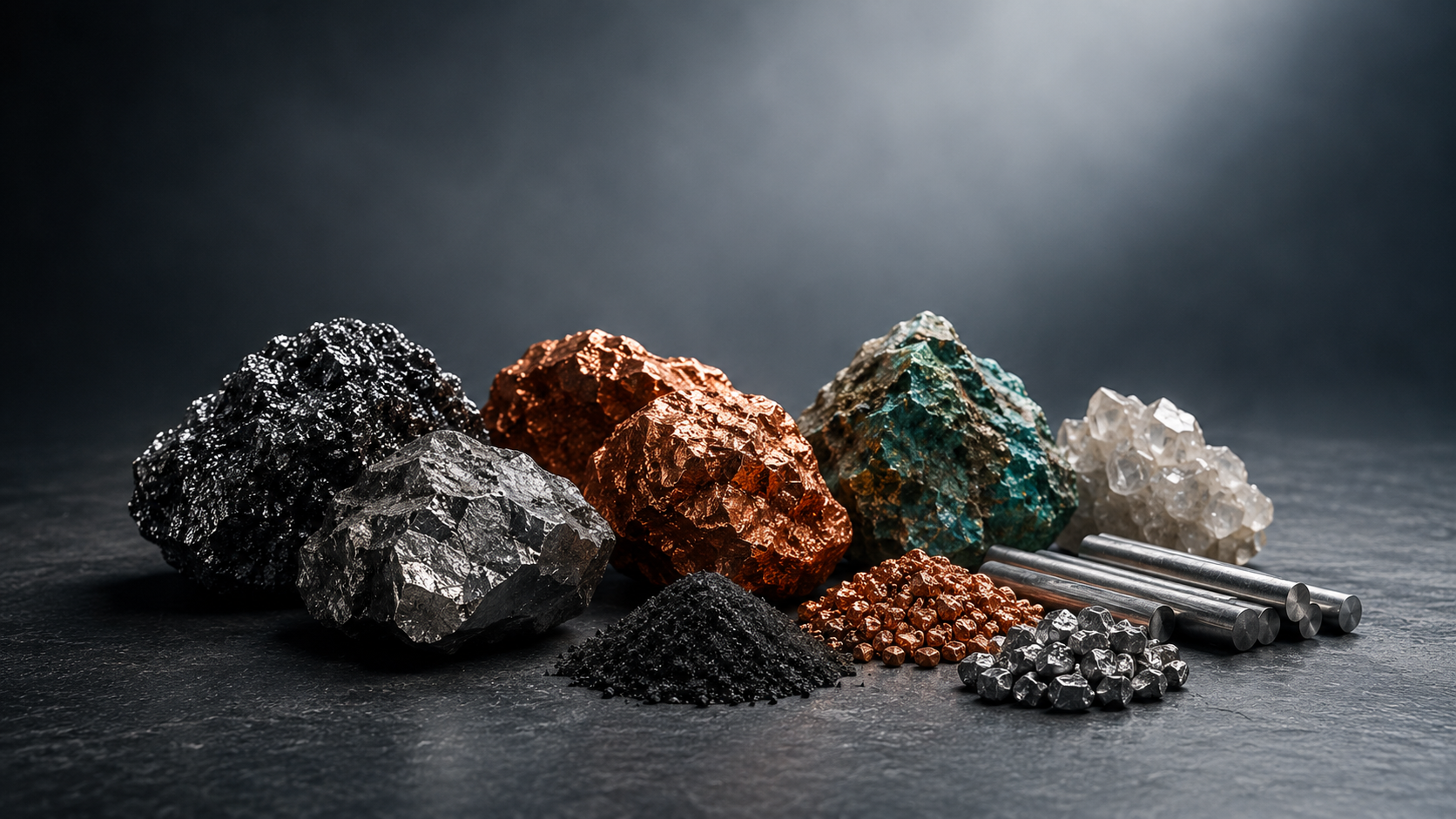
- The International Energy Agency has repeatedly warned that demand for essential minerals will skyrocket by 2040 if countries continue to commit to net-zero emissions ambitions.
- The future of energy security might be mining and mineral supply chains, refining facilities, and not oil wells.
- Energy security now includes safe access to batteries, minerals, semiconductors, and renewable energy components.
- Critical minerals are increasingly important to national security, technical leadership and military capability.
Oil has been the engine of the world economy for over a century. It decided the rise and fall of nations, influenced military strategy, ignited wars and gave resource-rich countries a geopolitical heft they had never known. Petroleum has been associated with economic power and national security, from the shocks of the 1970s to the strategic importance of the Persian Gulf. Now we are entering a new energy age on Earth. As countries look to decarbonise their economies and build out renewable energy infrastructure, a new suite of resources is becoming strategically critical. Lithium, cobalt, nickel, graphite, copper and rare earth elements are now considered the building blocks of the 21st-century economy. They are the building blocks for electric cars, batteries, solar panels, wind turbines, data centres, semiconductors and advanced defence technologies.
Many observers have called critical minerals “the new oil” because of this shift. It is not exact, but it does show a significant shift in the global distribution of economic and geopolitical power. The future of energy security might be mining and mineral supply chains, refining facilities, and not oil wells.
The basis of the green economy
Critical minerals are vital for all of the major sustainable energy technologies. Electric car batteries require lithium, nickel, cobalt, manganese and graphite. Wind turbines need a lot of rare earth materials like neodymium and dysprosium for the powerful permanent magnets. Solar panels require silicon, silver, copper and other specialist materials. Modern power grids require huge amounts of copper to expand transmission networks to accommodate renewable energy. The International Energy Agency has repeatedly warned that demand for essential minerals will skyrocket by 2040 if countries continue to commit to net-zero emissions ambitions. As a result, the energy revolution has not reduced resource dependence. Instead, it’s changing the kinds of resources modern economies depend on.
So a new kind of competition was born. Countries are not only fighting for access to fossil fuels anymore. They clash over the minerals that will power the next generation of technologies.
Dependence Geography
Part of the reason they are attracting geopolitical interest is the concentration of key minerals. The Democratic Republic of Congo produces the vast majority of the world’s cobalt. Australia is the world’s largest producer of lithium. Indonesia has become a key supplier of nickel. China produces a large share of rare earths, but more importantly, it mines, processes and refines them. This concentration reveals weaknesses. Disruption in one country can damage global supply networks. A number of things can affect the supply and prices of minerals, such as political instability, trade disputes, export restrictions, environmental legislation and changes in domestic policy. This mirrors earlier fears about oil dependence, when a handful of producers had disproportionate sway over the world market.
But essential minerals bring a new problem. Mining is only one part of the supply chain. The real bottlenecks are often processing and refining. China’s dominance is a case in point for this truth. China doesn’t own the world’s mineral reserves, but it has spent decades building up refining capacity, manufacturing infrastructure and industrial ecosystems. Many countries depend on Chinese processing plants, even if they source their raw materials elsewhere. Mineral supply chains are becoming strategic rather than purely commercial issues.
Energy Security is being redefined
Traditionally, energy security referred to securing consistent availability to oil, natural gas, and coal. Governments maintained strategic petroleum stockpiles, diversified suppliers, and safeguarded shipping routes. Energy security now includes safe access to batteries, minerals, semiconductors, and renewable energy components. The move from fossil fuels to clean energy technologies is producing new dependencies. An electric car reduces reliance on imported oil while increasing reliance on lithium, nickel, cobalt, and battery manufacturing supply chains.
Similarly, renewable energy systems may lessen vulnerability to oil price fluctuations, but they require huge quantities of minerals, which are frequently sourced from a small number of nations. As a result, countries are recognising vital minerals as strategic assets. National mineral policies, supply chain alliances, and resource diplomacy are increasingly important aspects of economic and foreign policy.
The New Geopolitics Contest
The vital minerals have become more important, and the big powers are fighting for them. The US has taken steps to secure mineral supply chains and reduce reliance on Chinese processing. The European Union has policies to diversify sources and to increase domestic production. Both Japan and South Korea have invested heavily in overseas mining operations and strategic partnerships.
Meanwhile, China is consolidating its position across the mineral value chain through investments, long-term contracts and industrial policies. The competition is more than economic. Critical minerals are increasingly important to national security, technical leadership and military capability. Advanced defence systems, precision-guided weaponry, radar technologies, satellites and communication systems all require specialised minerals and rare earth elements. It all comes down to how many resources you have. Which in turn decides how economically competitive you are and how geopolitically powerful you are.

Anusreeta Dutta is a columnist and climate researcher with experience in political analysis, ESG research, and energy policy. Views expressed are the author’s own.
 Anjali Singh
  Aayush Pal