
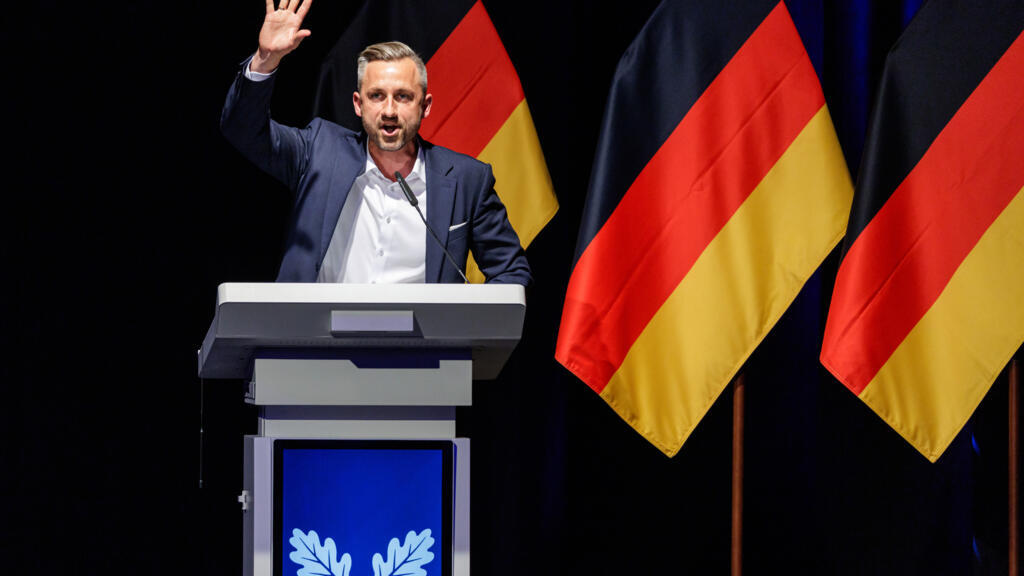
- The AfD’s electoral victory has opened a new chapter in German politics and could have consequences not only for Germany but also for the wider European Union.
- The AfD has capitalised on this growing economic frustration by arguing that Germany’s current political leadership has failed to protect the country’s economic interests.
- The declining popularity of Chancellor Merz and the weakening position of the CDU could further strengthen the AfD at a national level.
- Whether this victory remains a regional breakthrough or becomes the beginning of a much larger national political transformation will now be one of the most important questions facing Germany—and Europe—in the years ahead.
One of the most remarkable political developments is unfolding in Germany as the far-right Alternative für Deutschland (AfD) has brought a political earthquake to the country by securing a landslide victory in the state election in Saxony-Anhalt.
The election marks a major moment in German politics. It represents the first major state election in which the AfD has emerged as the dominant political force, drawing widespread attention and raising serious questions about Germany’s political future. The party’s electoral victory has opened a new chapter in German politics and could have consequences not only for Germany but also for the wider European Union.
The far-right AfD secured around 44% of the overall vote, while the incumbent Christian Democratic Union (CDU), led nationally by Chancellor Friedrich Merz, managed to secure only around 18% of the vote. Although the CDU emerged as the second-largest party in the state election, the scale of its defeat represents a major political setback.
Despite its landslide victory, the AfD fell three seats short of securing a clear majority. This has created uncertainty over the formation of the next state government, particularly because the other major political parties in Germany have maintained a political firewall against the AfD and have repeatedly stated that they would not collaborate with the far-right party.
The Political Rise of the AfD and Germany’s Historical Concerns
The AfD has increasingly come into the spotlight because of its political ideology. For many people in Germany, the rise of a far-right political force raises historical concerns because of what Germany experienced during the Second World War and during some of the darkest chapters of its history. These concerns have resulted in significant political resistance towards the party. However, the AfD has repeatedly attempted to make it clear that Germany’s past should not necessarily define the country’s political future and that the dark chapters of German history are not something the party seeks to repeat.
Despite these assurances, significant concerns remain about the party’s ideology and political direction. At the same time, the AfD has successfully built its political support by arguing that Germany under its current political establishment has moved in the wrong direction, particularly economically and socially.One of the strongest areas of the AfD’s political campaign has been immigration. The party has argued that uncontrolled immigration has created serious security and social challenges in Germany and has contributed to concerns about the dilution of German cultural identity.
The AfD has consistently argued that Germany needs to prioritise its domestic concerns and the interests of its own citizens. Its political message has increasingly focused on the idea that Germany’s policies should primarily serve German interests. For years, the party has advocated stricter immigration policies, greater attention to domestic issues, and a political approach centred around protecting Germany’s national interests.
Germany’s Economic Crisis and Growing Public Frustration
The second major issue that has contributed to the AfD’s growing political strength is the condition of the German economy. For decades, Germany was regarded as the economic guardian of the European Union and the industrial powerhouse of Europe. However, in recent years, Germany has increasingly been described as the new “sick man of Europe”.
The German industrial sector has faced significant difficulties, unemployment concerns have increased, inflation has placed pressure on households and Germany’s export-driven economic model has come under serious strain. The energy crisis has further worsened an already difficult economic situation.German exports have faced increasing pressure, industries have struggled with rising costs, and companies have become increasingly hesitant to invest in Germany. The country’s energy dependency and the rising cost of energy have further complicated the situation for German industries, particularly manufacturing.
The AfD has capitalised on this growing economic frustration by arguing that Germany’s current political leadership has failed to protect the country’s economic interests. The party has also been critical of the European Union, arguing that Germany’s policies within the EU have increasingly forced the country to prioritise broader European interests over its own national economic requirements.
According to the AfD’s political argument, Germany should focus primarily on German interests rather than allowing European priorities to dictate major economic and political decisions.
A Major Challenge for Friedrich Merz and the CDU
Above all, the bigger political question emerging from this election concerns the government currently in power in Germany. Since Chancellor Friedrich Merz came to power, his Christian Democratic Union has faced increasing political pressure. The dramatic decline of the CDU, particularly in Saxony-Anhalt, is significant because the party had governed the state for decades.
The systematic collapse of CDU support in the state does not simply represent a challenge at the regional level. It raises serious questions about the future direction of German politics as a whole. The declining popularity of Chancellor Merz and the weakening position of the CDU could further strengthen the AfD at a national level. The Saxony-Anhalt election therefore represents more than just a regional political development; it reflects a changing political reality in Germany.
The AfD’s electoral victory also reflects a wider political trend across Europe. Far-right and nationalist political movements have gained momentum in several European countries as voters increasingly question liberal political policies, particularly on immigration, economic management and national identity.Across Europe, a growing section of the population believes that national economies need greater protection and that governments should focus more directly on domestic priorities. The growing opposition to immigration and the rise of nationalist politics have therefore created a much bigger political question for Europe.
A New Political Reality for Germany and Europe
The biggest question now is whether Germany is moving towards a major political transformation. A significant political shift inside Germany could also create serious divisions within the European Union. The EU has largely been shaped by centrist and liberal political ideology, and the growing strength of the AfD directly challenges several of the fundamental political assumptions behind European integration.
The AfD has repeatedly questioned the extent of Germany’s cooperation with the European Union and has argued that Germany should have greater control over its own political and economic decisions. Any major political divide between Germany and the European Union could create serious consequences for the bloc. Germany remains Europe’s largest economy and one of the most influential political powers within the EU.
A major political disagreement between Berlin and Brussels could therefore further weaken European unity, particularly at a time when the European Union is already facing serious geopolitical challenges. The EU is currently dealing with increasing geopolitical uncertainty, growing strategic divisions with the United States and an increasingly complicated international environment. At such a time, any major political division involving Germany could further complicate the European Union’s position.
The rise of the AfD in Germany is therefore not simply a normal electoral phenomenon. It is a political development that speaks volumes about the changing political reality inside Germany and across the European Union.The Saxony-Anhalt election may be a state-level contest, but its political consequences could extend far beyond the borders of the state. The AfD’s victory has demonstrated the growing dissatisfaction with Germany’s traditional political establishment and has raised a fundamental question about the country’s future political direction.
Whether this victory remains a regional breakthrough or becomes the beginning of a much larger national political transformation will now be one of the most important questions facing Germany—and Europe—in the years ahead.

Aayush Pal is a freelance writer on contemporary geopolitical developments. The views expressed in his work are entirely his own.
 Parag Gilada