
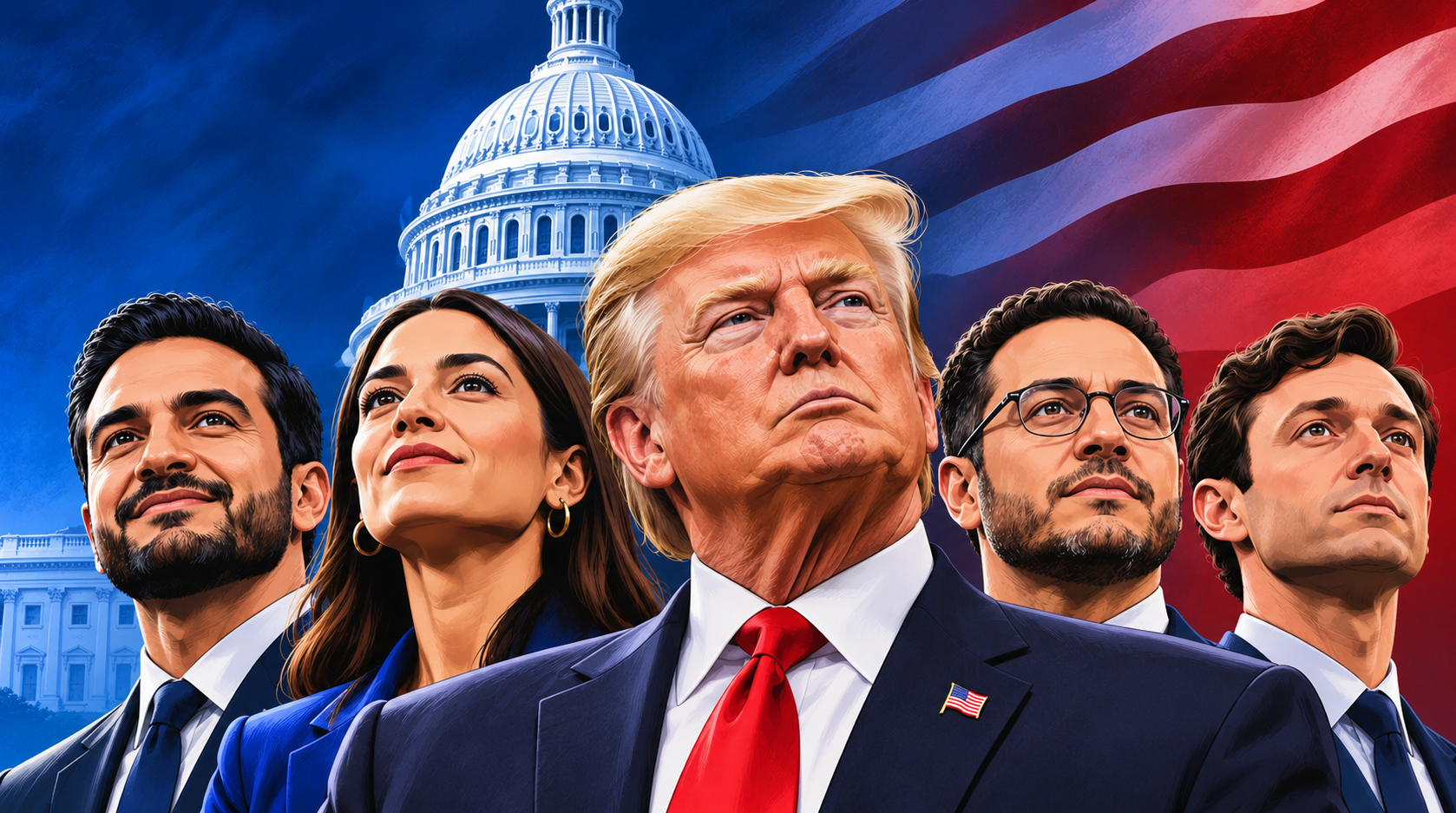
- In a massive electoral outcome in the United States, President Donald Trump’s Republican Party has suffered a major setback in the 2026 midterm elections, losing control of both chambers of Congress and handing an absolute majority to the Democrats.
- The outcome also carries implications for India, which has faced significant US tariffs and continues to await progress on a bilateral trade agreement with Washington.
- For Democrats, the task will be to translate their historic victory into effective governance and establish a political foundation capable of sustaining their momentum into the 2028 presidential elections.
In a massive electoral outcome in the United States, President Donald Trump’s Republican Party has suffered a major setback in the 2026 midterm elections, losing control of both chambers of Congress and handing an absolute majority to the Democrats. The outcome marks a historic moment for the Democratic Party and represents a significant political test for President Trump during the remaining years of his administration. The Republican defeat has sent shockwaves across the United States and the world, with Democrats securing a landslide victory, winning 228 seats in the House of Representatives and crossing the majority threshold in the Senate with a Democratic caucus of 54 seats. The outcome will allow Democrats to control the House’s legislative agenda and committee leadership, while their Senate majority will reshape the confirmation process and legislative priorities. More importantly, Democratic control of Congress will strengthen the party’s ability to conduct investigations and exercise oversight over the Trump administration.
The Republican Downfall: From Electoral Dominance to Congressional Defeat
The Republicans entered the midterm elections following their sweeping victory in the 2024 presidential elections, in which Trump won the popular vote, secured the crucial swing states and established Republican control over both chambers of Congress. However, within just two years, the political landscape has changed dramatically. Trump’s approval ratings have declined considerably, while the administration’s departure from several electoral promises has created growing dissatisfaction among voters. One of the most consequential decisions was Trump’s involvement in the Iran war, which became a major flashpoint during the midterm campaign. During the 2024 presidential election, Trump had repeatedly promised that the United States would avoid foreign wars and prioritise domestic concerns. However, his decision to target Iran after returning to power did not go down well with sections of his Republican voter base. The ramifications of the conflict have been severe, driving up energy prices, contributing to inflationary pressures and increasing the overall cost of living for ordinary Americans. These issues became the central focus of the midterm elections, with Democrats strategically aligning their campaigns around affordability, inflation and energy prices. Their messaging resonated with voters, enabling them not only to secure congressional majorities but also to flip seven Republican-held Senate seats, including Texas, Iowa, North Carolina, South Carolina, Maine, Kansas and Ohio.
Texas, Michigan and Kansas: Historic Democratic Breakthroughs
Among the most consequential outcomes was the Democratic victory in Texas, a state that has remained a Republican stronghold for decades. For the first time in nearly three decades, Democrats have secured a Senate seat in Texas, with James Talarico defeating Republican Ken Paxton. The victory has left the Republican establishment stunned and raised questions about the party’s electoral prospects in traditionally conservative states. One of the factors behind the Democratic breakthrough was the changing voting pattern among Latino voters, who have historically supported Republican candidates in significant numbers in recent elections. Economic dissatisfaction, particularly the rising cost of living, appears to have influenced voting behaviour among Hispanic communities. Trump’s aggressive immigration crackdown and the actions of Immigration and Customs Enforcement (ICE) also became major campaign issues, particularly among communities affected by the administration’s enforcement policies. At the same time, the administration’s success in reducing illegal border crossings and addressing border security concerns did not translate into the electoral advantage Republicans had anticipated. Another significant outcome was the victory of Abdul El-Sayed in Michigan, a candidate who had faced considerable criticism from Trump, including personal attacks and allegations of links to the Muslim Brotherhood. Despite the controversy, El-Sayed secured a decisive victory, highlighting the limitations of Trump’s political attacks in an election increasingly shaped by economic concerns. The Democratic victory in Kansas was equally historic, marking the first time in nearly a century that the state elected a Democratic senator. Taken together, these outcomes represent a significant shift in the American political landscape and reinforce the scale of what has emerged as a blue tsunami for the Democratic Party.
The Iran War, Economic Discontent and the Republican Leadership Crisis
The central question following the Republican defeat is what led to such a dramatic reversal in political fortunes. One of the principal reasons was the Iran war, a factor that has also been acknowledged within the Republican leadership. Vice President JD Vance, during the election-counting period, acknowledged that the conflict had contributed significantly to the Republican losses and suggested that the outcome could have been different had the United States not become involved in the war. The conflict has disrupted global energy markets and contributed to rising fuel prices across the United States, placing additional financial pressure on ordinary Americans. The broader increase in the cost of living further intensified voter dissatisfaction, undermining the administration’s economic messaging. These developments have significant implications for the 2028 presidential elections, with Democrats emboldened by their victory and increasingly confident about sustaining their political momentum. For Republicans, however, the challenge extends beyond losing congressional control. The party is facing a leadership crisis at a time when Trump, now 80, is constitutionally barred from seeking another presidential term in 2028. The central question is who will succeed him as the party’s leading political figure. Vice President JD Vance remains a potential contender, but his political standing has come under scrutiny, with critics questioning his electoral appeal and accusing him of being too closely aligned with billionaire interests. The midterm defeat has intensified doubts within sections of the Republican Party about whether Vance can successfully inherit Trump’s political coalition. Secretary of State Marco Rubio has also emerged as a potential contender, although his foreign policy credentials and perceived hawkishness could complicate his appeal among voters seeking a more restrained American foreign policy. The Republican Party now faces the challenge of rebuilding its leadership around an America First agenda that prioritises domestic concerns, avoids unnecessary foreign entanglements and addresses the economic anxieties of ordinary Americans.
The Democratic Resurgence and Implications for India
Within the Democratic Party, the electoral outcome has strengthened the position of its progressive and democratic socialist wing, which has increasingly gained prominence through the Democratic Socialists of America (DSA) and figures such as Congresswoman Alexandria Ocasio-Cortez and New York Mayor Zohran Mamdani. The emergence of younger political leaders, including Abdul El-Sayed and Jon Ossoff, has generated renewed enthusiasm within the party and raised the prospect of a generational transition in Democratic leadership. The midterm victory could provide these leaders with greater influence over the party’s future political direction, particularly as Democrats seek to consolidate their electoral gains ahead of 2028. The outcome also carries implications for India, which has faced significant US tariffs and continues to await progress on a bilateral trade agreement with Washington. Democratic control of Congress could increase scrutiny of Trump’s trade policies and create greater pressure for accountability in the administration’s economic decisions. For India, this could potentially provide an opportunity to negotiate a more favourable trade arrangement, although a change in congressional control does not automatically guarantee a reduction in tariffs or an agreement. The remaining two years of Trump’s presidency will therefore be particularly consequential, as the administration navigates a more assertive congressional opposition and faces growing questions about its political future. The broader challenge for Republicans will be to identify a successor capable of preserving Trump’s electoral coalition while addressing the economic and foreign policy concerns that contributed to their defeat. For Democrats, the task will be to translate their historic victory into effective governance and establish a political foundation capable of sustaining their momentum into the 2028 presidential elections.

Aayush Pal is a freelance writer on contemporary geopolitical developments. The views expressed in his work are entirely his own.
 Anjali Singh