- The decision by China to impose sanctions against the foreign ministers of Belize and Paraguay over their diplomatic engagements with Taiwan has led to increased geopolitical tension between Beijing and Washington due to strategic competition over the international position of Taiwan and influence in Latin America.
- China punishes those officials who have dealings with Taiwan in order to promote the One-China principle and discourage other states from expanding their relations with Taiwan.
- The controversy also brings into focus the application of balance of power politics. As China increases its diplomatic and economic engagement with Latin America, the US is more worried than ever before over its own influence and strategic security.
- This episode shows one of the main contradictions that exist in international relations today – the contradiction between China’s claims to sovereignty and the idea that countries have the right to choose their diplomatic partners independently.
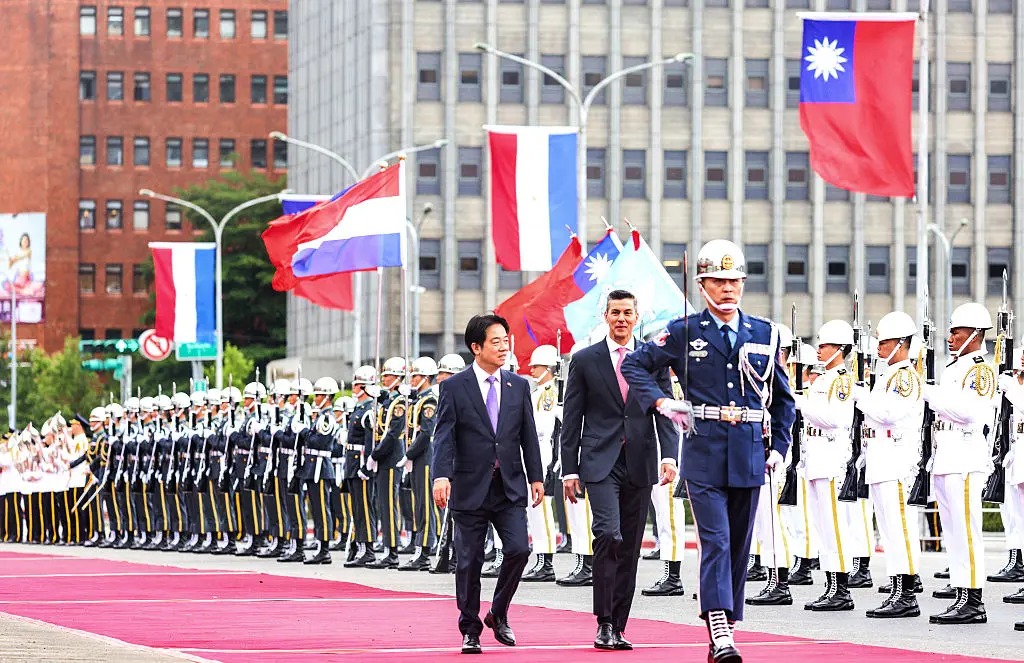
The decision by China to impose sanctions against the foreign ministers of Belize and Paraguay over their diplomatic engagements with Taiwan has led to increased geopolitical tension between Beijing and Washington due to strategic competition over the international position of Taiwan and influence in Latin America. The United States government has criticized these measures, referring to them as coercion on behalf of China to interfere in the sovereign decisions of states.
According to reports, Beijing imposed sanctions against Gustavo Villate, Paraguay’s communications minister, and Francis Fonseca, Belize’s foreign minister, on October 12. The decision is explained by China’s national security interests, as the officials are accused of backing the independence of Taiwan and promoting the idea that China has conducted cyber attacks on other states.
Under these sanctions, China will freeze the assets of the officials in China, deny them visas to visit China, and prohibit Chinese organizations and citizens from doing business with the diplomats. As officials of countries maintaining diplomatic relations with Taiwan usually do not have reasons to visit China, it can be assumed that the sanctions will have no significant impact.
One-China Policy and Diplomacy of Taiwan
This controversy stems from the basic contradiction between China and Taiwan regarding sovereignty and recognition by the international community. China views Taiwan as a part of its territory and does not approve of any initiatives that would indicate that Taiwan is considered a sovereign state. Taiwan, officially known as the Republic of China, retains its own government which functions independently from the People’s Republic of China.
Paraguay and Belize belong to 12 states that continue to maintain diplomatic relations with Taiwan. Beijing has been stepping up its efforts to convince Taiwan’s allies to recognise China through economic persuasion, diplomacy, and pressure. The relations between Taiwan and Nauru were cut off in 2024, Honduras followed suit in 2023.
From the point of international relations theory, Beijing’s actions clearly show the way the tool of diplomatic recognition has transformed into a tool of geopolitical competition. China punishes those officials who have dealings with Taiwan in order to promote the One-China principle and discourage other states from expanding their relations with Taiwan. However, such actions can only reinforce the view that Beijing employs economic and diplomatic tools to limit the foreign policy flexibility of smaller states.
US Supports Taiwan and Its Regional Partners
Washington has condemned the sanctions, with State Department spokesman Tommy Pigott saying that the US under President Donald Trump had opposed “coercion and aggression toward countries that exercise their sovereign right.” The United States has restated its position in support of Taiwan and its partners, highlighting its own worries over China’s growing role in the Western Hemisphere.
Although the United States does not have any formal ties with Taiwan, it continues to be its most important international partner in terms of security matters. The position taken by the US stems from a consistent US foreign policy goal which involves deterrence of any coercive changes to the status quo in the Taiwan Straits without harming its regional partnerships.
The controversy also brings into focus the application of balance of power politics. As China increases its diplomatic and economic engagement with Latin America, the US is more worried than ever before over its own influence and strategic security. In this context, the move by China against Belize and Paraguay has gone beyond the issue of Taiwan.
Taiwan Defies Beijing’s Intimidation
Taiwanese officials refused to submit to China’s pressure tactics and stood up for their right to have international relations. Premier Cho Jung-tai stated that Beijing had no right to intrude in the internal or foreign affairs of sovereign countries. Deputy Foreign Minister Chen Ming-chi called China’s pressure tactics a form of transnational repression and wondered whether Beijing wanted to sanction all countries having diplomatic relations with Taiwan.
This disagreement took place at a time when China was continuing to put military pressure on Taiwan through its military airplanes and naval ships near Taiwan. This was part of the larger Chinese strategy of putting pressure on Taiwan.
These sanctions are not going to change the policy of Belize and Paraguay in the short term. But this clearly shows the pressure being exerted on smaller countries.
In conclusion, this episode shows one of the main contradictions that exist in international relations today – the contradiction between China’s claims to sovereignty and the idea that countries have the right to choose their diplomatic partners independently. Due to the intensification of rivalry between the US and China, the few remaining diplomatic partners of Taiwan can be expected to experience mounting pressure.

Anjali Singh is a postgraduate student of Political Science and International Relations, a Social Media Analyst, and a former Research Intern at the Indian Council of World Affairs. Views expressed are the author’s own.
 Archita Gaur
  Aayush Pal