
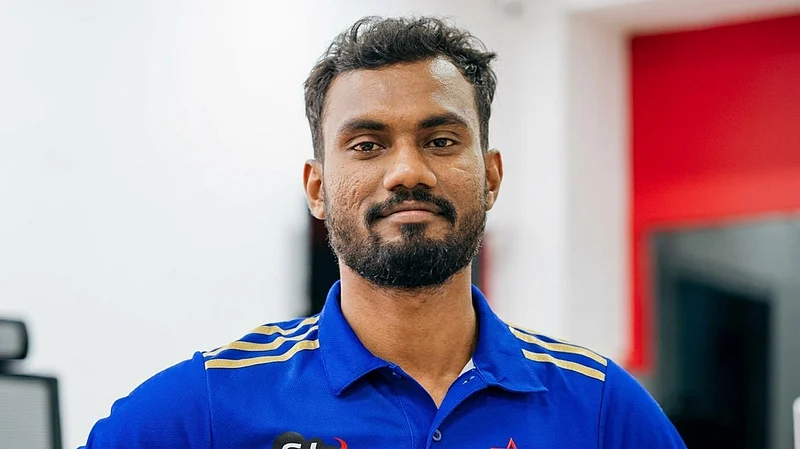
- The Supreme Court of Saudi Arabia’s move to quash the death penalty issued against Anojan Sivarasa, a migrant worker from Sri Lanka, is an important diplomatic achievement for Colombo.
- Instead of publicly challenging the sovereignty of Saudi Arabia, Colombo chose to go for relief through the host nation’s legal system.
- Although the ruling by the Supreme Court is definitely a big relief, it does not necessarily imply that Sivarasa has been released from prison nor that his conviction has been overturned.
- The Sivarasa case clearly illustrates an essential principle of international relations whereby the sovereignty of the state determines the limits of diplomacy, but the safety of its citizens becomes one of the most important obligations.
The Supreme Court of Saudi Arabia’s move to quash the death penalty issued against Anojan Sivarasa, a migrant worker from Sri Lanka, is an important diplomatic achievement for Colombo. This event shows how states resort to bilateral diplomacy, legal activism, and international pressure to ensure the safety of their nationals when abroad.
Anojan Sivarasa, a Sri Lankan Hindu migrant worker, was given the death penalty in September after posting on Facebook an allegedly insulting comment about Islam and the Prophet Muhammad. This issue provoked public anxiety in Sri Lanka as well as calls for help from political figures, religious authorities and international human rights bodies. While the highest court in Saudi Arabia has now annulled the death penalty, the case has been remanded to the lower court.
Diplomacy as a means of protecting citizens
This incident shows the significance of consular diplomacy in which states work on the protection of their citizens who are encountering problems either legally or personally abroad. Sri Lankan officials tried to engage diplomatically with Saudi officials, legal representation, Supreme Court intervention, and even sought the assistance of their embassy in Riyadh.
A special legal delegation was sent to Saudi Arabia, while the Sri Lankans worked to provide proper legal representation and challenge the death penalty imposed against him. Members of parliament and religious leaders also sought clemency for him. Taking the perspective of liberal institutionalism, the incident provides a case of how laws, diplomacy, and international involvement could offer means of conflict resolution without developing into bilateral disputes.
Instead of publicly challenging the sovereignty of Saudi Arabia, Colombo chose to go for relief through the host nation’s legal system.
The Supreme Court ruling does not necessarily indicate that diplomatic pressures alone led to this outcome. Nevertheless, this series of events shows that persistent efforts can keep the issue of one’s citizenship on both the diplomatic and legal agendas.
State sovereignty vs. human rights
Another aspect of this case reflects an ongoing dilemma in international relations – the principle of sovereignty of the state and the expectation on the part of the international community that states will respect certain basic rights.
The government of Saudi Arabia is sovereign and has the right to implement its own internal law. However, the death penalty imposed on someone who made a comment on social media received criticism from human rights organisations, because it was viewed as a punishment for free speech and an infringement of human dignity.
This issue could be analysed through the English School of international relations theory and the concept of international order and common norms.
It was a delicate situation for Sri Lanka to balance between supporting the rights of its citizens while ensuring healthy diplomatic ties with a nation that houses migrant labour from Sri Lanka and continues to be an essential overseas employment destination for citizens of Sri Lanka.
The choice of pursuing legal and diplomatic remedies shows an attempt to reconcile both these issues.
Vulnerability of migrant workers
The case of Sivarasa also brings forth the vulnerability of migrant workers in the international system. Though migrants might be making a substantial contribution to the economy of their home countries, they may face difficulties due to lack of language, legal counsel, family connection, and unfamiliar legal processes.
For instance, security for human security does not only mean the protection of state boundaries, but it includes the safety, respect and rights of individual people. In this regard, the actions taken by the Sri Lankan government cannot be considered simply as an issue of consular services because it also involves the question of duties that a state owes to its citizens who earn their living outside their countries.
Moreover, it also shows the difference between the bargaining powers of the parties involved in the issue. While Sri Lanka could provide legal and diplomatic assistance, it was not possible for the Sri Lankan government to control the legal process in Saudi Arabia.
Soft power and international pressure
The participation of political parties in Sri Lanka, Buddhist and Hindu religious figures, and groups such as Human Rights Watch represents an application of soft power and transnational advocacy networks. They were instrumental in transforming a personal criminal matter into a larger social affair about issues of justice, religion, and migrant worker rights.
The human rights organisations appealed to Saudi Arabia to reverse this judgment, but appeals to religious and political figures in Sri Lanka revealed that this was not a mere political or religious issue. Mobilisation might help in raising the cost of reputation of a certain judgment, but it is not clear how much influence this will have on the final result.
In addition, this example illustrates the limits of international pressure. Calls for human rights do not always carry more weight than national legislation, and sometimes international pressure may irritate countries. That is why diplomacy still plays an important role in turning public concern into results.
A relief, but no resolution just yet
Although the ruling by the Supreme Court is definitely a big relief, it does not necessarily imply that Sivarasa has been released from prison nor that his conviction has been overturned. The case is back at the lower court, and there are many questions still as regards whether he will serve his prison time or have other things to deal with.
In the case of Sri Lanka, the immediate task would be to keep up the diplomacy until the legal status of the diplomat becomes known. In the case of Saudi Arabia, the case is sure to receive continued attention due to the way in which speech offences are being tried, and migrants are being treated in their legal system.
Ultimately, the whole episode shows that diplomacy makes a difference when individuals are protected without needlessly putting pressure on relations between states.
While the setting aside of the death penalty is a key development, the ultimate measure will be how far Sivarasa receives a proper and proportional legal verdict. The Sivarasa case clearly illustrates an essential principle of international relations whereby the sovereignty of the state determines the limits of diplomacy, but the safety of its citizens becomes one of the most important obligations.

Anjali Singh is a postgraduate student of Political Science and International Relations, a Social Media Analyst, and a former Research Intern at the Indian Council of World Affairs. Views expressed are the author’s own.
 Archita Gaur
  Aayush Pal