
IAF marks 94 years of service, sacrifice and strength
- The number of operational fighter squadrons for the Indian Air Force (IAF) in 2026 has been brought down to 29, which falls short of the sanctioned number of 42.5 squadrons.
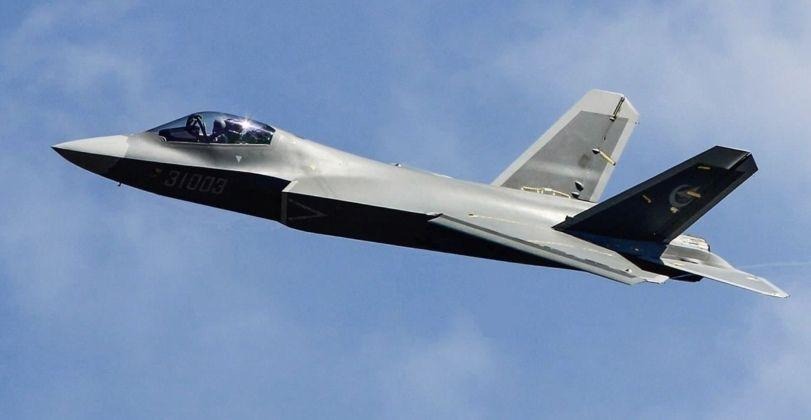
- China still poses the biggest threat in the long run as its air force continues to modernise, deploying up to 500 J-20 stealth jets, a total that can rise to about 1,000 by 2030.
- What is most pressing right now are the reports about the procurement by Pakistan of around 40 Chinese J-35 fifth-generation stealth aircraft.
- While the IAF says goodbye to an old chief and hello to a new one, it does so with a smaller fleet than it has seen in six decades, with the stealth gap widening every single day, and a modernization program whose success depends on industrial delivery.
The celebrations of the 94th Air Force Day started with a parade by Group Captain Manish Sharma, which was followed by the investiture ceremony where Air Warriors were awarded medals for their acts of bravery and service. This year’s theme for the event was “Indian Air Force – Infallible, Impervious and Precise,” which the Air Chief said was “not just another slogan but reflects the strength and will of the force.”The static display at Hindan displayed the combat capabilities of the Indian Air Force for the present as well as the future. A number of fighter aircraft like the Rafale, Su-30 MKI, Jaguar and Tejas along with helicopters such as the LCH Prachand and ALH Dhruv were part of the static display at Hindan. It was for the first time that the BrahMos Supersonic Cruise Missile participated in the static display at Hindan. The Air Chief Marshal A.P.Singh arrived at the parade location in a vintage car from the sixties, while three helicopters did the aerial drill of ‘Dhwaj’. Team Shakti, the all-women Air Warrior Drill team, participated in the event, reflecting the growing participation of women in the Indian Air Force.
In the Union Budget for 2026-27, the Ministry of Defence has been allocated a total of ₹7.85 lakh crore, which is the highest among all ministries and marks an increase of 15.19% in comparison to the previous year. A large part of this budget has been assigned to capital acquisition, which stands at ₹2.31 lakh crore, out of which ₹63,733.94 crore has been earmarked for the procurement of aircraft and aeroengines.
A huge part of the capital expenditure has gone to the Indian Air Force.
There has been a rise of 37.03% in the capital budget of the Indian Air Force in comparison to its budget estimates for 2025-26, reflecting the strong determination of the government to develop the ongoing modernisation process with heavy funding. The share of IAF in the Defence Services Estimates has also increased from 8.83% in the 2021-22 financial year to 10.80% in the 2026-27 financial year.
| Budget component | 2026–27 allocation | Key change/share |
| Ministry of Defence – total | ₹7,84,678 crore (₹7.85 lakh crore) | +15.19% |
| Defence Services – Revenue | ₹3,65,478.98 crore | +17.24% |
| Defence Services – Capital | ₹2,19,306.47 crore (₹2.19 lakh crore) | +21.84% |
| Capital Acquisition | ₹1.85 lakh crore | +24% |
| Procurement from domestic industry | ₹1.39 lakh crore | 75% of capital acquisition |
| Aircraft & aero-engines | ₹63,733.94 crore | Major capital-modernisation category |
| Defence pensions | ₹1.71 lakh crore | +6.56% |
| DRDO | ₹29,100.25 crore | Up from ₹26,816.82 crore |
The Depleting Strength: 29 Squadrons and Falling
The number of operational fighter squadrons for the Indian Air Force (IAF) in 2026 has been brought down to 29, which falls short of the sanctioned number of 42.5 squadrons. This translates to a deficiency of 13.5 squadrons. Taking into consideration that a squadron comprises an average of 18 to 20 aircraft, this deficit translates into 243 to 270 aircraft.
| Year / Period | Approx. Fighter Squadrons | Significance |
| 2002 | 42 | Last period near authorised strength |
| 2009 | 28 | Major decline after older aircraft retirements |
| 2014 | 38 | Temporary recovery |
| 2017 | 33 | Decline resumes |
| 2019 | 30 | Near historic low |
| 2024 | 31 | Among lowest levels in decades |
| 2025 | 31 | Limited recovery |
| 2026 | 29 | Current operational strength |
| Authorised | 42.5 | Sanctioned strength |
Current Fighter Fleet
| Fighter Aircraft | Approx. Strength | Primary Role |
| Su-30MKI | 258–270 | Heavy air superiority, multirole strike; BrahMos carrier |
| Jaguar | 100+ | Deep-penetration and ground strike |
| MiG-29/UPG | 59 | Air superiority and interception |
| Mirage 2000 | 46 | Precision strike and air defence |
| Tejas Mk-1 | 37 | Light multirole fighter and air defence |
| Rafale | 36 | Advanced multirole air superiority and precision strike |
| Tejas Mk-1A | 180 ordered | Future light-fighter replacement and fleet expansion |
The Su-30MKI serves as the core of the Indian Air Force‘s (IAF) fighter force, with approximately 258 to 270 aircraft in service. About 40 of these Su-30MKIs are equipped with BrahMos missiles, offering the IAF the ability to conduct long–range precision strikes. The Rafale and Mirage 2000 aircraft contribute advanced multi–role and precision–strike capabilities, while the MiG-29s continue to play a key role in air defence and interception missions. The Jaguar aircraft provide deep–strike capabilities, but due to their ageing fleet, they will likely need to be replaced in the future. The Tejas is designed to become the IAF’s main light–fighter platform, with 180 Tejas Mk-1A aircraft already ordered.
How Many Squadrons Does India Need?
The figure of 42.5 squadrons represents the authorised strength of the IAF, rather than the exact number needed to handle a major two-front conflict.
A publicly available IAF assessment from the mid-2010s indicated that at least 45 squadrons would be required to effectively counter a combined threat from China and Pakistan.
In 2026, Air Chief Marshal A.P. Singh stated that the IAF needs more than 42 squadrons, taking into account the current security environment.
| Figure | Meaning |
| 29 squadrons | Current operational strength |
| 42.5 squadrons | Authorised strength |
| 45 squadrons | Previously stated two-front requirement |
| 42+ squadrons | Current Chief’s assessment; exact updated figure not publicly disclosed |
The requirement for 36 to 40 fighter jets per year by the Air Chief is for induction, and not for the 13.5 squadron shortfall that exists already.
Figure | Meaning |
| 29 | SquadronsCurrent operational strength |
| 42.5 | Squadrons Authorised strength |
45 squadrons | Previously stated two-front requirement |
| 42+ squadrons | Current Chief’s assessment; exact updated figure not publicly disclosed |
With approximately 18–20 aircraft per squadron:
18 × 2 = 36
20 × 2 = 40
Thus, 36-40 planes ≈ 2 squadrons per year.
This is needed in order to replace old planes, stop their further depletion and build up squadrons once more.
The Two-Front Threat: China and Pakistan
China still poses the biggest threat in the long run as its air force continues to modernise, deploying up to 500 J-20 stealth jets, a total that can rise to about 1,000 by 2030. The PLAAF is developing its sixth-generation aircraft, whereas India does not have any stealth jets.
What is most pressing right now are the reports about the procurement by Pakistan of around 40 Chinese J-35 fifth-generation stealth aircraft. This will make Pakistan the first foreign user of the stealth fighter jets from China. As per the reports, it is expected that four to twelve of the fighter jets will reach Pakistan by either late 2026 or 2027, with the rest following.
This has been termed a “cause for concern” by Air Chief Marshal Singh since the pilots of the Pakistan Air Force are undergoing training in China on the aircraft. This low-observable and deep strike capability aircraft is going to cause problems for India’s air force for many years to come. It has been feared that the J-35 will offer a deep strike capability to Pakistan against India’s nuclear infrastructure, raising the risk of nuclear escalation.
| Threat Actor | Platform / Programme | Key Capability | Expected Timeline | Potential Impact on IAF |
Pakistan | J-35 (FC-31) | 5th-generation stealth fighter; low observability, advanced sensors and long-range strike capability | First deliveries potentially late 2026–2027; reports indicate a possible fleet of up to 40 aircraft | Could reduce India’s existing numerical advantage in the near term and introduce a stealth-fighter capability into the PAF |
China | J-20 | 5th-generation stealth air-superiority fighter with advanced avionics, sensors and long-range weapons | Around 500 operational aircraft reported; potentially 1,000 by 2030 | Creates a significant long-term qualitative and quantitative challenge for the IAF, particularly along the northern frontier |
| China | 6th-generation fighter programmes | Next-generation stealth, networking, sensors, electronic warfare and potentially unmanned teaming | Development/testing phase; 2030s | Could widen the technology gap if India does not accelerate AMCA and other next-generation programmes |
China–Pakistan | 5th-generation cooperation | Training, technology cooperation and integration of Chinese-origin combat systems | Ongoing | Increases the strategic challenge by combining Chinese technology with Pakistan’s operational experience and geographic proximity |
There have been many delays with the AMCA programme. It is expected that the first prototype would see the light of day by early 2027, the first flight of which would be done between 2028 and 2029, with induction being planned for the mid-2030s. The Air Chief has said that if there are more delays with AMCA, India might opt for other aircraft, including Russia’s Su-57 proposal. Pakistan can induct a stealth fighter before India’s first AMCA flight.
However, the Indian Air Force continues to make large investments in the technologies of tomorrow. The DAC approval of February 2026 suggested Combat Missiles and AS-HAPS Air ship based High Altitude Pseudo satellites for the IAF.
Major Indian Air Force Weapons & Air-Defence Programmes
| Programme | Category | Quantity | Estimated Value | Status |
| R-37M Long-Range AAM | Air-to-Air Missile | 300 units | Over $1.2 billion | Contract signed May 2026; 40 Su-30MKI aircraft to be modified |
| SCALP Cruise Missile | Air-to-Ground Missile | 100–150 units | ₹3,000–₹3,200 crore | Deal being finalised; capability validated during Operation Sindoor |
| S-400 Air Defence System | Surface-to-Air Missile (SAM) | 5 additional systems | Part of ₹2.38 lakh crore package | DAC approval granted March 2026 |
| MRSAM Weapon System | Surface-to-Air Missile (SAM) | Not specified | Part of ₹52,000 crore package | DAC approval granted July 2026 |
| Astra Mk-2 BVR Missile | Air-to-Air Missile | Not specified | Not publicly specified | Developmental trials completed; reported range of 160–200+ km |
The Indian Air Force S-400 Squadron was able to bring down a special mission aircraft of Pakistan in the month of May, 2026, as part of Operation Sindoor. The shoot down was carried out at a range of 314 km, which is the longest ever for a surface-to-air engagement.
Drone Warfare and Stealth UCAVs
The Ghatak Stealth UCAV project, costing Rs 39,000 crore ($4.7 billion), is the biggest budgetary allocation being made for drone combat.In March 2026, the Defence Acquisition Council sanctioned the purchase of about 60 Ghatak UCAVs, which amounts to four squadrons of the drones.The Ghatak is a jet-driven, unmanned combat aircraft that weighs about 13 tonnes and has been developed for deep-strike operations in an active enemy environment.
In early 2026, the Sureshastra Mk1 loitering munition, a jet-propelled, catapult-launched kamikaze drone with a maximum range of 300 km, was awarded a contract, while the Mk2 (500 km) and 1,500 km versions were being developed.
| Drone Programme | Category | Quantity | Estimated Value | Status |
| Ghatak Stealth UCAV | Combat Drone | 60 units (4 squadrons) | ₹39,000 crore | DAC approval granted March 2026 |
| MALE Combat UAVs | Combat Drone | 87 units | Over ₹30,000 crore | 10 bids received in June 2026 |
| Jet-Based Kamikaze Drones | Loitering Munition | Not specified | Part of ₹52,000 crore package | DAC approval granted July 2026 |
| Sureshastra Mk1 | Loitering Munition | 200 units | ₹300 crore | Contract awarded; first units delivered April 2026 |
| FW-HAPS | ISR Platform | Not specified | Part of ₹52,000 crore package | DAC approval granted July 2026 |
| AS-HAPS | ISR Platform | Not specified | Part of ₹3.60 lakh crore package | DAC approval granted February 2026 |
| AEW&C “Netra” | ISR / Airborne Early Warning | Additional units | Not publicly specified | FOC handed over to IAF June 2026 |
This Air Force Day is also the last public speech by Air Chief Marshal A.P. Singh, who is set to retire this month, having served a commendable stint. In his speech, he highlighted how “the power of the IAF lies in the Air Warriors and their operational readiness, not just in advanced systems.” He will be succeeded by Air Marshal Ashutosh Dixit. While the IAF says goodbye to an old chief and hello to a new one, it does so with a smaller fleet than it has seen in six decades, with the stealth gap widening every single day, and a modernization program whose success depends on industrial delivery. The money is available. The question remains whether the system will deliver before it becomes uncontested skies.
References:
- https://www.pib.gov.in/PressReleasePage.aspx?PRID=2320862®=48&lang=2
- https://newsonair.gov.in/iaf-celebrates-94th-anniversary-air-chief-marshal-ap-singh-highlights-forces-capabilities/
- https://yespunjab.com/world-witnessed-speed-of-iafs-combat-operations-during-op-sindoor-air-chief-marshal-a-p-singh/
- https://militarywatchmagazine.com/article/longest-ranged-a2a-missiles-exported-russia-india#1
- https://www.hindustantimes.com/india-news/pakistanchina-5th-gen-fighter-jet-collaboration-a-concern-but-we-possess-necessary-capabilities-iaf-chief-101791030903283.html
- https://defencesecurityasia.com/en/pakistan-j35-stealth-fighter-2026-china-india-airpower-shift/
- https://militarywatchmagazine.com/article/pakistan-four-chinese-fighter-stealth-fleet
- https://www.pib.gov.in/PressReleasePage.aspx?PRID=2221716®=6&lang=1
- https://www.rajnathsingh.in/press-release/defence-budget-2026-27-post-op-sindoor-further-strengthens-govts-resolve-of-creating-a-robust-foolproof-security-system-raksha-mantri/;
- https://www.pib.gov.in/PressReleasePage.aspx?PRID=2222601®=48&lang=2
- https://defence.in/

Piyush Anand is a Biotechnology Engineering student at Chandigarh University. His primary interest lies in International Affairs, Defence and Strategy. Views expressed are the author’s own.
 Parag Gilada
 Aayush Pal
 Pranav S