

- Africa, being an important part of the Global South, naturally falls within this broader vision.
- Another major factor is that India considers Africa an ocean of opportunity in terms of the economy, culture, people-to-people relations, and new-age technologies.
- India’s approach has largely focused on development, capacity building, technology, healthcare, education, and people-to-people relations.
- For India, therefore, Africa is not merely another region for strategic engagement. It is an important partner in India’s larger vision of strengthening the Global South, expanding economic opportunities, and creating a more representative and balanced global order.
Africa, a continent with an abundance of resources, a continent that has created immense opportunities, and one that is considered to be the next big thing in global geopolitics, has finally emerged as a new centre stage of growth, prosperity, and geopolitical contention. India is a country that has invested in following this path. India has always understood its responsibility as a like-minded nation that has not only worked for its own prosperity but, more importantly, has also focused greatly on humanity and the prospects of the world.
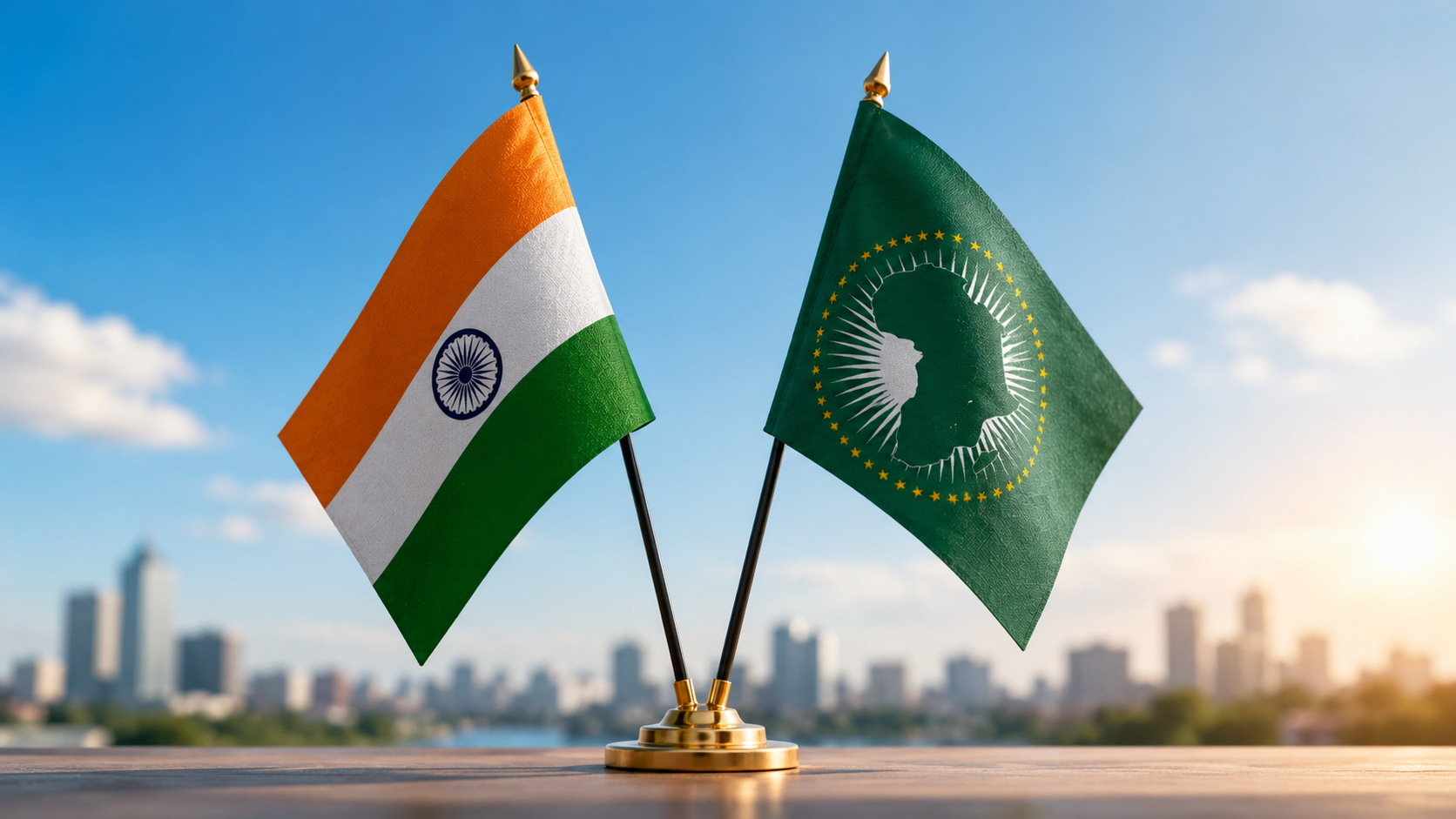
Africa, therefore, falls high on India’s radar. India’s presence in Africa has been connected through the policy that India has been aspiring to, becoming a new focal point and a new voice of the Global South. This has been evidenced by the fact that, in the last three years, India has conducted two Voice of the Global South Summits. The idea is that India is projecting itself as a centre stage for growth, representing the voices of the Global South and showcasing its leadership at the global level. Africa, being an important part of the Global South, naturally falls within this broader vision.
Another major factor is that India considers Africa an ocean of opportunity in terms of the economy, culture, people-to-people relations, and new-age technologies. India is of the opinion that it needs to diversify its economy, and since many African countries offer factors of production, greater democratic opportunities, and, more importantly, significant geopolitical resources, Africa becomes a perfect candidate for India’s growing engagement.
There are also important geopolitical reasons behind India’s growing interest in Africa. The continent is situated in an important geopolitical location, and having a presence in Africa provides India with a strategic outlook towards the wider world. Therefore, India’s presence and engagement with African countries have become increasingly important.
This has been visible in the Indian Prime Minister’s recent visit to Ethiopia. It has also been evident in how India has acted as one of the major voices for including Africa in global institutions, particularly through its efforts to include the African Union as a permanent member of the G20. This itself speaks volumes about how India has been sincere and responsible in developing its relationship with Africa and understanding the importance of the continent.
Although there are greater opportunities existing in Africa, these opportunities also come with significant challenges. Africa continues to suffer from domestic issues, civil unrest, famine, and large-scale migration. In all of these situations, India has been acting as a pillar of growth and stability for Africa. This can also be seen in India’s contribution to United Nations peacekeeping operations. India has one of the largest contingents of Blue Helmets deployed in conflict zones across Africa, particularly in sub-Saharan Africa.
However, India has not been alone in developing relations with the African continent. Several major powers, particularly the United States, Russia, China, and European countries, are very much interested in strengthening their relationships with Africa. However, each of these countries has its own strategy.
For the United States, the strategy is largely connected to economic and defence relations. Several African countries have traditionally maintained strong relations with the United States, along with growing cooperation in security and other strategic areas.
Russia’s relationship with Africa has mainly focused on defence and the military-industrial complex. Africa has also witnessed a transition of power in recent years, with a series of military coups overthrowing governments in countries such as Burkina Faso, Mali, Guinea, and Niger. These developments have significantly changed the foreign-policy priorities of these countries.
Burkina Faso, Mali, and Niger have also formed the Alliance of Sahel States, while Russia has emerged as a country providing greater defence and security support to these governments.
For European countries, the situation has become increasingly difficult, particularly for France, which traditionally enjoyed a strong foothold in the Sahel region. However, because of the political changes and military coups, France has suffered a significant loss of influence. More broadly, the traditional European presence in parts of Africa has also reduced.
The story with China, however, is different. China has shown a strong interest in developing economic relations across the African continent, from North Africa to South Africa. China is particularly involved in developing economic partnerships and infrastructure projects. From the outside, this may sound very interesting and promising. However, the major difference is that China’s economic engagement often comes with significant financial costs, including high levels of debt that African countries have to repay. This has raised questions about the long-term returns and sustainability of Chinese investments in Africa.
China’s involvement has therefore become a major subject of discussion in Africa.
India’s policy, at present, is comparatively limited, but it is also cautious and less transactional than that of many other countries. India’s approach has largely focused on development, capacity building, technology, healthcare, education, and people-to-people relations.
That being said, the major responsibility also lies with Africa to understand its own importance, maintain itself away from instability, and focus specifically on development and prosperity. Africa has the resources, population, strategic location, and economic potential to become one of the most important regions of the 21st century.
For India, therefore, Africa is not merely another region for strategic engagement. It is an important partner in India’s larger vision of strengthening the Global South, expanding economic opportunities, and creating a more representative and balanced global order.

Kumar Satish is a postgraduate in International Relations with a keen interest in reading and writing on geopolitical affairs.
 Aayush Pal