
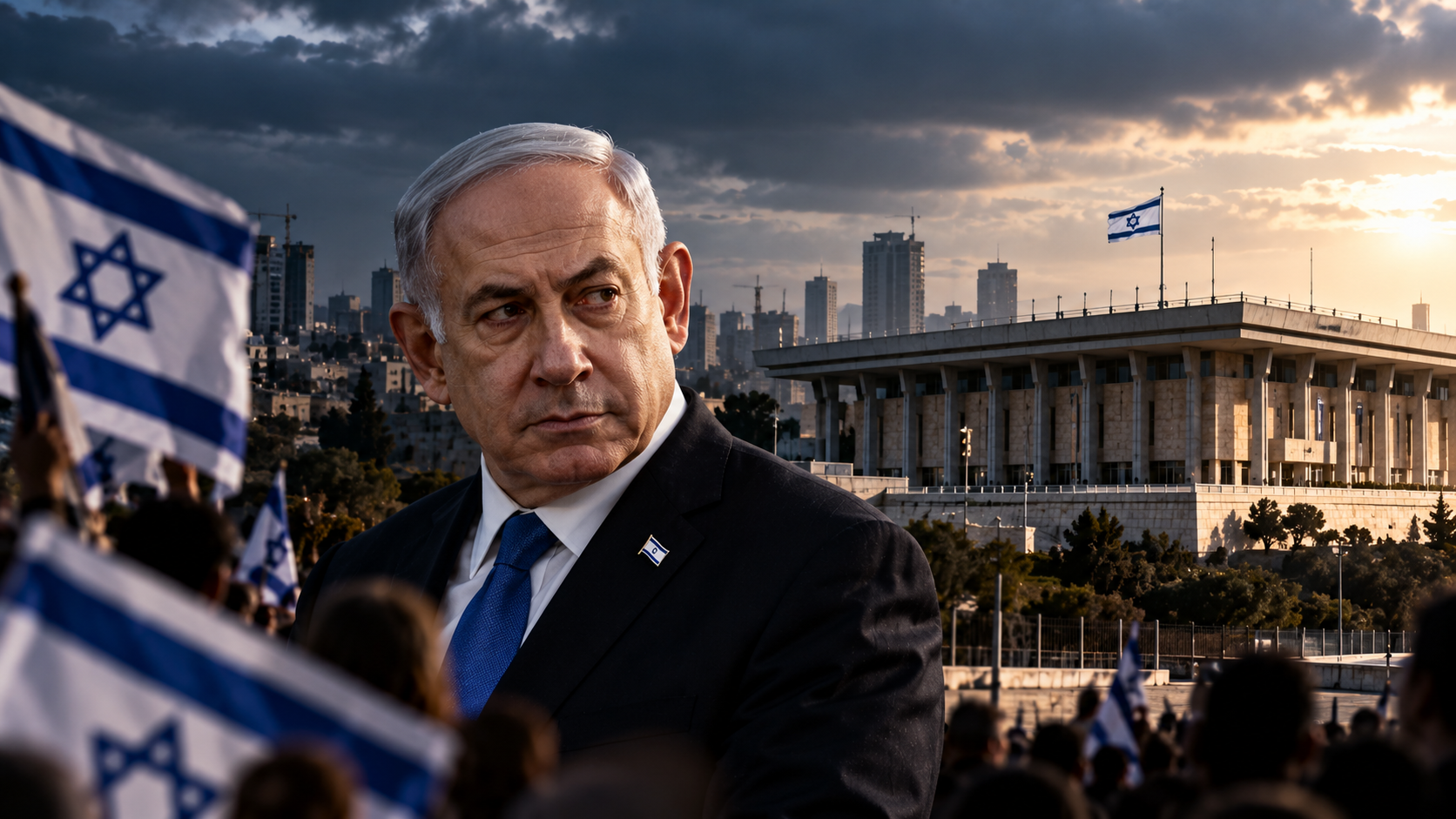
- The parliamentary elections will consequently serve as an important test of whether Netanyahu can retain the political support necessary to continue governing.
- The next government will therefore face difficult decisions about deterrence, military preparedness, regional diplomacy and the long-term management of Israel’s security commitments.
- For Netanyahu and any successor, restoring Israel’s international standing will be a major diplomatic challenge.
- Israel’s parliamentary elections come at a defining moment for the country. Netanyahu’s political future remains closely tied to the public’s assessment of his leadership, but the broader challenge concerns Israel’s strategic direction.
With the election season returning to the global stage, Israel is preparing for its parliamentary elections on October 27. The elections could determine the political future of the governing Likud Party, led by Prime Minister Benjamin Netanyahu. This is arguably one of the most consequential electoral contests in Israel’s recent history, as it comes at a time when the country’s security environment, domestic politics and international standing have undergone significant changes.
These are the first major parliamentary elections in Israel since the October 7, 2023, Hamas attack, which fundamentally altered the country’s security priorities and brought Israel to the centre of international political debate. Although a ceasefire has been established, the conflict’s underlying issues remain unresolved, and the future of Gaza and the wider regional security environment continues to be uncertain. Internationally, Israel has faced growing criticism, including from several European allies over its military operations and objectives in Gaza. Domestically, Netanyahu is facing questions about his leadership, security policies and the future direction of the country.
Netanyahu’s Political Survival and the Divisions Within Israel
It is important to understand that, even before October 7, 2023, Netanyahu was facing significant domestic opposition over his government’s judicial overhaul. The proposed changes sought to increase the elected government’s influence over the judiciary and limit aspects of the Supreme Court’s authority, raising concerns about judicial independence and the balance of power between the executive, legislature and judiciary. These proposals triggered widespread protests, with large numbers of Israelis taking to the streets to oppose the government’s plans.
Following the outbreak of the war in Gaza, the judicial overhaul debate receded from the centre of public attention, although the underlying divisions did not disappear. Netanyahu occupies a deeply polarising position in Israeli politics. For sections of the conservative and far-right electorate, he remains a leader capable of defending Israel against its regional adversaries. For his critics, however, his policies have weakened democratic institutions, intensified domestic divisions and raised questions about political accountability.
These divisions have remained evident throughout the war. The handling of the hostages, the government’s military strategy and the prospects for ending the conflict have generated significant debate within Israeli society. The support expressed for US President Donald Trump during his visit to Israel also highlighted the complicated relationship between domestic political sentiment and the country’s international partnerships. Netanyahu’s political position is therefore being shaped not only by his government’s security record but also by the competing expectations of Israelis who differ over the country’s future.
The parliamentary elections will consequently serve as an important test of whether Netanyahu can retain the political support necessary to continue governing. The central challenge is to reconcile the demands of voters who prioritise military security with those who seek greater accountability, an end to prolonged conflict and a renewed focus on domestic concerns.
The Security Challenge: Gaza, Lebanon and Iran
Israeli politics remains closely tied to the country’s security environment, and the next government will inherit a series of unresolved regional challenges. Since October 2023, Israel has been involved in prolonged military operations, placing substantial demands on its armed forces, economy and civilian population. The country has effectively operated under the pressures of a war economy, with continuing security commitments affecting domestic priorities.
In Gaza, Israel has inflicted substantial damage on Hamas’s military infrastructure and eliminated several senior figures. However, the broader objective of dismantling Hamas as a military and governing force remains unresolved. Although Israel controls significant areas of the enclave, the question of who will govern Gaza in the long term remains a major political and security challenge. Any incoming government will have to address the future administration of the territory, the conditions for lasting security and the possibility of renewed hostilities.
A similar challenge exists in Lebanon, where Israel has inflicted substantial losses on Hezbollah’s leadership and military capabilities. Nevertheless, Hezbollah has not been eliminated as a political and military force, and the prospect of renewed confrontation continues to complicate Israel’s northern security environment. The activities of Yemen’s Houthi movement and the wider regional tensions have added further uncertainty, creating additional risks for Israel and its regional partners.
The confrontation with Iran has introduced another dimension to this security challenge. The objective of weakening Iran’s military capabilities and altering the regional balance of power has carried significant strategic consequences. However, the extent to which these objectives have been achieved remains contested. Military operations have imposed costs, while the broader consequences for regional stability, energy markets and American military commitments have created additional complications.
For Israel’s next government, the central challenge will be to translate military gains into a sustainable strategic outcome. Eliminating individual adversaries or damaging military infrastructure does not necessarily resolve the political and security conditions that allow hostile organisations to survive. The next government will therefore face difficult decisions about deterrence, military preparedness, regional diplomacy and the long-term management of Israel’s security commitments.
Israel’s International Isolation and the Challenge of Restoring Its Image
Another major challenge facing Israel is the deterioration of its international standing since October 2023. Israel’s military campaign in Gaza has generated extensive international criticism, including from several European allies. Concerns over civilian casualties, humanitarian conditions and the conduct of military operations have placed increasing pressure on Israel’s diplomatic relationships.
The consequences extend beyond Europe. In the United States, Israel’s relationship with Washington remains strategically important, but the war has become a more prominent subject of domestic political debate. Sections of the American public have increasingly questioned Israeli military operations and the extent of US support. This has created a more complicated political environment for a relationship that has traditionally enjoyed substantial bipartisan backing.
For Netanyahu and any successor, restoring Israel’s international standing will be a major diplomatic challenge. Israel cannot afford to ignore the long-term consequences of deteriorating relations with its traditional partners. Its ability to maintain security cooperation, diplomatic support and economic partnerships will depend partly on how the next government addresses the humanitarian and political consequences of the conflicts.
The relationship with the United States will be particularly important. Although Washington remains Israel’s most significant strategic partner, differences over regional military operations, the future of Gaza and the wider confrontation with Iran could affect the relationship. The next Israeli government will need to balance its security objectives with the need to maintain international support and avoid further diplomatic isolation.
A Defining Election for Israel’s Political and Strategic Future
Israel’s parliamentary system makes the election particularly consequential. The Knesset consists of 120 seats, and a government requires the support of at least 61 lawmakers to command a majority. No single party has historically secured an outright majority, making coalition-building central to the formation of successive governments. Netanyahu’s Likud Party has relied on alliances with right-wing and religious parties, including those associated with Itamar Ben-Gvir and Bezalel Smotrich.
This time, Netanyahu faces a significant political challenge from opposition figures including Gadi Eisenkot and Naftali Bennett. Their ability to assemble a viable alternative coalition could determine whether the Likud Party retains power. President Trump has also publicly endorsed Netanyahu, underlining the importance of their relationship during a period of regional instability. However, the ultimate outcome will depend on the distribution of seats and the ability of political parties to negotiate a governing majority.
The elections therefore carry consequences that extend well beyond the future of a single prime minister. The next government will have to address unresolved conflicts, determine the future of Gaza, manage continuing security threats and rebuild Israel’s international relationships. It will also face domestic questions surrounding political accountability, judicial independence and the social divisions that have deepened over recent years.
Ultimately, Israel’s parliamentary elections come at a defining moment for the country. Netanyahu’s political future remains closely tied to the public’s assessment of his leadership, but the broader challenge concerns Israel’s strategic direction. Any government that emerges from the election will inherit a demanding domestic and international agenda, with decisions that could shape the country’s security, diplomatic relationships and political trajectory for years to come.

Aayush Pal is a freelance writer on contemporary geopolitical developments. The views expressed in his work are entirely his own.
 Anjali Singh