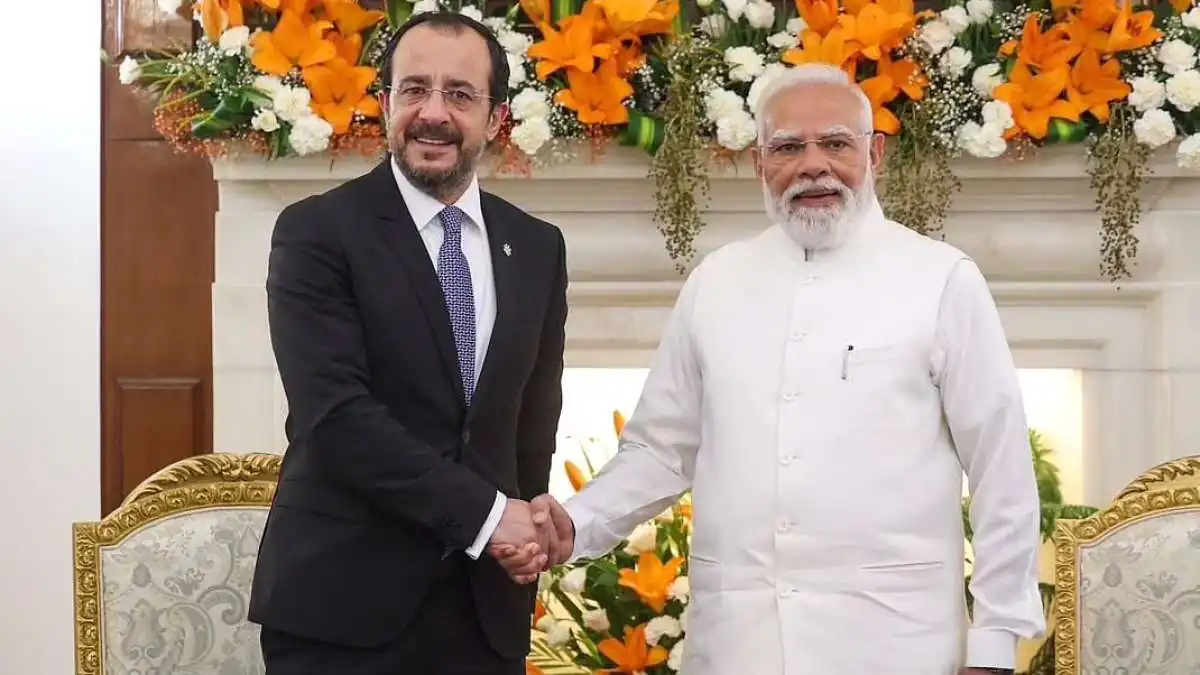
- Both leaders agreed that this would mark the first time for the two countries to begin cooperating at a new level of cooperation across several different sectors such as trade, defence, technology & regional issues.
- The establishment of these two initiatives is indicative of an increasing level of alignment with respect to security issues between India and Cyprus.
- The visit comes just ahead of the 65th anniversary of diplomatic ties between the two countries and is expected to give a new push to bilateral relations and India’s engagement with Europe at a time of changing global alignments.
On 22 May, Indian Prime Minister Modi and Cypriot President Christodoulides conducted extensive bilateral talks; and they concluded that relations between India and Cyprus were going to progress substantially from this point forward, and that their bilateral relationship is going to be upgraded to “strategic partnership” status. Both leaders agreed that this would mark the first time for the two countries to begin cooperating at a new level of cooperation across several different sectors such as trade, defence, technology & regional issues.
During a joint press conference following their delegation-level talks at Hyderabad House, PM Modi described two general areas for continued collaboration between the two countries: defence and security. He specifically talked about expanding cooperation on Cyber Security issues, Maritime Security, and Counter Terrorism; further, both countries agreed to develop a Defence Cooperation Roadmap to be in place between 2026 and 2031, and launch a Cyber Security Dialogue to facilitate continued coordination in security. The establishment of these two initiatives is indicative of an increasing level of alignment with respect to security issues between India and Cyprus.
PM Modi has sent a message of strong economic and investment ties between India and Cyprus. Cyprus is currently one of India’s top ten investors and over the last ten years has doubled its investment. Both countries expressed their continued hope that the India-European Union Free Trade Agreement (FTA) would create new opportunities for trade and investments between them, with the common goal of doubling Cypriot investment in India over the next five. Cyprus also announced that it would establish a trade center in Mumbai to facilitate economic exchanges and business connections.
The two nations have signed a number of agreements focused on migration and mobility, social security, higher education, cultural cooperation and innovation. Joint Working Groups focused on counter-terrorism cooperation and digital technology will further strengthen the institutions of both nations. The introduction of India’s Unified Payments Interface (UPI) in Cyprus in 2022 will likely improve the financial connectivity and digital integration of both nations.
The two leaders have held discussions on major global issues including the ongoing wars in Ukraine and West Asia, re-confirming that they both support a peaceful resolution to these conflicts and wish to engage in negotiations to do so. They also called for immediate action to reform global institutions so they may adequately address unprecedented global challenges. Cyprus has reiterated its support for India’s stance against cross-border terrorism, further enhancing political trust between the nations.
Cyprus’s current role as the Presidency of the EU Council adds to the geopolitical vital role of the meeting. Thus, Indian and Cypriot political analysts are witnessing the strengthening of India-Cyprus ties in the context of wider regional dynamics, including tensions with Turkey and Pakistan. This trilateral cooperation underlines India’s long-term strategic objectives in the Mediterranean and Europe.
The political context of the relationship has elements of both liberal institutionalism and realism. Increased defence cooperation and geopolitical signalling are realist, while trade and economic agreements, which involve many parties and aim to promote trade and cooperation, are liberal institutionalist. A dualistic theoretical approach might allow both states to pursue national interests that are mutually beneficial, while also helping to build a stable, rules-based international order.
The visit comes just ahead of the 65th anniversary of diplomatic ties between the two countries and is expected to give a new push to bilateral relations and India’s engagement with Europe at a time of changing global alignments.

Anjali Singh is a postgraduate student of Political Science and International Relations, a Social Media Analyst, and a former Research Intern at the Indian Council of World Affairs. Views expressed are the author’s own.
 Aayush Pal