
- The QUAD has evolved into an important platform for coordinating the four countries’ strategic and economic interests in the Indo-Pacific.
- For India, a functioning QUAD is strategically valuable. China remains India’s principal long-term security challenge.
- India-US relations deteriorated following Operation Sindoor, India’s military response to the 2025 Pahalgam terrorist attack that killed 26 Indians by Pakistan-based terrorists in Jammu and Kashmir.
- The real test is whether Manila can transform diplomatic optics into strategic outcomes. New Delhi does not merely need a warmer Modi-Trump relationship; it needs a more dependable, trustworthy American partnership.
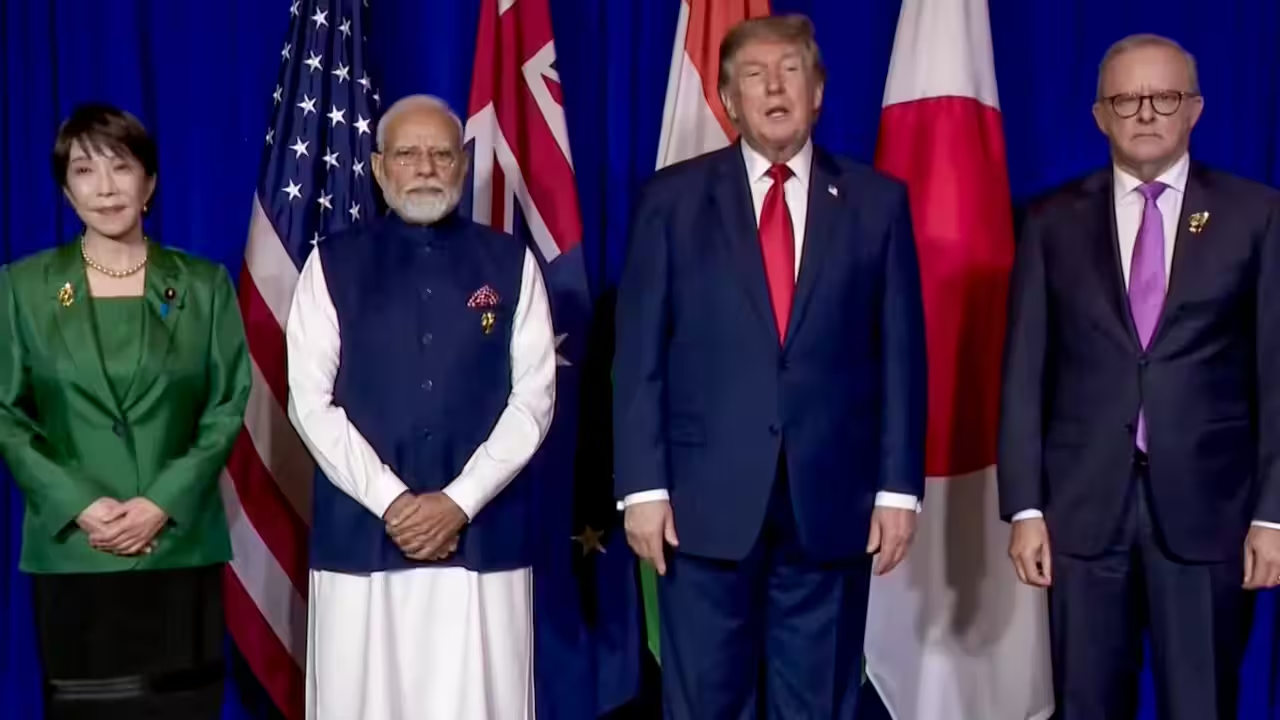
The leaders of the United States, India, Japan, and Australia are expected to meet in Manila on November 17, 2026, on the sidelines of the 49th ASEAN summit. The meeting would be the first QUAD leaders’ summit in two years and the first since Donald Trump returned to the POTUS in January 2025.
For India, however, Manila’s significance extends beyond the future of the QUAD. It offers PM Narendra Modi and President Donald Trump an opportunity to rebuild a relationship that suffered considerable strain following Operation Sindoor last year.
QUAD: Reviving Indo-Pacific Strategic Partnership
The QUAD has evolved into an important platform for coordinating the four countries’ strategic and economic interests in the Indo-Pacific.
Although it is not a formal military alliance, its significance lies in maritime security, regional connectivity, technological cooperation, and maintaining a rules-based order in the Indo-Pacific region.
The Manila agenda is expected to focus on critical minerals, secure commercial shipping lanes, and maritime security. These priorities are particularly important as tensions in the South China Sea and attacks on commercial vessels threaten international trade and energy supplies.
For India, a functioning QUAD is strategically valuable. China remains India’s principal long-term security challenge. Cooperation with Japan, Australia and the United States gives India access to maritime intelligence, advanced technologies, investment and strategic coordination, without requiring it to enter a formal military alliance.
Modi-Trump: Can Manila Repair The Post-Sindoor Bilateral Ties?
The expected interaction between Modi and Trump carries a different significance. India-US relations deteriorated following Operation Sindoor, India’s military response to the 2025 Pahalgam terrorist attack that killed 26 Indians by Pakistan-based terrorists in Jammu and Kashmir.
On May 10, 2025, Trump announced that India and Pakistan had agreed to a ceasefire following US intervention and trade-related negotiations. New Delhi rejected this account, maintaining that cessation of military action was negotiated directly between the two countries’ military establishments, without third-party mediation, especially at the request of Pakistani DGMO.
During their telephonic conversation on June 18, 2025, Modi explicitly conveyed to Trump that India would never accept third-party mediation on matters concerning Pakistan.
Relations subsequently deteriorated further over Washington’s tariff policies, which raised the tariff burden on India at up to 50%, severely straining commercial relations, with widespread criticism by Indians against the United States. The once much-talked-about warm bear hugs and camaraderie between the two leaders soon turned into a long hiatus with no meetings between the two, bilaterally or on the sidelines of international forums.
Manila and tangible outcomes
The Manila gathering could become an important diplomatic moment for Indo-US relations. For Trump, demonstrating continued engagement with India would reinforce American credibility in the Indo-Pacific. For PM Modi, it offers an opportunity to repair a strained relationship without compromising India’s strategic positions.
The real test is whether Manila can transform diplomatic optics into strategic outcomes. New Delhi does not merely need a warmer Modi-Trump relationship; it needs a more dependable, trustworthy American partnership.
References:
- https://www.reuters.com/world/asia-pacific/trump-other-quad-leaders-meet-manila-tuesday-sources-say-2026-11-14/?taid=6af7f68e718669000140a693&utm_campaign=trueAnthem:+Trending+Content&utm_medium=trueAnthem&utm_source=twitter
- https://www.moneycontrol.com/world/pm-modi-to-meet-donald-trump-in-manila-what-s-on-the-agenda-at-quad-leaders-meeting-article-14081280.html
- https://www.firstpost.com/india/operation-sindoor-pakistan-sought-ceasefire-before-india-completed-half-its-strikes-says-ex-cds-14036183.html
- https://indianexpress.com/article/india/pm-modi-donald-trump-india-pakistan-ceasefire-10073281/
- https://www.congress.gov/crs_external_products/R/PDF/R47597/R47597.11.pdf

Niranjan Kadam G is a columnist and digital creator with a keen interest in India’s foreign policy, political science, and global affairs shaping India’s strategic and economic interests. His work focuses on analysing international developments, geopolitics, and their implications for India’s position in the evolving global order. The views expressed are the author’s own.
 Aayush Pal
 Parag Gilada