
- Putin’s visit has once again brought the old Japanese-Russian territorial differences to the centre stage, and this has further raised questions.
- This growing relationship between China, North Korea, and Russia is not only deterring the nexus of South Korea, Japan, and the United States of America, but more importantly, it also talks about the growing Russian aspirations and interests in the Indo-Pacific region.
- Ever since the new leadership of the Liberal Democratic Party of Japan came to power, the Japanese relationship with the United States of America has greatly increased, and this has become a cause of concern for Russia.
- Russia’s move not only brings back flashbacks of the territorial differences between the two countries, but more importantly, it also shows how the regions of the Asia-Pacific are very much militarised and how countries are greatly involved in showcasing power.
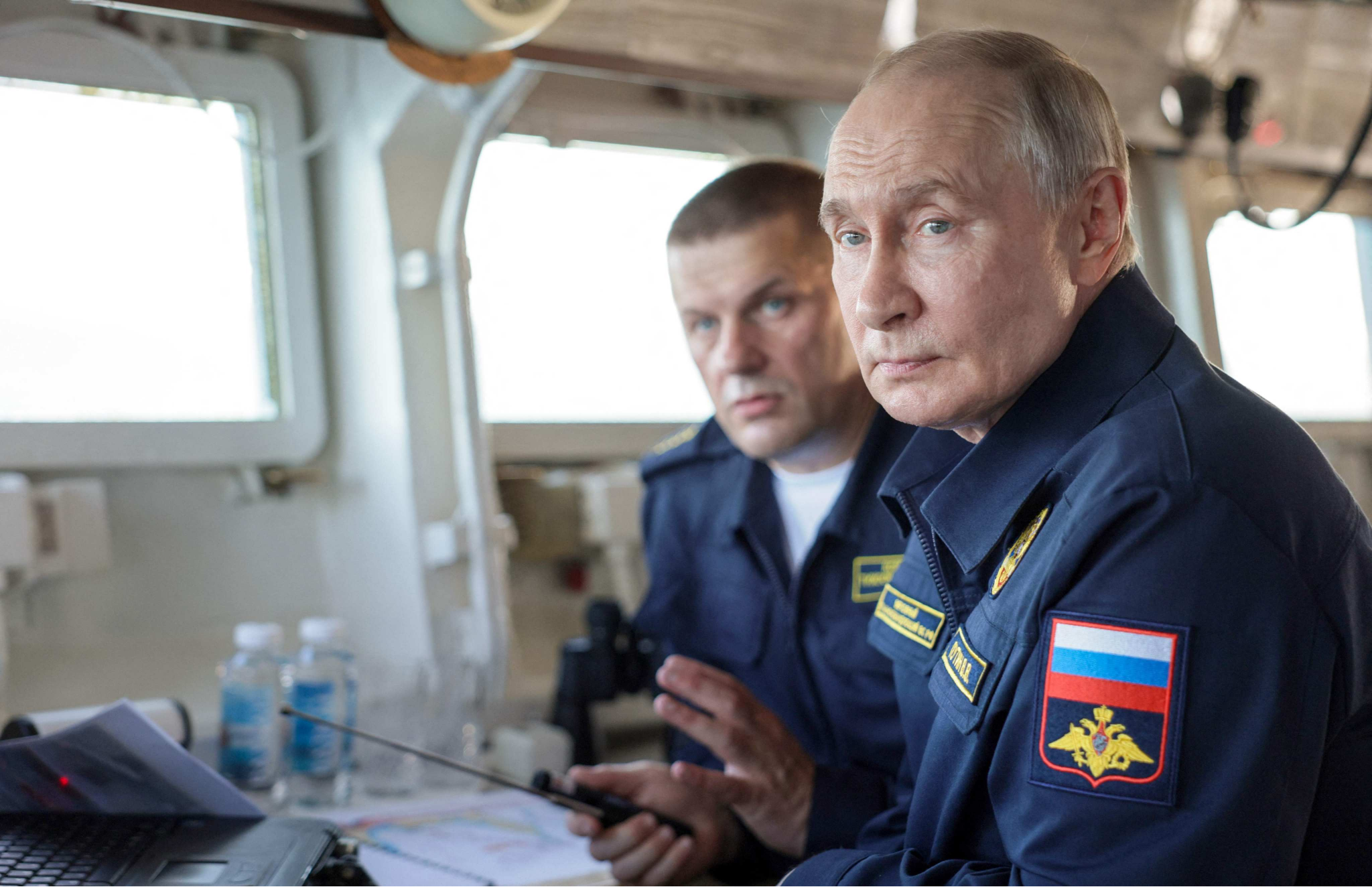
In a significant geopolitical development last week, the Russian President made his first-ever visit to the disputed and contested Kuril Islands, particularly travelling to Iturup. Interestingly, these are the four islands which Japan considers to be its Northern Territories. Putin’s visit has once again brought the old Japanese-Russian territorial differences to the centre stage, and this has further raised questions. This also tells us one particular thing: how the Indo-Pacific and Asia-Pacific have become a new centre of geopolitical reality.
Now, during his visit to the southern island, the Russian President inspected a fish-processing facility, visited a hospital, and carried out other humanitarian work. Now, this has been greatly questioned by the Japanese government. Japanese citizens stated that President Putin’s move should be seen as an aggressive step into the region, and any particular move by Russia against the sovereignty of Japan should be called out and questioned. Now, this tells us about the greater dynamics of the relationship.
Interestingly, Japan has been one such Asian country which has been extremely vocal against Russia and has also provided military aid to Ukraine. Russia has understood Japan’s growing closeness towards Ukraine, and this particular move by President Putin is also directly aimed towards that. But more importantly, it also represents the coming together of two important phenomena. One is the growing military relationship between Russia, China, and North Korea. This growing relationship between China, North Korea, and Russia is not only deterring the nexus of South Korea, Japan, and the United States of America, but more importantly, it also talks about the growing Russian aspirations and interests in the Indo-Pacific region.
Now, the relationship between Japan and Russia has been very interesting. Japan and Russia have shared historical differences, although there was a sense of greater understanding which was being developed under the prime ministership of the late Shinzo Abe. But ever since the new leadership of the Liberal Democratic Party of Japan came to power, the Japanese relationship with the United States of America has greatly increased, and this has become a cause of concern for Russia.
Although Japan is initially dependent on Russia in terms of energy, it is important to note that despite sanctioning Russia, Japan continues to import natural gas from Russia through the Sakhalin oil and gas projects, which has continued to showcase its relationship with Japan.
However, Russia’s move not only brings back flashbacks of the territorial differences between the two countries, but more importantly, it also shows how the regions of the Asia-Pacific are very much militarised and how countries are greatly involved in showcasing power.

Aayush Pal is a freelance writer on contemporary geopolitical developments. The views expressed in his work are entirely his own.
 Anjali Singh
  Archita Gaur