- Access to critical minerals, energy, semiconductors, and related manufacturing capabilities will become the new determinants of power in the contemporary global order.
- The idea is not to completely avoid China, but more importantly to reduce overdependence on China and create a fair and balanced supply chain for critical minerals.
- This reflects a transition in the Quad’s approach, from merely discussing the idea of a balance of power in the region to actively implementing measures on the ground.
- The member countries should continue to strengthen and develop this strategy, not only to increase their stature in the Indo-Pacific region but also to prevent the emergence of an unchecked power imbalance in the region.
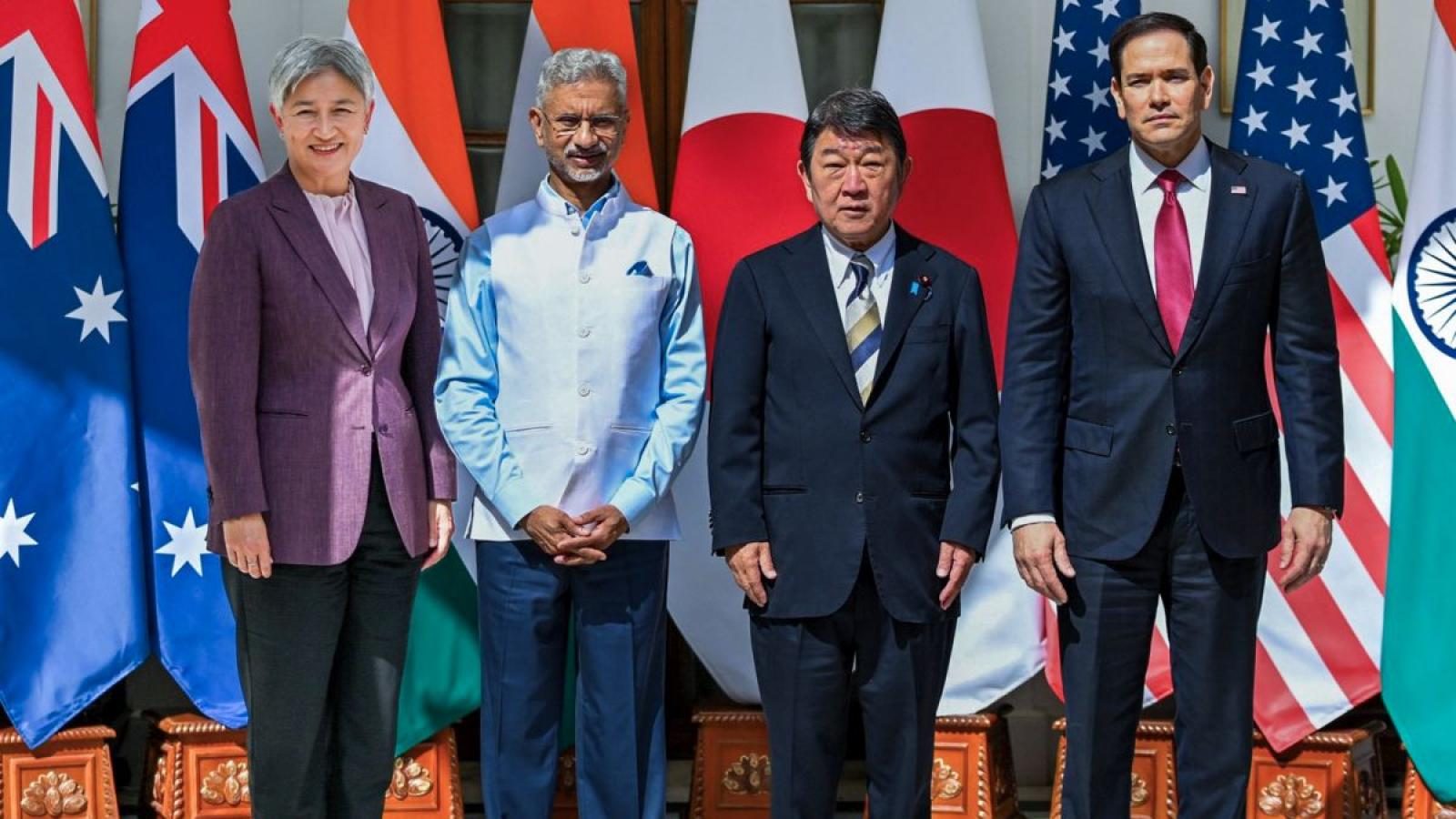
In a major geopolitical move, the Quad foreign ministers held a meeting in New Delhi. This came during the four-day mega visit of the United States Secretary of State, Marco Rubio, to India. The Quad, which has been a founding pillar for geopolitical connectivity among the four Indo-Pacific nations, including India, Japan, Australia, and the United States of America, witnessed a highly anticipated meeting amid growing uncertainty regarding the future of the grouping. Over the last few years, the grouping had largely remained stagnant. This particular meeting was the need of the hour not only for the member countries but also to continue building momentum in relations and cooperation regarding the Indo-Pacific.
Quad’s Growing Importance in Indo-Pacific Geopolitics
The Quad has greatly evolved in contemporary geopolitics. From being only a grouping focused on the Indo-Pacific, it has now become an international headline. Countries around the world have started to discuss it and regard it as a major force to reckon with. Different countries have shared different perspectives and interpretations regarding the Quad. For China, the Quad is considered an Asian NATO. For Southeast Asian countries, the Quad is viewed with a cautious approach, while for Pacific Island countries, the Quad is seen as an engine of growth, prosperity, and infrastructure development.
This major Quad meeting was chaired by the Indian External Affairs Minister Dr S. Jaishankar and saw the participation of the United States Secretary of State Marco Rubio, Australian Foreign Minister Penny Wong, and Japanese Foreign Minister Toshimitsu Motegi. Several important decisions were taken during the Quad meeting, including major cooperation in critical minerals and energy.
Critical Minerals and Energy as the New Strategic Priority
This became one of the biggest headlines emerging from this year’s Quad meeting in New Delhi. It clearly reflects that the member countries of the Quad now understand that geopolitical competition is no longer determined only by military power. Access to critical minerals, energy, semiconductors, and related manufacturing capabilities will become the new determinants of power in the contemporary global order. This is the reason why the member countries have made critical minerals one of the key building blocks of cooperation.
The member countries proposed a new strategy for coordinated investment in extraction, refining, logistics, storage, and technology partnerships related to cobalt, lithium, graphite, and nickel. The idea is not to completely avoid China, but more importantly to reduce overdependence on China and create a fair and balanced supply chain for critical minerals, as these minerals are becoming the new determinants of global growth, prosperity, and the balance of power in world geopolitics.
Maritime Surveillance and Port Infrastructure Development
The next major decision taken during the meeting was related to maritime surveillance and port infrastructure. As Dr Jaishankar often says, maritime democracies are coming together. The idea is to maintain transparency and freedom of navigation in Indo-Pacific waters and to avoid any unilateral changes regarding maritime boundaries and control. This is why maritime surveillance has become extremely important, particularly in the context of China’s growing dominance and increasingly assertive behaviour in the region.
Several Southeast Asian countries, including the Philippines and Vietnam, have witnessed how China has increased tensions in the region by building artificial islands and encroaching upon maritime territories. Therefore, there is now a greater need for maintaining a maritime balance of power. The focus on port infrastructure is another important and relatively new development seen during this Quad meeting.
This clearly suggests that the Quad countries have now started to give a more commercial and strategic dimension to the grouping. Through the development of ports, they seek to expand commercial activities, but more importantly, they also seek to create a strategic presence in the region. This reflects a transition in the Quad’s approach, from merely discussing the idea of a balance of power in the region to actively implementing measures on the ground. These ports serve both military and economic purposes and provide a greater sense of deterrence and coordination among member countries.
Another major decision taken during the meeting was related to the Maritime Domain Awareness Initiative, which also emerged as an important development during the discussions.
President Trump’s Indo-Pacific Strategy and India’s Role in the Quad
This major Quad meeting was particularly important under President Trump’s leadership. Earlier, many believed that President Trump might not carry forward the same momentum from his first administration. During his first term, President Trump was extremely vocal regarding the Quad and strongly positioned it as a balancing mechanism against China. However, in his second term, a somewhat different strategy has emerged where President Trump appears to be attempting to build a new understanding with China. His bilateral visit to China highlighted this approach. At the same time, his economic policies targeting Quad member nations also created certain concerns among the member states.
Despite these concerns, this meeting clearly reflects that President Trump remains determined to strengthen the Quad. Although he may be seeking military and economic understandings with China, it does not mean that the United States of America is willing to compromise on its Indo-Pacific aspirations. The United States understands the importance of creating a strong deterrence mechanism against China.
The meeting also comes as a major boost for India. India has remained an active player in the Quad, although recently it found itself somewhat isolated, especially after the Ukraine war. The three other Quad countries, including Japan, Australia, and the United States, attempted to influence India to take a stronger position against Russia. However, India not only remained neutral but was also among the few countries that refused to impose sanctions on Russia.
India’s strategy has consistently been that matters related to the Indo-Pacific should remain limited to the Indo-Pacific and should not be connected with other geopolitical conflicts. Therefore, India would be satisfied to see that the new strategy and cooperation framework remain focused primarily on Indo-Pacific matters.
For Japan and Australia as well, this meeting holds significant importance. Japan continues to witness growing Chinese military activity in the region, while Australia also sees the Quad as an important mechanism to create deterrence against China. Hence, the Quad strategy and the understandings achieved during this meeting are important for all member countries.
The member countries should continue to strengthen and develop this strategy, not only to increase their stature in the Indo-Pacific region but also to prevent the emergence of an unchecked power imbalance in the region.
Reference:

Aayush Pal is a freelance writer on contemporary geopolitical developments. The views expressed in his work are entirely his own.
 Anjali Singh
  Archita Gaur