
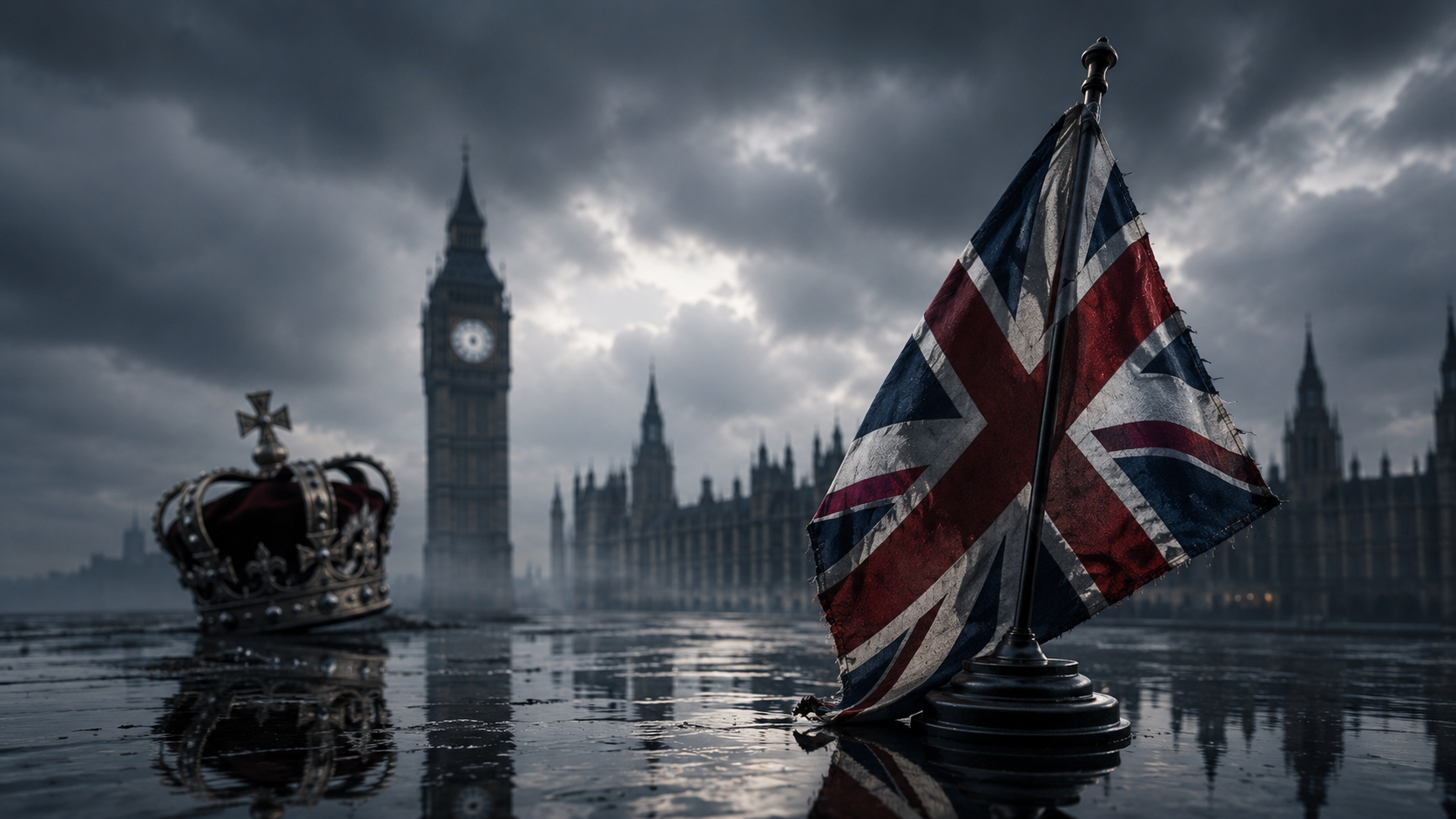
- Six prime ministers in ten years, and none of them have been able to complete their term in office. The United Kingdom is currently witnessing one of the most politically unstable periods in its history.
- This comes after the Labour Party performed poorly in the recent local elections in the United Kingdom, which were conducted last month, where Reform UK and the Green Party saw major gains.
- More importantly, there has been the issue of immigration, where large numbers of immigrants have been allowed to enter the country under the Labour administration.
- Reform UK, however, is considered the biggest beneficiary of the situation. The party is already surging in popularity, has made immigration its central political issue, and will likely capitalise on the current circumstances.
Six prime ministers in ten years, and none of them have been able to complete their term in office. The United Kingdom is currently witnessing one of the most politically unstable periods in its history, where being the Prime Minister, which is considered one of the most prestigious constitutional positions in the Western Hemisphere, has now become a new curse. At a time when leadership needs to be committed, and the country needs to be stabilised, the United Kingdom is undergoing one of the most complicated democratic periods since its establishment, as yet another prime minister has not completed his term.
This comes as the United Kingdom’s Prime Minister from the Labour Party, Keir Starmer, resigned from office after being elected in July 2024. He was only in office for a period of two years. Despite the Labour Party winning the 2024 general election in a landslide, Prime Minister Starmer stepped aside at a time when the United Kingdom was witnessing great challenges both domestically and internationally.
Suffering from economic stagnation, the country has been given a major responsibility in funding the war. The country has also been witnessing a major immigration issue. The United Kingdom has seen troubles all around. Prime Minister Starmer, who was facing major party struggles and was running low on public approval ratings, finally succumbed to the crisis. For months, he had been saying that no matter what happened, he would continue to be Prime Minister and resist all internal and external challenges. However, amid a major party revolt, he resigned from office.
Reasons Behind Starmer’s Resignation
The reasons for his resignation are multiple. He had been running low on public approval ratings. This comes after the Labour Party performed poorly in the recent local elections in the United Kingdom, which were conducted last month, where Reform UK and the Green Party saw major gains. The poor performance of Labour in the local elections precipitated calls for the Prime Minister’s resignation.
Economic and Immigration Challenges
Along with that, the United Kingdom has been suffering economically, with unemployment rising, inflation increasing, and people not necessarily being happy with the state of affairs. The Ukraine war has further created strain on the treasury of the United Kingdom, as the country has been one of the major military contributors to Ukraine, especially since the return of President Trump.
More importantly, there has been the issue of immigration, where large numbers of immigrants have been allowed to enter the country under the Labour administration. People across the United Kingdom have been raising concerns, particularly in terms of domestic issues, security concerns, and the belief that they do not want their culture to be diluted. Many believe that multiculturalism has significantly diluted the identity of the British people. Along with that, multiple cases have emerged where immigrants have been involved in criminal activities, further escalating the issue.
We have seen how the movement led by far-right activist Tommy Robinson, through his marches in September of last year and May of this year, saw millions of Britons turning out, showing that the Labour Party is losing support.
Controversies Surrounding the Labour Government
There was another concern against the Labour Party. Critics argue that the party has been going after independent voices, with those critical of the Labour Party or the government facing charges and, in some cases, imprisonment. Critics claim that the United Kingdom has increasingly curbed independent voices over the last two years and has detained more people for speech-related offences than many would expect from a liberal democracy.
On top of that, there have been other challenges. Rupert Lowe submitted a committee report regarding Pakistani grooming gangs, which allegedly abused more than 250,000 white British girls over several decades. Critics argue that these gangs were allowed to operate because of failures in governance and immigration policies. They also claim that successive governments failed to adequately address the issue. The Labour Party has nevertheless continued to support higher levels of immigration. All of this has contributed to the resignation of Prime Minister Starmer.
Another issue concerns Peter Mandelson, the United Kingdom’s Ambassador to the United States. Critics within the Labour Party who demanded Starmer’s resignation have pointed to Mandelson’s reported links with Jeffrey Epstein following renewed attention to the Epstein files. Mandelson was known to have had a friendship with Epstein, and critics have raised questions about his appointment. Conservative and Reform politicians have accused Prime Minister Starmer of poor judgment in maintaining close political ties with Mandelson and have attempted to connect the controversy to the broader crisis facing the government.
Who Replaces Starmer and What Comes Next?
Another question is who may replace Prime Minister Starmer. One of the biggest names is senior Labour politician Andy Burnham. He recently won the Markfield by-election, making a strong statement within Labour Party politics and the wider political landscape of the United Kingdom. He is expected to file his nomination and could emerge victorious, becoming the new Prime Minister from the Labour Party.
However, the question remains whether he will be able to settle the crisis. The crisis in the United Kingdom also gives an opportunity to rival parties, particularly the Conservatives and Reform UK. However, for Britons to trust the Conservatives again may be difficult. Brexit was one of the major projects of the Conservative government, and over a span of seven years, the Conservatives produced several prime ministers, many of whom failed to complete their terms. They have also failed to solve the immigration issue, and one of their biggest political decisions has backfired and contributed to economic stagnation.
Looking at the recent local elections, the Conservatives are nowhere near recovering from the political mess surrounding them. Reform UK, however, is considered the biggest beneficiary of the situation. The party is already surging in popularity, has made immigration its central political issue, and will likely capitalise on the current circumstances.
But even for the Reform Party, the major challenge would not only be to tackle the immigration saga but also to focus on the economy and foster a stronger relationship with the United States of America. As we have seen under Prime Minister Starmer, the relationship between the United Kingdom and the United States reached a historic low, with President Trump openly criticising Prime Minister Starmer for not working effectively with his administration.
Therefore, the bigger challenge for the Reform Party would be to strengthen relations with the United States, address the immigration issue, revive the economy, and also navigate a new pathway regarding the Ukraine war. These challenges will ultimately determine whether the party can transform its growing popularity into effective governance and long-term political success.

Aayush Pal is a freelance writer on contemporary geopolitical developments. The views expressed in his work are entirely his own.
 Archita Gaur
  Hridbina Chatterjee
  Divyanka Tandon