
- With bilateral trade reaching approximately US$19.8 billion in 2025, India and Malaysia hope to further expand it in the coming years, given the high potential in their partnership.
- The priorities of Kuala Lumpur’s leadership strongly resonate with New Delhi’s commitments and its regional outlook, like the shared vision for a free, open, inclusive and rules-based order in the Indo-Pacific.
- The continued bilateral collaboration and collective participation in multilateral partnerships will further contribute to fostering regional cooperation and building balanced relations in the shared neighbourhood.
India’s relationship with Malaysia is multi-faceted and has strengthened considerably in recent years. In 2024, the two countries elevated their bilateral ties to a Comprehensive Strategic Partnership that marked a significant milestone in their relations. The recent visit of India’s Prime Minister to Malaysia represents another step forward in their evolving partnership.
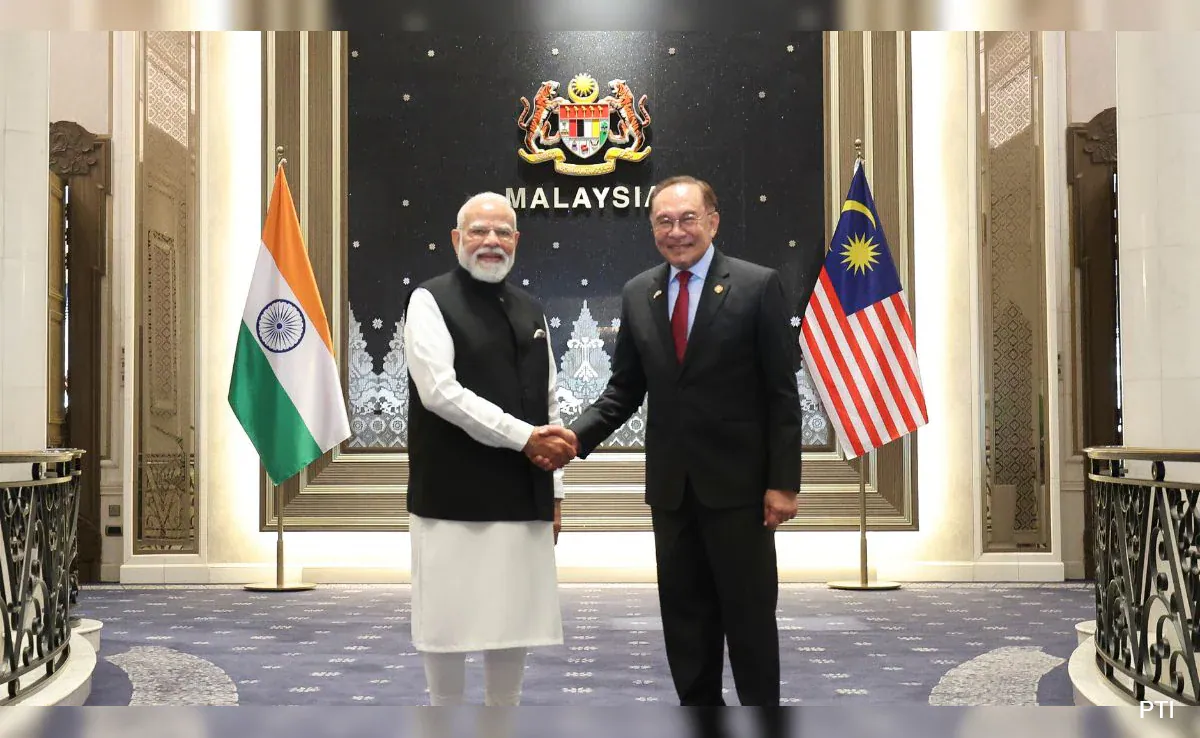
On 8th February 2026, Prime Minister Modi was welcomed by his Malaysian counterpart, H.E Anwar Ibrahim, in Kuala Lumpur, where the PM was given a ceremonial welcome at the Perdana Putra complex, which functions as the centre of Malaysia’s government. The visit was aimed at further deepening India-Malaysia ties and promoting stronger collaborations, during which the leaders held wide-ranging discussions and agreed to advance cooperation in key sectors, including economy, security, culture and technology.
On the economic front, the two Prime Ministers reviewed the progress in trade and investment between the two countries. With India-Malaysia’s bilateral trade reaching approximately US$19.8 billion during the period 2024-2025, the leaders expressed hope about further expanding the existing trade in the coming years, given the high potential in their partnership. They also discussed promoting the use of local currencies in bilateral transactions, which can ease cross-border activities as well as reduce transaction costs. In this context, Payments Network Malaysia (PayNet) and NPCI International Limited (NIPL) have collaborated and signed an agreement to enable cross-border QR-based digital payments between India and Malaysia.
Over the years, Malaysia has become a significant partner for India and is our third-largest trading partner among ASEAN nations at present. Likewise, India has been an important investment destination for Malaysian companies. However, despite steady engagement, India and Malaysia’s economic partnership has yet to realise its full potential as their bilateral trade has experienced phases of stagnation and remains largely concentrated in conventional sectors such as palm oil cultivation. With this in view, the leaders during the meeting acknowledged the need for greater diversification beyond traditional areas of engagement and discussed enhancing cooperation in emerging sectors like semiconductors, digital economy, healthcare, artificial intelligence, renewable energy, food security, green technology, among others.
Defence and security is another key pillar of India-Malaysia relations and has witnessed extensive cooperation over the last few years, such as through regular conduct of joint exercises, training initiatives and exchange programs. Some of the notable examples include the inaugural India-Malaysia Security Dialogue, the Exercise Harimau Shakti between the armies of India and Malaysia, and Exercise Samudragupta Lakshamana conducted between the Indian Navy and the Royal Malaysian Navy. These recent engagements reflect the increased cooperation in both defence and maritime domains between the two nations. Moreover, the Malaysia-India Defence Cooperation Committee (MIDCOM), a collaboration between the defence industries of the two sides, is expected to expand progressively.
India and Malaysia’s shared vision also includes strengthening regional security and eliminating cross-border terrorism. In their joint statement, the two leaders strongly condemned terrorism and vowed zero tolerance towards it. They agreed to advance cooperation in security measures, including information sharing, intelligence exchanges and efforts to counter terror financing. Additionally, India and Malaysia also served as co-chairs of the Counter Terrorism Working Group at the ASEAN Defence Ministers’ Meeting Plus (ADMM Plus) held in November 2025, which again highlighted their collaborative role in addressing security challenges in the region.
The present India-Malaysia bilateral relations are rooted in shared culture and values as well as deep historical and civilisational linkages. During the meeting, PM Modi reiterated that India and Malaysia share a “special relationship”. Malaysia is currently home to a rich Indian diaspora, with approximately 2.9 million people of Indian origin residing in the country. Diplomatic relations between the two sides were established in 1957 and have grown progressively since then. Reflecting on this strong foundation, the two leaders exchanged views on further strengthening the existing cultural connections, such as through increased people-to-people connectivity, tourism cooperation, enhanced youth engagement and deeper academic collaboration, such as through faculty and student exchange programmes and expanded vocational training initiatives. Some progress in the education and skill development sector is visible in the ongoing cooperation between Nalanda University and the University of Malaya, as well as between the Indian Institute of Technology Madras and the Advanced Semiconductor Academy in Malaysia.
Such bilateral visits, therefore, highlight the importance of dialogue and diplomacy in the contemporary global environment. However, what is particularly remarkable about this visit is that over eleven cooperation agreements were signed between India and Malaysia in newer fields like anti-corruption, disaster management, health, and national security training, among others. During the visit, a proposal was made to also open India’s first Consulate in Sabah, Malaysia, to further deepen their diplomatic ties. Such advancements in India-Malaysia relations not only broaden their existing bilateral ties but also strengthen India’s relations with ASEAN at large. For instance, Malaysia supported India in the review of the ASEAN-India Trade in Goods Agreement (AITIGA). It also welcomed India’s upcoming BRICS Chairmanship in 2026. In a similar gesture, PM Modi also appreciated Malaysia’s ASEAN Chairmanship for 2025 for successfully leading and navigating the grouping through a year marked by regional uncertainties and global opportunities.
This recognition has come in response to Malaysia playing a stabilising regional role at a time when the Southeast Asian region faced intense geopolitical and intra-regional tensions. Foreign affairs analysts have widely agreed that Kuala Lumpur delivered effectively during its leadership by strategically balancing the uncertainties and at the same time upholding the core values of inclusivity, sustainability and global cooperation. Some of the defining moments under Malaysia’s ASEAN Chairmanship include the Kuala Lumpur Peace Accord, which sought to ease tensions arising from the Cambodia-Thailand conflict, thereby reflecting.
ASEAN’s commitment to conflict resolution of internal matters. Furthermore, the unresolved South China Sea dispute and the expanding footprint of external forces impacting the region’s stability were other major impediments during the course of Malaysia’s Chairmanship.
However, despite the challenges, Malaysia managed to preserve the core value of ASEAN through its emphasis on sustainability and inclusivity. For instance, ASEAN under Malaysia’s leadership witnessed the milestone moment of the expansion of the grouping with the inclusion of Timor-Leste as its 11th member. It also reflected on future goals of the bloc, like strong economic growth and climate action. Malaysia, therefore, played a stabilising and diplomatically balanced role and upheld ASEAN centrality by focusing on advancing its role in the larger Indo-Pacific region. It is these priorities reflected during Kuala Lumpur’s leadership that also strongly resonate with New Delhi’s commitments and its regional outlook, like the shared vision of India, Malaysia and ASEAN’s shared for a free, open, inclusive and rules-based order in the Indo-Pacific. PM Modi’s visit and appreciation of Malaysia’s leadership thus reflect the strong bilateral goodwill between the two nations and signal India’s intent to collaborate with potential partners from Southeast Asia to collectively contribute to building a stable regional order.
To conclude, this visit and subsequent agreements therefore indicate a fresh and renewed approach to India-Malaysia bilateral relations following a period of slight stagnation, and with Malaysia also facing challenges during its ASEAN chairmanship majorly caused by rising geopolitical tensions in the region. The visit hints towards a deeper India-Malaysia strategic partnership in the coming years as both sides have demonstrated a strong willingness to strengthen their existing relations and expand cooperation across diverse sectors such as counter terrorism and intelligence sharing. Additionally, with 2026 designated as the India-ASEAN Maritime Year, both Malaysia and India envision comprehensive engagement in the defence and maritime sector. Other domains for potential partnership in the coming future are energy, tourism and healthcare that will further boost people-to-people ties between the two nations.
Such collaborative engagements serve the dual purpose of being mutually beneficial while at the same time advancing India-Malaysia relations. Furthermore, India’s commitment to strengthening ties with Malaysia reflects its broader Act East Policy and its vision towards the Indo-Pacific, as both sides remain committed to a free, open, inclusive and rules-based Indo-Pacific, thereby reflecting India and ASEAN’s shared goal for the region. Their continued bilateral collaboration and collective participation in multilateral partnerships will further contribute to fostering regional cooperation and building balanced relations in the shared neighbourhood.
References:
- https://www.mea.gov.in/press-releases.htm?dtl/40654/Official_Visit_of_Honble_Prime_Minister_Shri_Narendra_Modi_to_Kuala_Lumpur_Malaysia_February_07 08_2026
- https://www.reuters.com/world/asia-pacific/indias-modi-visits-malaysia-boost-trade-security- ties-2026-02-08/
- https://www.pib.gov.in/PressReleasePage.aspx?PRID=2225062®=3&lang=1
- https://www.externalaffairs.in/2026/02/India-Malaysia-Elevate-Comprehensive-Strategic-Part nership-During-Prime-Minister-Modi-Official-Visit.html
- https://www.pmindia.gov.in/en/news_updates/india-malaysia-joint-statement-on-the-occasion-of-the-official-visit-by-pm-of-india-to-malaysia/

Faareha is a PhD scholar awaiting her final defence and has worked on India’s Act East Policy. She is currently a Non-Resident Fellow at the Subhas Chandra Bose Chair on International Relations at Chanakya University. She has previously completed her six-month research internship at India’s Council of World Affairs. Views expressed are the author’s own.
 Aayush Pal
  Dr Nanda Kishor