
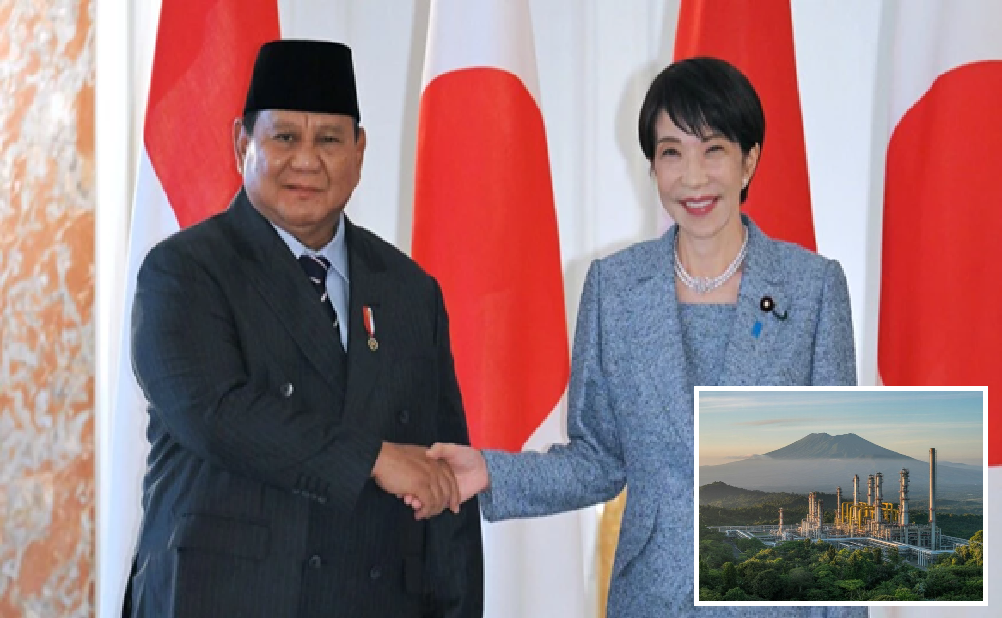
- Japan and Indonesia have pledged to strengthen coordination on energy security amid rising tensions in West Asia and disruptions to global energy supplies.
- From a liberal institutionalist viewpoint, the Japan-Indonesia partnership reflects efforts to build cooperative frameworks that promote stability and interdependence.
- Part of the motivation behind Japan’s outreach to Southeast Asia is a desire to offset China’s increasing influence in the area.
Japan and Indonesia have pledged to strengthen coordination on energy security amid rising tensions in West Asia and disruptions to global energy supplies, underscoring how regional alliances are evolving amid global geopolitical issues. During negotiations in Tokyo, Indonesian President Prabowo Subianto and Japanese Prime Minister Sanae Takaichi announced the accord, which comes as the U.S.-Israeli war with Iran jeopardises essential oil and gas supplies that cross the Strait of Hormuz.
From a realist perspective, the action shows how states are acting strategically in an increasingly unpredictable international system to obtain vital resources. Japan is extremely vulnerable to supply interruptions because it imports almost 93% of its oil from West Asia. Indonesia becomes an important partner in reducing this risk because it is a significant supplier of coal and liquefied natural gas. Both nations may improve their energy security and reduce their vulnerability to external shocks by strengthening their bilateral ties.
The crisis underscores the importance of energy geopolitics, where control over supply chains and transit routes directly influences national power. The Strait of Hormuz, a chokepoint for global energy trade, has become a focal point of instability. Japan’s response—releasing oil reserves, subsidising fuel, and increasing reliance on coal-fired power—demonstrates a pragmatic adaptation to shifting conditions, even as it balances long-term sustainability goals.
From a liberal institutionalist viewpoint, the Japan-Indonesia partnership reflects efforts to build cooperative frameworks that promote stability and interdependence. Beyond energy, both countries have expanded collaboration in critical minerals, artificial intelligence, and infrastructure development. These initiatives aim to create resilient supply chains and reinforce economic ties, reducing the likelihood of conflict through mutual benefit.
Given that both leaders manage both internal and external influences, the agreement is also consistent with two-level game theory. For Japan, keeping steady energy supplies is crucial to preserving both public trust and economic stability. Indonesia’s long-term development objectives are supported by drawing in international investment and expanding industrialisation, especially in areas like nuclear energy and rare earths. As a result, the collaboration supports both national goals and global strategic positioning.
The collaboration also impacts more general Indo-Pacific geopolitics. Part of the motivation behind Japan’s outreach to Southeast Asia is a desire to offset China’s increasing influence in the area. Tokyo upholds its vision of a “Free and Open Indo-Pacific” by fortifying its relationship with Indonesia, while Jakarta continues to take a non-aligned position by interacting with other international partners.
In the end, the energy relationship between Japan and Indonesia serves as an example of how international disputes can spur regional cooperation. States are reevaluating alliances and policies as the West Asia crisis transforms energy markets, proving that geopolitical rivalry and economic security are still closely linked in the modern international order.

Anjali Singh is a postgraduate student of Political Science and International Relations, a Social Media Analyst, and a former Research Intern at the Indian Council of World Affairs. Views expressed are the author’s own.
 Hridbina Chatterjee
  Diksha Bharti
  Kumar Satish