
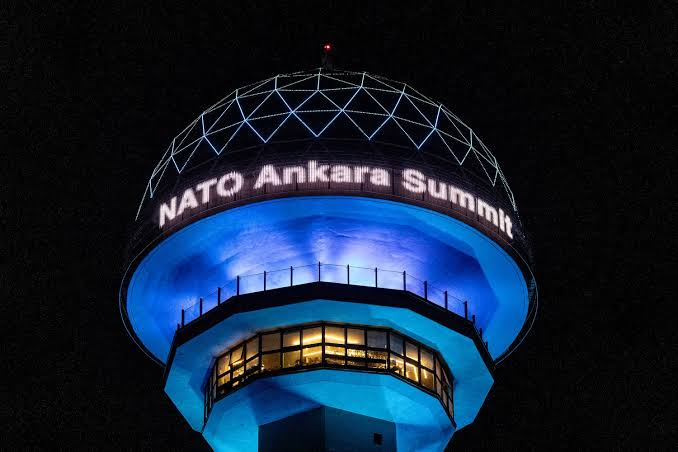
- The venue itself reflects shifting strategic priorities, at a time when security concerns are escalating across the Black Sea, the Middle East and beyond. The importance of the summit lies as much in what NATO decided as in where it chose to meet.
- The decision to hold the summit in Ankara was not merely a matter of protocol. It was an acknowledgement that the most urgent security challenges facing the Alliance are now converging in Turkey’s strategic neighbourhood and that the Alliance’s future will increasingly be shaped by that geography.
- The selection of Ankara is not just about Turkey’s geographical position, but reflects a broader reorientation of NATO’s understanding of security. The Alliance is no longer reacting to isolated regional problems, but to an increasingly interdependent security environment.
- Ultimately, what makes the Ankara Summit significant is not merely the decisions it produces, but the strategic message conveyed by its location. The Alliance’s choice of Ankara reflects the growing relevance of the region where European, Black Sea and Middle Eastern security concerns converge.
The location of a summit can reveal as much about geopolitics as the communiqués issued at its conclusion. By selecting Ankara as the site of the 2026 NATO Summit, the alliance sent a signal that went beyond diplomatic convenience. The venue itself reflects shifting strategic priorities, at a time when security concerns are escalating across the Black Sea, the Middle East and beyond. The importance of the summit lies as much in what NATO decided as in where it chose to meet.
Why Ankara?
The importance of Turkey to NATO is rooted in its geography. Located at the crossroads of Europe and Asia, Turkey borders the Black Sea, lies adjacent to the Middle East, and controls the Bosporus and Dardanelles, straits that connect the Black Sea to the Mediterranean and are governed by the Montreux Convention. Since Russia’s full-scale invasion of Ukraine in 2022, the Black Sea has once again become a major axis of strategic competition, making Turkey’s role in regulating maritime access through the straits much more consequential.
Is Ankara’s role simply a Black Sea matter? Turkey sits at the nexus of multiple security theatres: the war in Ukraine, instability and uncertainty in Syria, Iraq, the Eastern Mediterranean, and even the South Caucasus. It is also one of the few NATO members capable of engaging simultaneously across Europe, the Middle East, and the wider Eurasian region. Although Ankara has long pursued a more independent foreign policy, including maintaining open channels of communication with Moscow, it remains a key pillar of the Alliance’s southern and south-eastern flank.
In this context, the decision to hold the summit in Ankara was not merely a matter of protocol. It was an acknowledgement that the most urgent security challenges facing the Alliance are now converging in Turkey’s strategic neighbourhood and that the Alliance’s future will increasingly be shaped by that geography.
A Shift in NATO’s Strategic Thinking:
The selection of Ankara is not just about Turkey’s geographical position, but reflects a broader reorientation of NATO’s understanding of security. The Alliance is no longer reacting to isolated regional problems, but to an increasingly interdependent security environment.
The war in Ukraine has brought the Black Sea back to the heart of European security, while instability in the Middle East continues to generate spillover effects in the Alliance through migration, energy insecurity, and regional conflict. These trends, coupled with growing competition for access to maritime routes and critical infrastructure, have blurred the boundaries between regional theatres.
Against this background, Ankara emerges as the point where these challenges converge. The choice of location for the summit also signals NATO’s recognition that future security concerns will be increasingly interlinked, and that addressing them requires a broader strategic perspective as opposed to a theatre-specific outlook.
Turkey: NATO’s Most Complex Ally
Turkey’s growing strategic importance does not mean that its relationship with NATO has been without strain. In recent years, Ankara has pursued a more independent foreign policy, from the purchase of the Russian S-400 air defence system to maintaining diplomatic channels with Moscow after Russia’s invasion of Ukraine. Those decisions have at times placed Turkey at odds with several Alliance members.
Yet these tensions have not reduced Turkey’s strategic importance. Instead, they reveal a paradox at the heart of NATO: that one of its most indispensable members is also one of its most independent. Turkey’s ability to engage with Russia, influence developments in Syria and the South Caucasus, and to affect security calculations in the Black Sea gives it a diplomatic reach that few other Allies enjoy. The decision to hold the summit in Ankara highlights this reality. NATO may not always agree with Turkey’s strategic decisions, but it increasingly realises that the Alliance’s changing security environment requires Turkey as a partner to address its challenges, not merely as a member.
Conclusion
Ultimately, what makes the Ankara Summit significant is not merely the decisions it produces, but the strategic message conveyed by its location. As NATO confronts an increasingly complex security environment, its strategic focus is no longer confined to a region or adversary. The Alliance’s choice of Ankara reflects the growing relevance of the region where European, Black Sea and Middle Eastern security concerns converge. Turkey’s relationship with NATO will continue to be characterised by both cooperation and contention, but its geographic position ensures that it will remain indispensable to the Alliance’s strategic calculus. In that sense, the Ankara Summit may be remembered less for its communiqué than for what its venue revealed: that in an era of internetworked threats, geography has once again become central to a grand strategy.

Archita Gaur is a postgraduate student at the School of International Studies, JNU. She specialises in the World Economy and has a strong interest in public policy, economic research, and governance. The views expressed are the author’s own.
 Kumar Satish
  Anjali Singh
  Dr Mohmmad Rizwan