

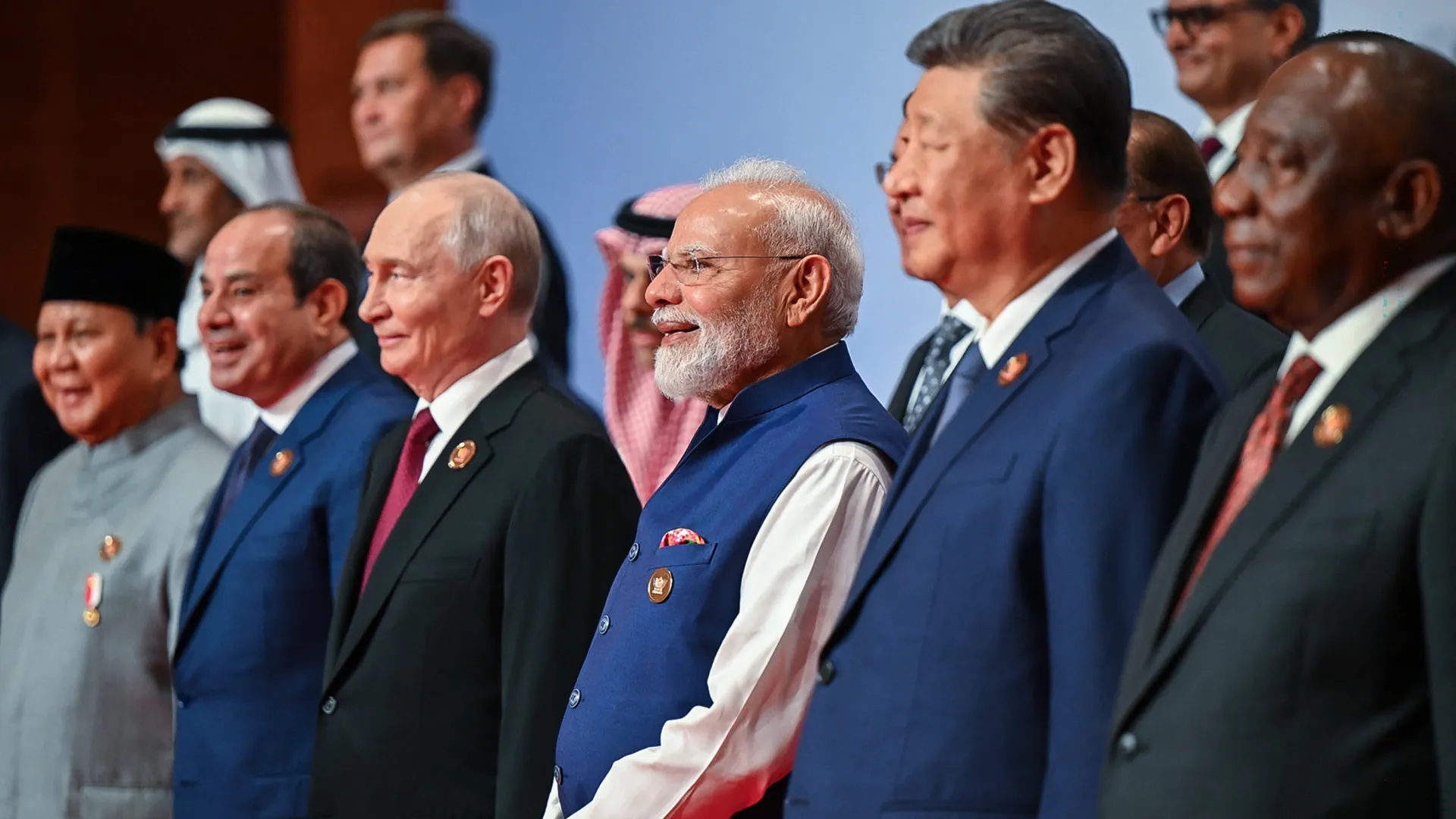
- The BRICS Summit therefore became not only a platform for collective discussions among member countries but also a major bilateral opportunity for India to strengthen its existing relationships and explore new areas of cooperation.
- The meeting therefore becomes important not only for India-China relations but also for the wider BRICS framework, as stronger relations between the 2 largest Asian members can contribute to greater stability and cooperation within the organisation.
- The UAE has therefore become an increasingly important partner for India, not only from an economic perspective but also because of its wider geopolitical significance in the Gulf.
- The summit therefore demonstrated how India’s foreign policy is increasingly using multilateral platforms not only to participate in global discussions but also to advance its own bilateral strategic interests.
India has just hosted the BRICS Summit in New Delhi. The summit was of great importance and greatly elevated India’s geopolitical position, as the Prime Minister’s strategic foreign policy vision and geopolitical responsibility were clearly visible throughout the summit. One of the major talking points has been the number of bilateral meetings that Prime Minister Narendra Modi held. India not only completely justified its responsibility as the president of the summit, but most importantly, it used the opportunity to schedule a greater number of bilateral meetings with important countries. The BRICS Summit therefore became not only a platform for collective discussions among member countries but also a major bilateral opportunity for India to strengthen its existing relationships and explore new areas of cooperation.
India-Russia: Expanding a Strategic Partnership
One of the first bilateral meetings that Prime Minister Narendra Modi had was with Russian President Vladimir Putin, where both countries discussed defence, energy and other important bilateral matters. The 2 countries agreed that India and Russia should further advance their bilateral relationship. India and Russia have been trying to further elevate their existing military relationship and expand it from defence and strategic cooperation towards other areas of the economy. Russia, especially after the Ukraine war, has been very keen on exploring its economic potential, and India has been one of the premier destinations for Russia. The series of discussions that India and Russia have had in recent times further highlights the importance of the bilateral relationship between the 2 countries. During this important meeting, President Putin also extended an invitation to Prime Minister Narendra Modi to visit Russia for the annual bilateral summit between India and Russia. This itself speaks about the continued importance that both countries attach to their strategic partnership.
India-China and India-Iran Engagement
Another major and important bilateral meeting was with Chinese President Xi Jinping. This was a bilateral meeting of great importance for India, given that both countries have had significant differences and that India and China need to come out of their existing differences and focus on bilateral matters between the 2 countries. The meeting therefore becomes important not only for India-China relations but also for the wider BRICS framework, as stronger relations between the 2 largest Asian members can contribute to greater stability and cooperation within the organisation. Another major bilateral meeting that Prime Minister Narendra Modi had was with the Iranian President. This becomes important as Iran is currently involved in a war, making the meeting particularly significant from a geopolitical perspective. Iran is important for India in terms of connectivity and energy. India has shared a good relationship with Iran, and the Iranian President also appreciated India’s willingness to engage bilaterally between the 2 countries. It was made very clear that India has been a consistent partner for Iran, and India and Iran share a long civilisational relationship. The bilateral therefore becomes important not only because of the current geopolitical situation but also because of the strategic importance that Iran holds for India’s wider regional interests.
India-UAE and the Gulf
Another important bilateral meeting that Prime Minister Narendra Modi had was with the Crown Prince of the United Arab Emirates. This meeting came at a time when the India-UAE relationship has emerged as a major strategic partnership for India. The relationship between India and the United Arab Emirates has greatly increased in recent years. Both countries have signed a Free Trade Agreement, while they are also exploring ways to diversify the relationship across energy, trade, technology and people-to-people ties. Considering the current geopolitical situation in West Asia, the UAE also understands the importance of India and expects India to play a constructive role in the region. India, on the other hand, wants to see greater ties with the UAE so that it can have greater leverage over West Asian matters. The UAE has therefore become an increasingly important partner for India, not only from an economic perspective but also because of its wider geopolitical significance in the Gulf.
India’s Extended Neighbourhood: Southeast Asia
Another major focus of the bilateral meetings of the Indian Prime Minister was towards Southeast Asian nations. It is important to understand that Southeast Asia has increasingly been viewed as India’s extended neighbourhood, and during the summit, Prime Minister Modi held bilateral meetings with Vietnam and Malaysia. These are 2 countries that India has been keeping a close eye on and with which it has been trying to increase its bilateral presence. Both countries are important centres of growth and centres of power in Southeast Asia and have important factors of production that India needs to strengthen its economic and strategic influence in the region. India has also been developing greater defence ties with Vietnam, which has agreed to purchase BrahMos from India. This makes Vietnam particularly important for India’s defence diplomacy and its wider engagement in Southeast Asia.
India & Africa
India has been further expanding its ties with African countries, with Ethiopia and South Africa being two of the premier countries with which India has been strengthening its relations. The reason being not only their inclusion in BRICS, but more importantly, the shared opportunities that these two countries and India have been exploring to diversify the African leg of the great geopolitical factors that African countries share with India. India has been trying to gain momentum and also evolve in its strategic engagement by expanding defence and military ties with these countries.
One of the reasons that India has also been greatly engaging with Africa is the critical mineral resources that African countries possess. Along with that, African countries, in return, also expect India to play a constructive role in bringing the voice of the African continent to the global stage. Not to forget that it was under India’s presidency that the African Union was given a permanent seat in the G20.
Therefore, the overall BRICS Summit was not only a major multilateral opportunity for Prime Minister Narendra Modi and India but also a significant bilateral opportunity. India used its presidency of BRICS to engage with major powers such as Russia and China, maintain its strategic relationship with Iran and the UAE, and strengthen its presence in Southeast Asia through countries such as Vietnam and Malaysia. The summit therefore demonstrated how India’s foreign policy is increasingly using multilateral platforms not only to participate in global discussions but also to advance its own bilateral strategic interests.

Kumar Satish is a postgraduate in International Relations with a keen interest in reading and writing on geopolitical affairs.
 Anjali Singh
  Aayush Pal