
|
Getting your Trinity Audio player ready...
|
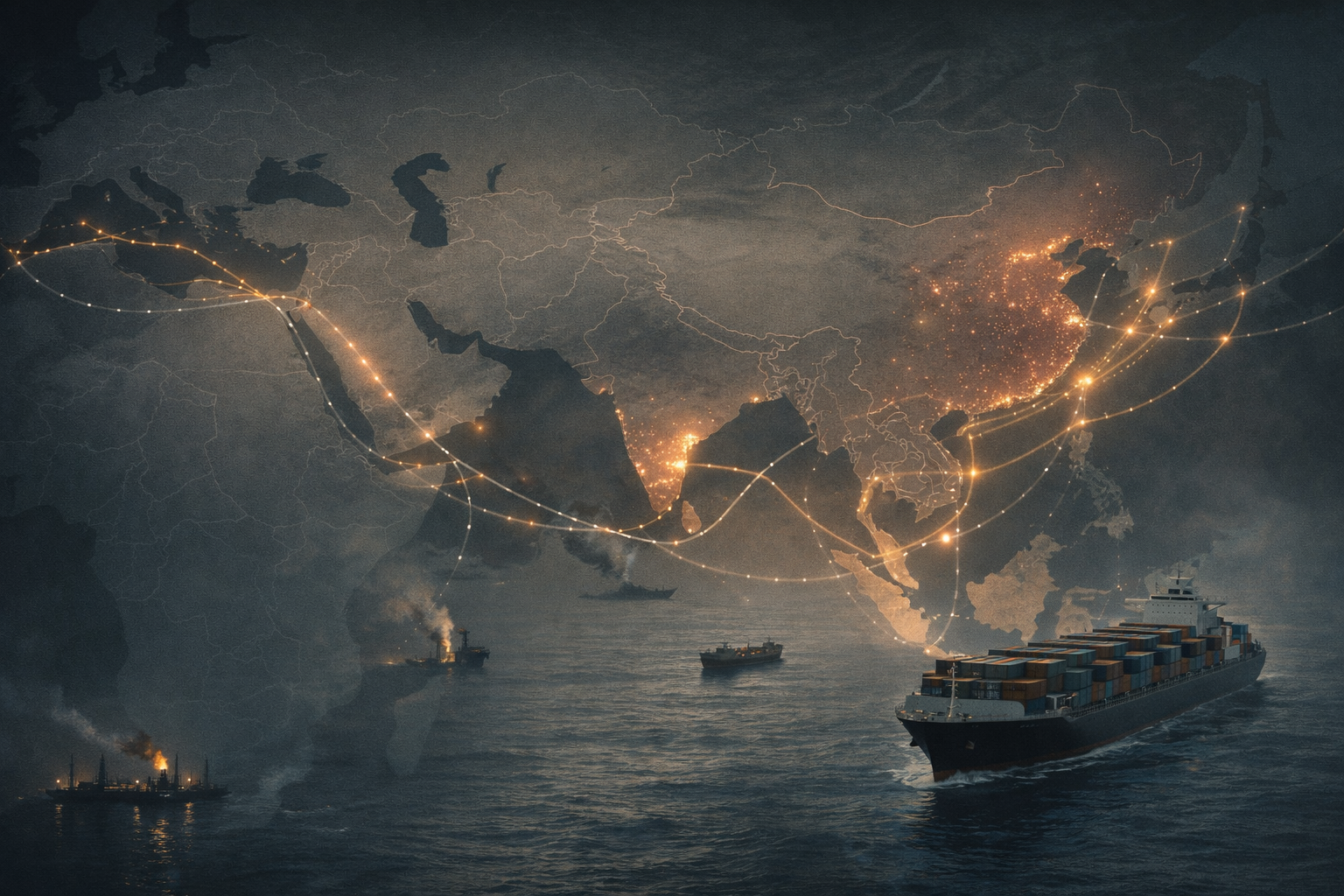
- China’s GDP grew by 5% more than anticipated, demonstrating both resilience and susceptibility as the US-Israel conflict with Iran alters the dynamics of the global economy.
- When global demand declines as a result of war, interdependence may swiftly become a liability, as evidenced by the dramatic drop in export growth to 2.5% in March.
- In summary, China’s early 2026 performance shows resilience, but it also highlights the vulnerability of an export-driven economy in a global system that is becoming more unstable.
China’s GDP grew by 5% more than anticipated, demonstrating both resilience and susceptibility as the US-Israel conflict with Iran alters the dynamics of the global economy. China exceeded forecasts despite trade and energy market disruptions, primarily due to manufacturing and exports. But a more thorough examination using international relations theory reveals fundamental risks that underlie this performance.
According to neorealism, China’s economic development is a reflection of the limitations imposed by anarchic international relations. Beijing is still quite vulnerable to outside shocks like rising oil prices and interrupted marine trade routes because it is the world’s biggest energy importer. China’s reliance on safe sea routes and stable international markets is highlighted by the prolonged turmoil in West Asia. These are crucial weaknesses for a nation whose economy might serve as the foundation for its geopolitical goals. The circumstance supports the realist idea that geopolitical stability and economic security are inextricably linked, even though China’s varied energy mix, which includes cheap imports from Russia, provides some protection.
The logic of complex interconnectedness, a fundamental idea in liberal international relations theory, is also demonstrated by China’s export-led economic model. Even if local consumption is lagging, strong worldwide demand has underpinned development, especially for electronics, electric vehicles, and green technologies. But when global demand declines as a result of war, interdependence may swiftly become a liability, as evidenced by the dramatic drop in export growth to 2.5% in March. Growing input costs and “cost-push inflation” serve as additional examples of how external shocks spread throughout interconnected economies, impacting both consumers and producers.
From a mercantilist perspective, China’s ongoing trade surplus and focus on manufacturing superiority are indicative of a calculated attempt to gain economic dominance. A long-term plan to strengthen the nation is consistent with the state’s emphasis on high-tech industry, innovation, and export competitiveness. However, this approach also produces imbalances, making the economy unduly dependent on foreign markets due to high industrial output and low local demand. Analysts caution that a fundamental vulnerability could be revealed if exports decline and domestic consumption is insufficient to maintain growth.
China’s efforts to redefine its economic identity are highlighted by a constructivist viewpoint. Beijing aims to shift from an export-focused paradigm to one that is driven by innovation and local consumption through initiatives under its Five-Year Plan. Nonetheless, enduring issues like a real estate crisis, a reduction in the population, and low consumer confidence imply that this change is still unfinished.
In order to stabilise growth, China’s policy response will probably include both targeted actions and fiscal stimulus. However, the larger geopolitical landscape, which is characterised by trade disputes, conflict, and shifting alliances, will continue to influence results. To conclude, China’s early 2026 performance shows resilience, but it also highlights the vulnerability of an export-driven economy in a global system that is becoming more unstable.

Anjali Singh is a postgraduate student of Political Science and International Relations, a Social Media Analyst, and a former Research Intern at the Indian Council of World Affairs. Views expressed are the author’s own.
 Aayush Pal