
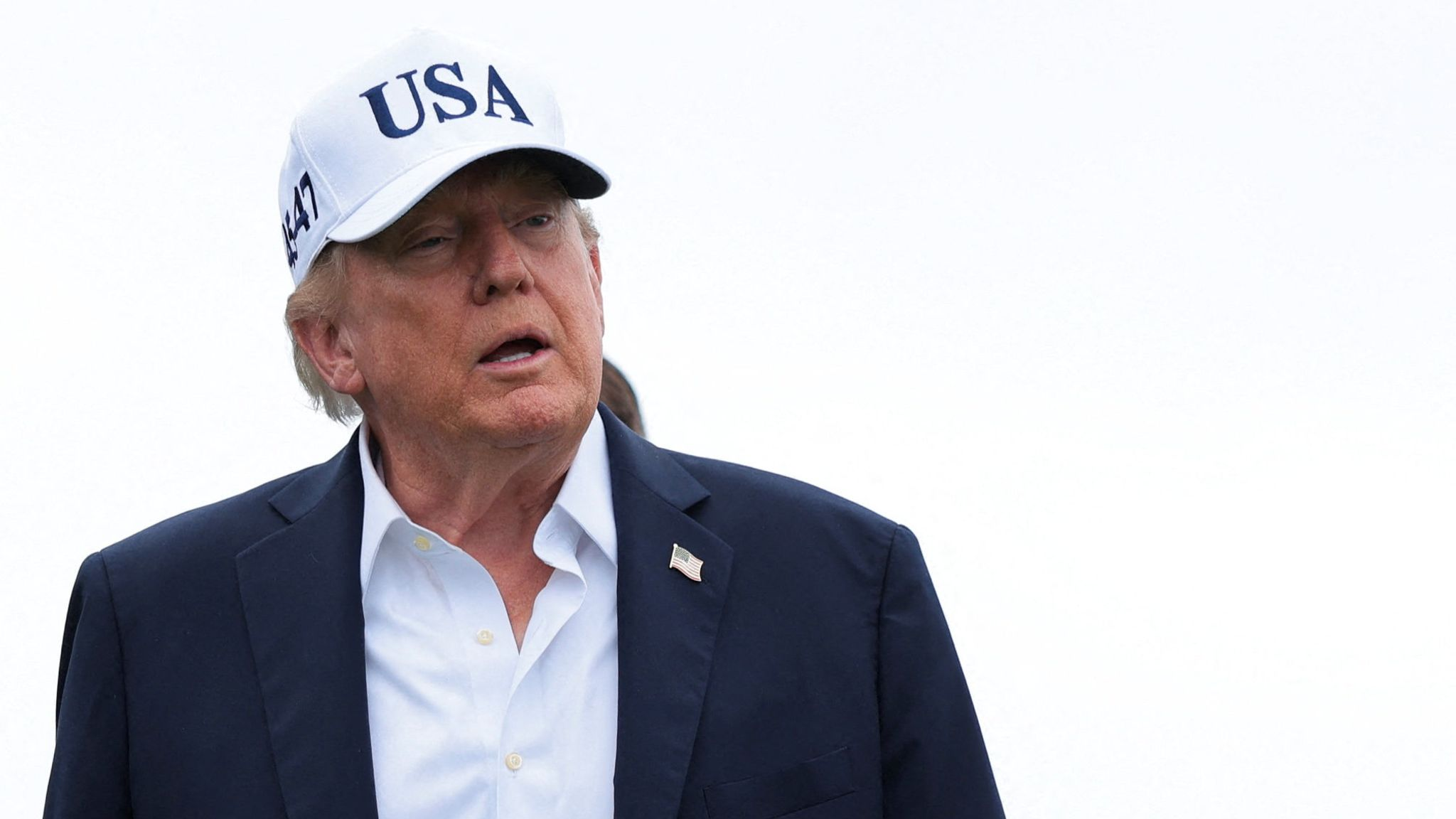
- President Trump has openly come out in favour of Irish reunification, and the bigger question that comes up is why President Trump has been saying this and why an ally of the United Kingdom has become so keen on a development that could potentially lead to the breakup of the United Kingdom.
- Trump’s comments have therefore opened a Pandora’s box that goes beyond Ireland and raises the broader question of whether the United Kingdom can continue to maintain its existing political structure.
- For London, this is not simply a comment from another foreign leader; it is a statement coming from its most important traditional ally.
- A change in the constitutional structure of the UK could reshape European security, Britain’s relationship with the European Union and the balance of power within the British Isles.
President Trump is no stranger to controversy or to opening a Pandora’s box in geopolitics. Since his return to power in Washington, he and his rhetoric have brought both him and the United States of America into the spotlight and onto the centre stage of global politics. His statements, bilateral talks and international trips have all become new talking points, and this time one of his important bilateral visits to Ireland has raised questions about the political status and even the future existence of the United Kingdom. This comes as President Trump was on an important bilateral visit to Ireland, where he made a very important and interesting statement, saying that he would “love to see” Ireland unified and that if reunification is eventually going to happen, then it may as well happen now. This is an important statement because it represents a major shift in the way the United States has traditionally approached the issue. Previous presidents of the United States have generally walked a tightrope on the question of Irish reunification, maintaining neutrality over whether Northern Ireland should remain part of the UK or become part of a united Ireland. President Trump, however, has openly come out in favour of Irish reunification, and the bigger question that comes up is why President Trump has been saying this and why an ally of the United Kingdom has become so keen on a development that could potentially lead to the breakup of the United Kingdom.
Trump and the Irish Reunification Question
It is important to note that under the Good Friday Agreement, Northern Ireland can leave the United Kingdom and join a united Ireland if a majority of people in Northern Ireland vote in favour of reunification. Therefore, the possibility of Northern Ireland becoming part of Ireland is not outside the democratic framework. However, President Trump’s statement has created a political controversy and has escalated the debate between the political parties of Northern Ireland and Ireland. The nationalist parties have broadly welcomed Trump’s comments, arguing that Irish reunification is an important political objective and that Northern Ireland should eventually have the right to determine its own future. On the other side, the pro-UK parties have strongly criticised the intervention, arguing that President Trump should not interfere in the domestic constitutional affairs of Northern Ireland. The reaction from the United Kingdom has also been sharp. Prime Minister Andy Burnham has categorically rejected the suggestion that there should be any immediate move towards Irish unification and has maintained that Northern Ireland’s constitutional future must be determined through the existing democratic and legal framework. But Trump’s statement becomes even more interesting when we look at the wider political situation across the United Kingdom. Scotland, Wales and Northern Ireland have increasingly seen political movements demanding greater autonomy, while discussions about independence and constitutional change have become more prominent. Any coordinated effort by these nations to move away from Westminster would represent a major challenge to the structure of the United Kingdom. The possibility of these countries eventually seeking closer integration with the European Union also adds another dimension to the debate, particularly because Brexit fundamentally changed their relationship with the European bloc. Trump’s comments have therefore opened a Pandora’s box that goes beyond Ireland and raises the broader question of whether the United Kingdom can continue to maintain its existing political structure.
The Growing Rift Between Trump and London
This development also comes at a time when the relationship between the United Kingdom and the United States has become more complicated than it has been in the recent past. The UK has traditionally been considered one of America’s closest allies, with the “special relationship” forming one of the foundations of Western foreign policy. However, since President Trump’s return to power, there have been increasing differences between Washington and London. Trump has repeatedly criticised Britain’s domestic policies, including immigration and energy policy, and has argued that the country has been weakened by its political and economic decisions. He has also questioned whether European allies, including the UK, are contributing enough towards their own security and have repeatedly called on them to take greater responsibility. The differences have also become visible over Ukraine, where Washington and London have at times had different approaches towards the war, European security and the future of Ukraine. All of this has challenged the traditional assumption that the United States and the United Kingdom will always see international and regional issues through the same lens. Therefore, when President Trump openly supports Irish reunification, it becomes much more politically sensitive. For London, this is not simply a comment from another foreign leader; it is a statement coming from its most important traditional ally. The bigger question that comes up is how the United Kingdom should respond when the United States itself appears to be questioning the political structure of one of its closest partners.
Could a Weaker United Kingdom Benefit Washington?
The question that naturally comes out of this is: how could the United States benefit from the possible independence of Scotland, Wales or Northern Ireland? One possible explanation lies in leverage. Since the United States now has to deal with the United Kingdom as a single political entity, and relations between Trump and the current British leadership have increasingly become difficult, a more fragmented United Kingdom could theoretically provide Washington with greater leverage over individual governments. If Scotland, Wales and Northern Ireland were to become independent, the United States would no longer have to deal with London alone and could develop separate political, economic and strategic relationships with the newly independent states. Another possible explanation is simply the differences President Trump has developed with the British political establishment. His criticism of Britain’s immigration policies, energy policies and defence spending has already created friction with the political establishment in London, and his comments on Ireland could therefore also be seen through the lens of his broader dissatisfaction with the current British leadership. However, this does not necessarily mean that Trump has a direct strategy to break up the United Kingdom. His comments may instead reflect his broader approach of challenging traditional political assumptions and openly supporting political movements that he believes align with his worldview. Whatever the motivation, the statement has already changed the political conversation, not only in Ireland but across the United Kingdom.
The Internal Crisis of the United Kingdom
The wider political situation inside the United Kingdom also needs to be understood. British politics has been going through a difficult phase since the resignation of Conservative Prime Minister Boris Johnson. The Conservative Party went through 2 changes of prime minister after Johnson before eventually losing power in Westminster. The Labour Party then came to power under former Prime Minister Keir Starmer after winning the 2024 general election. However, the Labour government’s political difficulties and declining approval created questions around its leadership, eventually bringing Andy Burnham into the picture. The bigger question is what is happening inside the United Kingdom itself. The country is going through a difficult phase in which society has become deeply divided over immigration, economic policy, national identity and the future relationship with Europe. Immigration has become one of the biggest political issues, while social and regional divisions have further complicated the situation. The economic difficulties facing the country have also contributed to public dissatisfaction, while Brexit continues to influence Britain’s political and economic debate. Britain’s role in the Ukraine war and the wider European security situation has further increased the pressure on the government. All of these factors have created an environment where questions about the future of the United Kingdom are becoming increasingly relevant. In this environment, President Trump’s comments on Irish reunification can have a much greater impact than they might have had a decade ago.
The interesting question now is what happens next. President Trump’s statement does not by itself change Northern Ireland’s constitutional status, nor does it automatically trigger a referendum or lead to the breakup of the United Kingdom. But it has changed the political conversation and has brought an issue that was traditionally handled with considerable diplomatic caution into the centre of international politics. It also raises a much bigger question about the future of the United Kingdom itself. If the debate over Irish reunification grows, while Scottish independence and Welsh autonomy movements continue to gain political space, London could increasingly find itself defending not only its international position but also the territorial integrity of the United Kingdom. For Europe, this could have significant consequences as well. A change in the constitutional structure of the UK could reshape European security, Britain’s relationship with the European Union and the balance of power within the British Isles. For Washington, meanwhile, the question will be whether Trump’s intervention creates greater American influence in the region or instead damages one of America’s most important traditional alliances. It will therefore be very interesting to see how far President Trump’s statement travels, what political reaction it creates in London, Belfast, Dublin, Edinburgh and Cardiff, and what long-term ramifications it could bring for Europe and the future of the United Kingdom.

Aayush Pal is a freelance writer on contemporary geopolitical developments. The views expressed in his work are entirely his own.
 Kumar Satish