
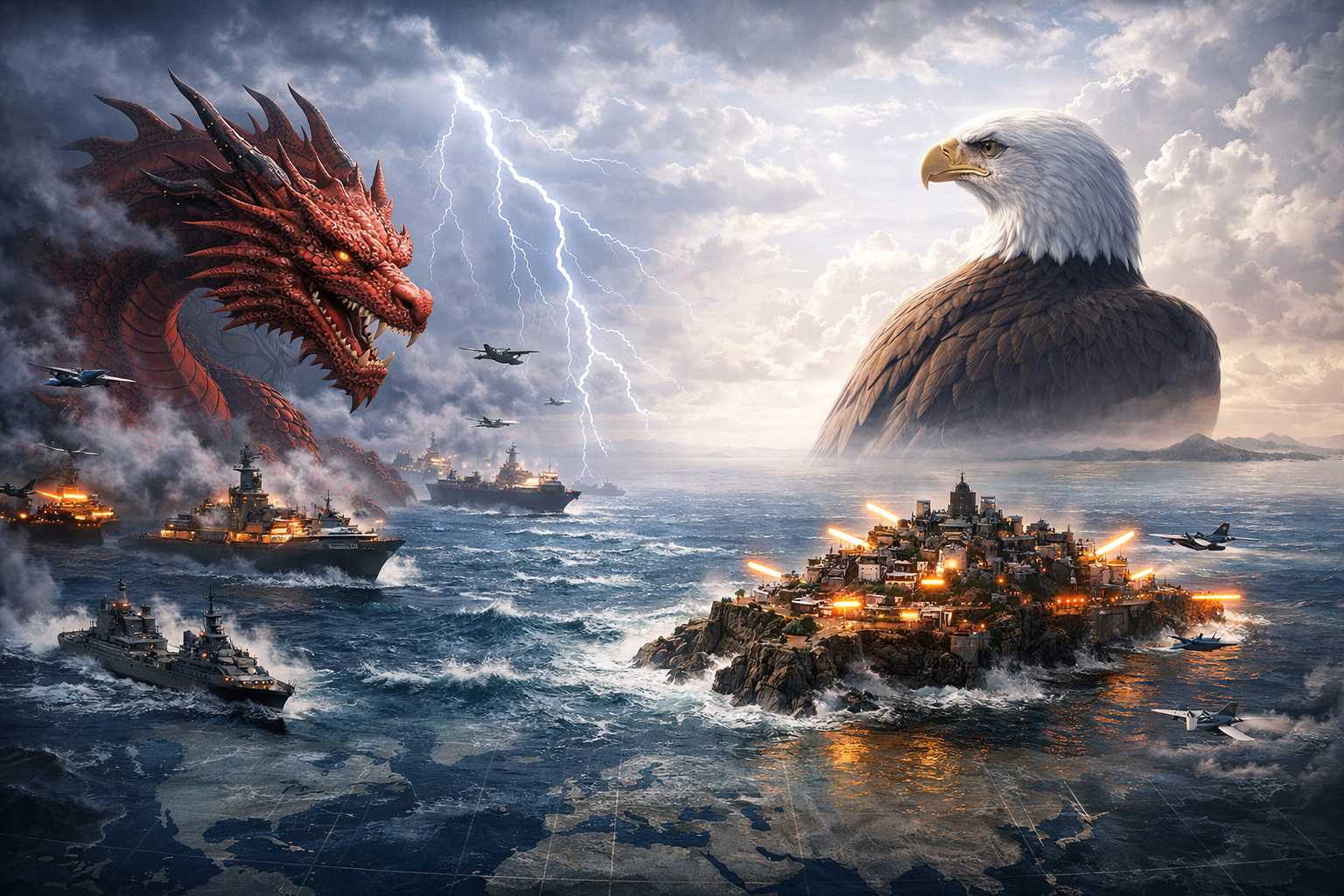
- Beijing may see a brief change in the Indo-Pacific power dynamics as Washington reallocates military resources to West Asia.
- U.S. officials insist that their military posture across the world is still strong and equipped to deal with several threats at once.
- Taiwan has issued a warning against Chinese propaganda attempts that use the conflict in West Asia to erode trust in American military technology and security assurances.
Growing tensions in West Asia have raised new worries in Taiwan that China would use the United States’ alleged strategic diversion to put more pressure on the island. Chinese air force intrusions have increased since mid-March, according to Taiwanese authorities, suggesting Beijing is testing regional stability while partially diverting U.S. military attention.
From a realist perspective, this is an example of traditional power politics. Beijing may see a brief change in the Indo-Pacific power dynamics as Washington reallocates military resources to West Asia. Long-term US participation abroad may be seen by Chinese leader Xi Jinping as a chance to step up coercive measures against Taiwan, which China claims as its own. Realist presumptions that states act to maximise power in uncertain situations are consistent with military drills, air intrusions, and strategic signalling.
U.S. officials, however, insist that their military posture across the world is still strong and equipped to deal with several threats at once. This is consistent with deterrence theory, which places a strong emphasis on capability and credibility. Washington aims to reassure regional allies and avoid Beijing’s mistake by claiming that its military might is still “formidable.”
Cognitive warfare is another important aspect of the current conflict. Taiwan has issued a warning against Chinese propaganda attempts that use the conflict in West Asia to erode trust in American military technology and security assurances. The goal of narratives that cast doubt on the efficacy of American military systems and draw attention to weaknesses, such as purported damage to cutting-edge technology, is to lower Taiwanese public morale. Constructivist theory holds that these initiatives mould identities and perceptions, affecting how societies see alliances and dangers.
The circumstance also serves as an example of how to learn from international war. In order to obtain intelligence on cutting-edge equipment like the F-35 fighter jet and missile defence networks, analysts observe that China is closely monitoring U.S. military actions in West Asia. This is consistent with theories of strategic adaptation, according to which states use observed wars to improve their military plans for the future.
In response, Taiwan is reaffirming its commitment to self-defence and putting forth plans to boost military spending. This illustrates a security conundrum in which protective actions taken by one player are viewed as dangerous by another, potentially raising tensions even higher.
In an overall sense, the changing dynamics highlight how geographically remote conflicts can alter regional strategic considerations. With Taiwan at its most vulnerable juncture, the conflict in West Asia has evolved from a regional problem to a factor in the larger rivalry between the United States and China.

Anjali Singh is a postgraduate student of Political Science and International Relations, a Social Media Analyst, and a former Research Intern at the Indian Council of World Affairs. Views expressed are the author’s own.
 Archita Gaur
  Diksha Bharti
  Aayush Pal