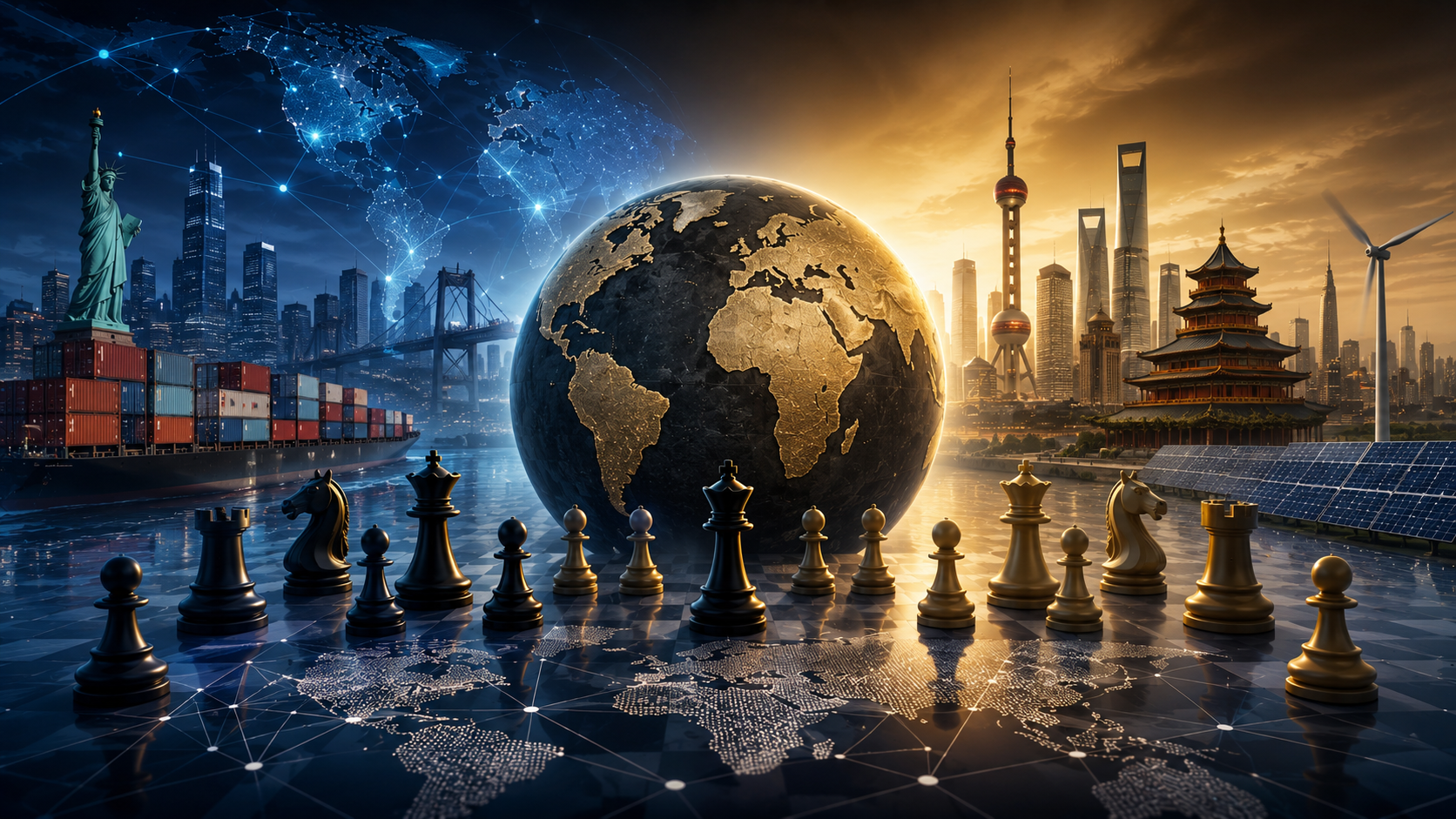
- The article argues that the unipolar world order dominated by the United States is steadily giving way to a multipolar international system, where power is increasingly distributed among multiple competing centres rather than concentrated in a single hegemon.
- It highlights how emerging powers, middle powers, and the Global South are asserting greater strategic autonomy, moving away from rigid bloc politics and increasingly shaping global diplomacy through flexible, interest-driven partnerships.
- India is presented as a uniquely positioned ‘swing state’ in this evolving order, balancing relationships across rival geopolitical camps while leveraging strategic autonomy to expand its diplomatic and economic influence.
- The article contends that traditional post-1945 global institutions are losing relevance, while new arenas of competition—technology, supply chains, currency systems, and informal strategic groupings—are defining the structure of the emerging multipolar world.
Analysing the emergence of multiple power centres and the ongoing shift away from a unipolar world order — a transformation reshaping diplomacy, trade, and the architecture of global governance.
For almost three decades after the collapse of the Soviet Union, one country stood unmatched economically, militarily, and culturally across much of the world. American primacy was always likely to be temporary, but the speed and abruptness with which it is now being challenged has surprised many experts. However, what is emerging is neither a return to the bipolar rivalries of the twentieth century nor a world in which a single state retains uncontested dominance. Instead, we are entering an era marked by multiple rival power centres, each with distinct interests and competing visions of the ideal international order.
The past two decades have witnessed significant shifts in this direction. The 2008 global financial crisis exposed deep structural weaknesses in Western-led economic systems. The war in Ukraine further reinforced perceptions of strategic instability, while revealing fractures and divisions even within Western alliances. In this evolving international landscape, strategic ambiguity and uncertainty have increasingly become the norm, with remnants of old systems coexisting alongside emerging alternatives.
The Architecture of a Post-Unipolar World
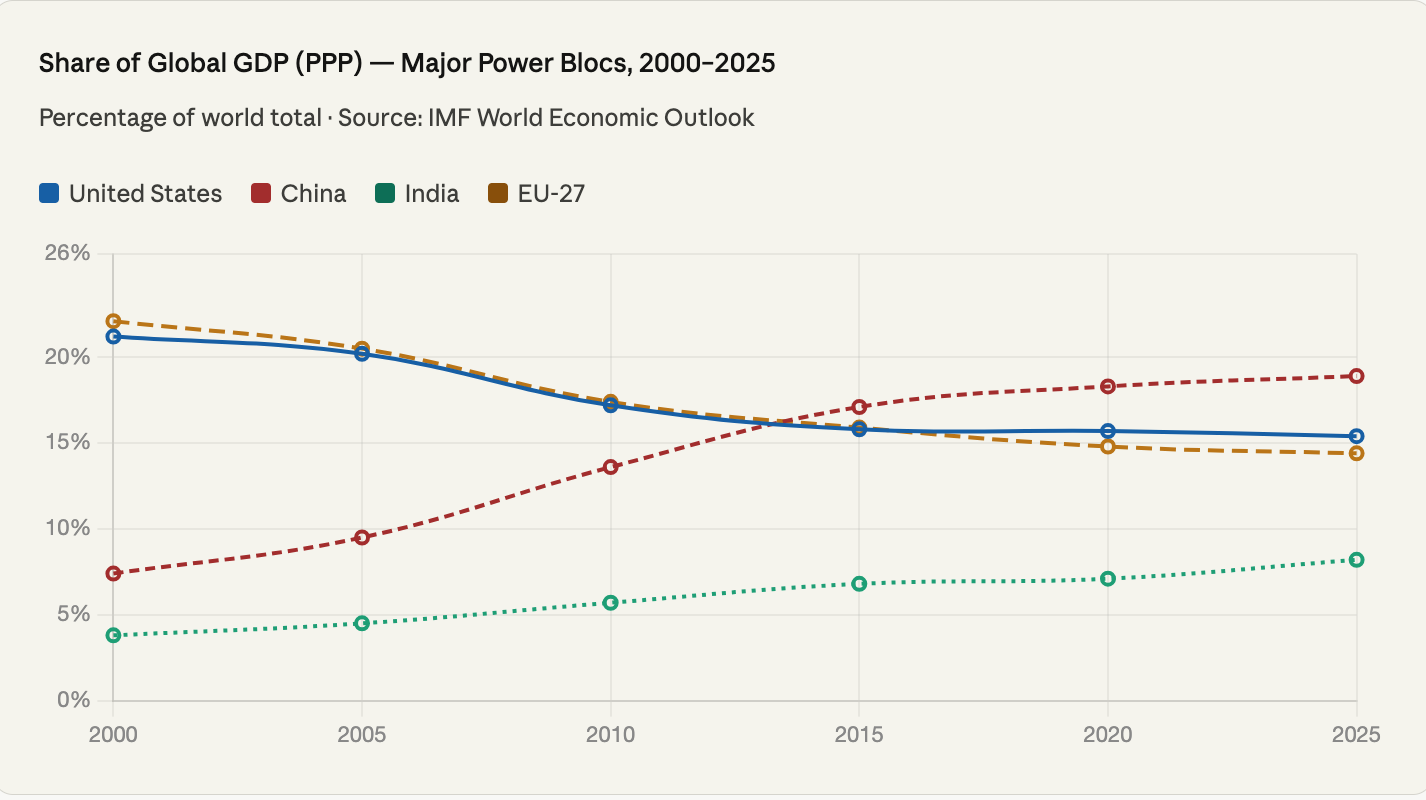
Multipolarity is not a new phenomenon. Scholars often cite the European Concert of Powers in the pre-1914 period as one of its most prominent historical examples. However, the current iteration of multipolarity differs in both scale and scope. Power competition today extends beyond geography and conventional military capabilities. Economic statecraft, digital influence, energy dependencies, and supply chain control have emerged as equally significant instruments of power.
China’s rise has arguably been the single most important variable reshaping the global balance of power. The Belt and Road Initiative (BRI), despite criticism, marked the first major attempt by a non-Western power to build a cross-continental infrastructure and connectivity network spanning Asia, Europe, and Africa. China’s growing influence is also reflected in the expanding international use of the renminbi, its dominance in rare-earth processing, and the rise of major Chinese technology firms such as Huawei. Traditional military-centric analyses of global power transitions often underestimated the strategic significance of economic and technological leverage.
The period in which one dominant power could unilaterally establish rules for all others appears to be drawing to a close. The more pressing question is what kind of order will replace it, and who will shape its rules.
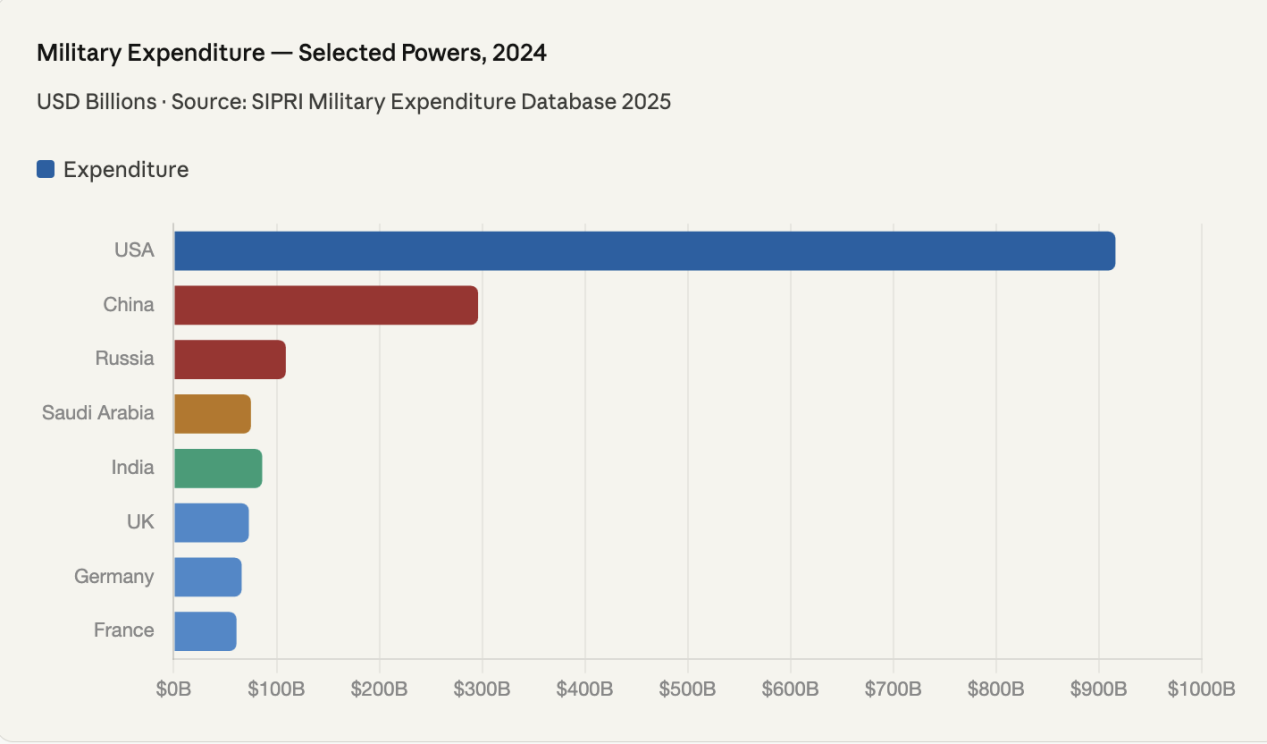
Although Russia retains considerable military capabilities and energy leverage, its invasion of Ukraine has significantly strained its position. The war has consolidated NATO, accelerated the accession of Sweden and Finland, and distanced Russia from Western capital and institutions. Yet Russia continues to retain influence in parts of the Global South through energy dependencies, arms exports, and its permanent seat on the UN Security Council. Russia may not be an architect of the multipolar world, but it remains an important disruptor within it.
The Middle Powers and the Global South
One noteworthy and often underappreciated development is the growing strategic autonomy of middle powers. Countries such as Turkey, Saudi Arabia, the UAE, Brazil, Indonesia, Vietnam, and South Africa are increasingly adopting independent hedging strategies in relation to both the United States and China, while also maintaining flexible positions towards Russia and the West.
This is more than simple hedging. It reflects a pragmatic recognition that rigid alignment no longer serves national interests in an increasingly fragmented global order. The expansion of BRICS to include countries such as Saudi Arabia, the UAE, Egypt, Ethiopia, and Iran demonstrates a growing institutional appetite for alternatives to Western-led structures, even if these alternatives remain underdeveloped.
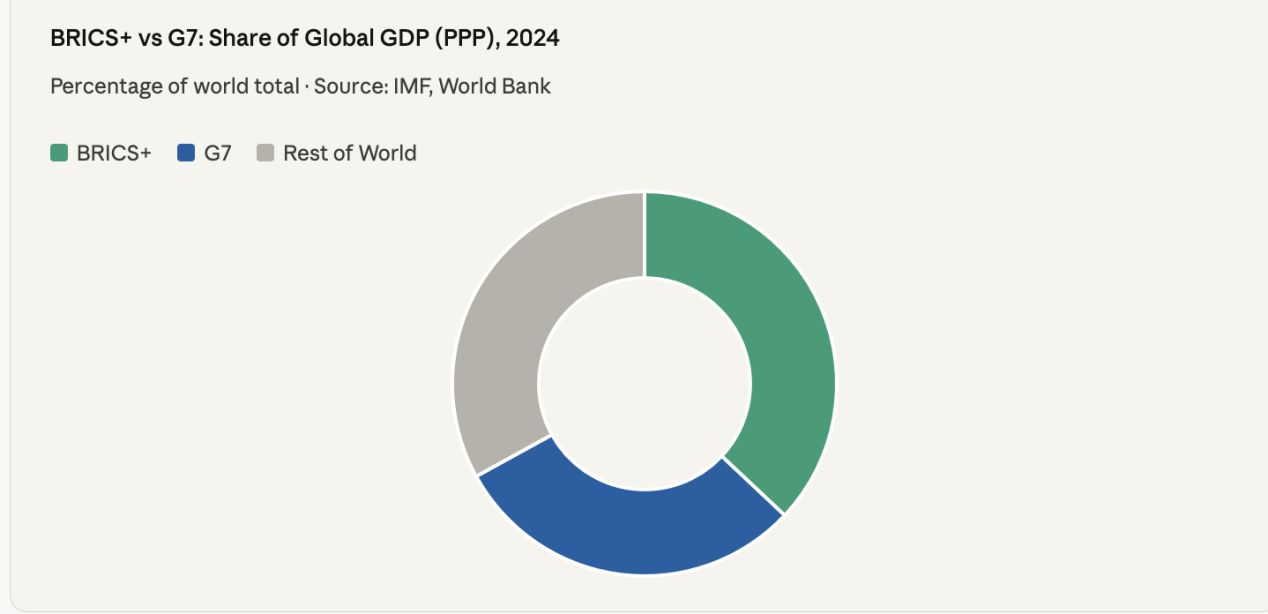
The Global South, traditionally viewed as a proxy battleground or a recipient of development finance, has increasingly begun asserting itself as a strategic actor in its own right. The African Union’s inclusion in the G20, ASEAN’s strengthening role in regional security, and the renewed inclination towards strategic non-alignment in Latin America suggest that the geopolitical periphery is no longer willing to remain a passive spectator.
India: The Swing State of the Multipolar Order
Among the emerging powers navigating this transition, India occupies a uniquely positioned space. India is a founding member of the Non-Aligned Movement, a Quad partner alongside the United States, Japan, and Australia, a full member of the Shanghai Cooperation Organisation with China and Russia, and one of the leading voices within BRICS. Few powers have managed to sustain such a complex web of strategic engagements simultaneously.
Guided by the principle of strategic autonomy, India has consistently avoided formal alliance structures while maintaining partnerships across competing geopolitical blocs. While abstaining from several UN resolutions related to the Russia-Ukraine conflict, India has deepened defence cooperation with the United States through agreements such as BECA and COMCASA. Even amid border tensions with China along the Line of Actual Control, bilateral trade has remained substantial. This is not necessarily a contradiction; it is the essence of strategic autonomy.
India’s G20 presidency in 2023 was itself an illustration of this evolving approach to statecraft. New Delhi succeeded in drafting a communiqué on Ukraine that avoided the most polarising Western rhetoric while reaffirming the principles of the UN Charter — a notable diplomatic achievement at a time of deep global divisions. India’s successful push for the African Union’s inclusion in the G20 further reinforced its image as a bridge between the Global North and Global South.

The economic case for India’s rise is equally compelling. As the world’s fastest-growing major economy, India benefits from favourable demographic trends, with its working-age population expected to continue expanding well into the 2040s, even as China and Europe confront ageing populations. Sectors such as semiconductors, pharmaceuticals, digital infrastructure, and renewable energy have attracted substantial foreign investment as multinational firms seek to diversify supply chains away from China. The “China Plus One” strategy has positioned India as one of the most significant beneficiaries of this shift.
Institutions Under Stress
The multilateral institutions established after 1945 are increasingly ill-equipped for the realities of the contemporary world. The United Nations Security Council continues to reflect the power structure of a war fought over eight decades ago, while countries such as India, Brazil, Germany, Japan, and Africa remain underrepresented at the highest decision-making level.
Similarly, governance structures within the IMF and World Bank continue to disproportionately favour Western powers, despite repeated demands for reform from developing countries. This imbalance has contributed to the rise of alternative institutions such as the New Development Bank and the Asian Infrastructure Investment Bank.
The World Trade Organization’s dispute settlement mechanism, once considered one of the defining achievements of the rules-based trading order, has been effectively paralysed by the prolonged blockage of Appellate Body appointments by the United States. This is not merely a procedural issue, but a reflection of deeper tensions over the legitimacy and neutrality of global economic governance.
What is emerging in place of these institutions is not a coherent alternative architecture, but a proliferation of overlapping, partial, and sometimes contradictory frameworks — regional trade agreements, currency swap arrangements, bilateral investment treaties, and informal coalitions such as the G20. This is the institutional face of multipolarity: not a unified world government, nor a bipolar rivalry, but a fragmented and imperfect patchwork where nothing functions seamlessly, yet nothing entirely collapses.
Technology, Currency, and the New Frontiers of Power
The race for influence in the multipolar world is increasingly unfolding in arenas where conventional measures of power are insufficient. Semiconductor supply chains are a prime example, particularly given the extraordinary concentration of advanced chip manufacturing capabilities in Taiwan. US export controls on advanced semiconductors and manufacturing equipment have accelerated China’s drive towards technological self-sufficiency, while prompting broader efforts across the United States, Europe, Japan, and India to diversify manufacturing capacity.
The gradual internationalisation of trade settlements in non-dollar currencies offers another lens through which to view this transformation. Bilateral oil transactions in renminbi, local currency swap arrangements, and experimentation with central bank digital currencies suggest a world in which dollar dominance may gradually erode at the margins, even if not immediately challenged at its core.
The dollar’s position as the world’s reserve currency remains deeply entrenched, supported by the depth of American capital markets, institutional credibility, and the absence of a credible alternative. Yet even modest shifts in commodity invoicing and cross-border settlement mechanisms point to an evolving financial order.
What Comes Next
Multipolarity does not necessarily promise stability. History offers little reassurance in that regard. The multipolar order preceding the First World War collapsed into catastrophic conflict, while the interwar period proved even more destructive. However, today’s strategic environment differs in one crucial respect: nuclear deterrence significantly raises the cost of direct great power conflict, even if it does little to prevent proxy wars, cyber confrontation, or economic coercion.
A more realistic expectation is a world of managed competition and selective cooperation. Major powers may compete intensely in some domains while cooperating in others where mutual interests demand coordination. Pure rivalry is unlikely to be sustainable in areas such as climate change, pandemic preparedness, biological threats, and artificial intelligence governance.
Whether such limited cooperation will prove sufficient to address the defining challenges of the twenty-first century remains an open question. Multipolarity is neither inherently desirable nor inherently dangerous. It is a strategic condition that must be understood, navigated, and managed with caution.
References
- Ikenberry, G. J. (2011). Liberal Leviathan: The Origins, Crisis, and Transformation of the American World Order. Princeton University Press. press.princeton.edu
- Mearsheimer, J. J. (2014). The Tragedy of Great Power Politics (Updated ed.). W. W. Norton & Company. wwnorton.com
- Pant, H. V. (2023). India’s Foreign Policy. Cambridge University Press. cambridge.org
- SIPRI (2025). World Military Expenditure, 2024. Stockholm International Peace Research Institute. sipri.org/databases/milex
- IMF (2025). World Economic Outlook, April 2025. International Monetary Fund. imf.org/en/Publications/WEO
- Nye, J. S. (2023). The Future of Power. PublicAffairs. publicaffairsbooks.com
- World Bank (2025). Global Economic Prospects, January 2025. worldbank.org/en/publication/global-economic-prospects
- Ministry of External Affairs, Government of India (2024). Annual Report 2023-24. mea.gov.in/annual-reports.htm
- Zakaria, F. (2008). The Post-American World. W. W. Norton. wwnorton.com
- Mahbubani, K. (2022). The Asian 21st Century. Springer. link.springer.com/book/10.1007/978-981-16-6811-3

Daljeet Singh holds a BTech in Computer Science and is currently pursuing an MA in Political Science. His interests range across geopolitics, international relations, and technology. An avid reader and writer, he is passionate about exploring the intersections of these fields. Views expressed are the author’s own.
 Aayush Pal
  Anjali Singh
  Archita Gaur