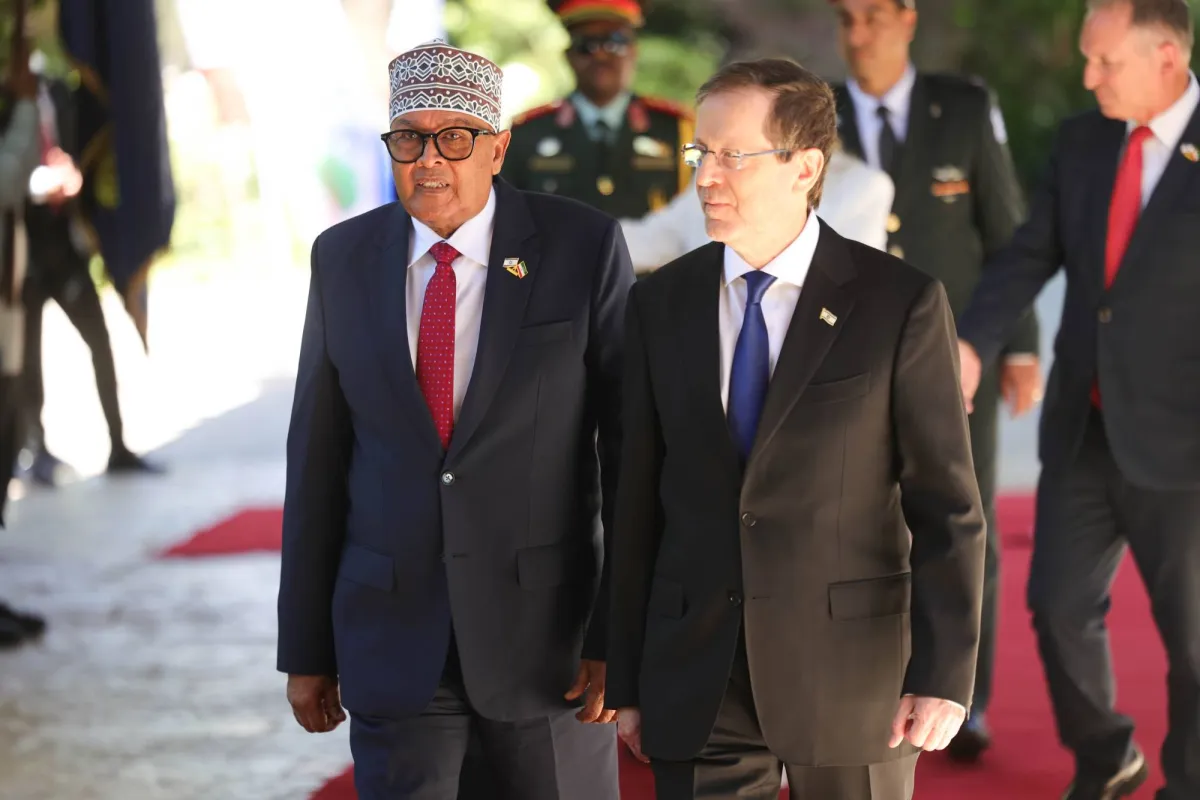
- The visit comes months after Israel became the first country in the world to officially recognise Somaliland, the self-declared state that broke away from Somalia in 1991.
- Somaliland occupies a highly strategic position along the Gulf of Aden and hosts the important Port of Berbera, which provides direct access to the Red Sea.
- As a result, a new geopolitical alignment appears to be emerging in the region, with countries such as Ethiopia, Israel, and the UAE increasing their engagement with Somaliland.
- The deepening relationship between Israel and Somaliland has the potential to significantly influence the geopolitical dynamics of the Horn of Africa and the Red Sea region.
In a landmark visit, Somaliland President Abdullahi Irro created history by becoming the first Somaliland leader to visit Israel. The visit comes months after Israel became the first country in the world to officially recognise Somaliland, the self-declared state that broke away from Somalia in 1991.
During his visit, President Irro met with Israeli Prime Minister Benjamin Netanyahu and inaugurated the Somaliland Embassy in Jerusalem. The development is historic in many ways, as Somaliland, despite having its own currency, government, and military, has struggled for decades to gain international recognition. Israel’s decision to recognise Somaliland marked a bold and unprecedented move in international diplomacy.
Strategic Importance of Somaliland
Israeli Prime Minister Netanyahu stated that strengthening ties with Somaliland would benefit both sides. Somaliland occupies a highly strategic position along the Gulf of Aden and hosts the important Port of Berbera, which provides direct access to the Red Sea.
This location is of immense importance to Israel. The port could offer Israel greater strategic visibility and logistical advantages in a region that has become increasingly volatile. It may also help Israel strengthen its ability to monitor developments in the Red Sea, particularly the activities of the Yemeni Houthis, whose attacks and disruptions have affected maritime traffic and regional security.
For years, instability in the Red Sea and threats to maritime movement have posed challenges to both regional and global trade. Israel’s growing presence near these critical waterways could alter the strategic calculations of several regional actors and reshape the geopolitical landscape of the Horn of Africa and the Red Sea region.
Regional Reactions and Emerging Alignments
The growing relationship between Israel and Somaliland has been strongly opposed by Somalia, which continues to view Somaliland as part of its sovereign territory. Several Arab countries have also expressed concerns over Israel’s decision, arguing that it challenges Somalia’s territorial integrity.
The development comes at a time when Ethiopia has also sought closer ties with Somaliland, particularly through agreements involving access to Somaliland’s ports. As a result, a new geopolitical alignment appears to be emerging in the region, with countries such as Ethiopia, Israel, and the UAE increasing their engagement with Somaliland.
For Somaliland, these partnerships could help strengthen its quest for wider international recognition. For its partners, Somaliland offers strategic and geopolitical advantages due to its location and infrastructure. On the other hand, countries such as Somalia, Egypt, and Saudi Arabia remain skeptical of these developments and have raised concerns about their long-term implications.
The deepening relationship between Israel and Somaliland has the potential to significantly influence the geopolitical dynamics of the Horn of Africa and the Red Sea region. As new alliances emerge and existing rivalries intensify, this partnership could become a key factor in shaping the future strategic balance in one of the world’s most important maritime corridors.

Aayush Pal is a freelance writer on contemporary geopolitical developments. The views expressed in his work are entirely his own.
 Anjali Singh