
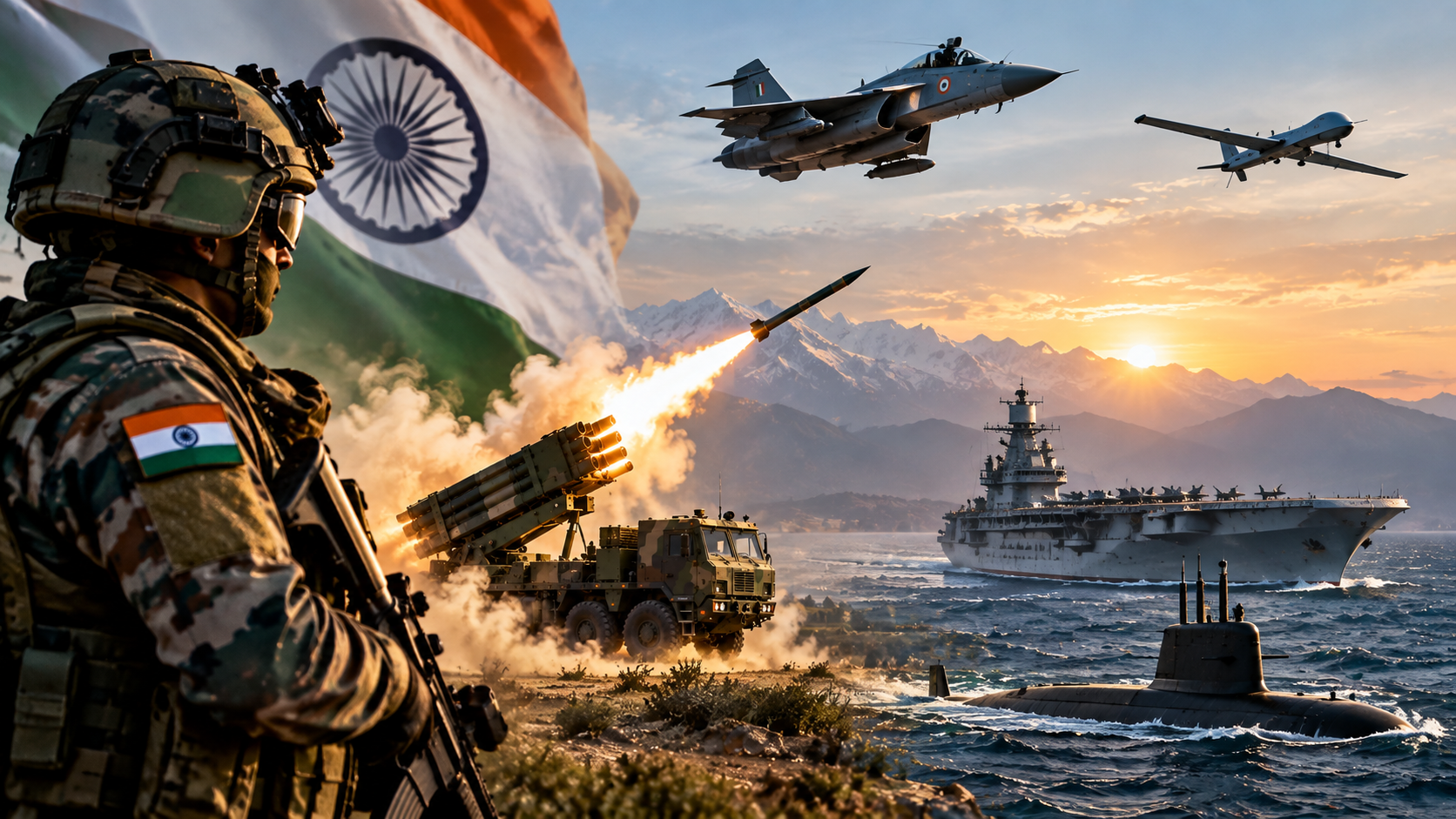
- The brutal reality of modern attrition warfare has exposed a glaring truth: the goal of conflict is to defeat the enemy’s strategy and outlast their economy, not to win a technological beauty contest.
- The current trajectory of the ‘Make in India’ program excels at building heavy, prestigious conventional platforms through monopolistic Defense Public Sector Undertakings (DPSUs).
- True strategic autonomy lies in Sea Denial, not the hollow prestige of Sea Control.
- New Delhi must strip away the allure of prestige, stop chasing Western tech-traps, and aggressively fund rugged, mass-producible, and affordable systems that can be sustained through a prolonged war—because those are the only weapons that truly deliver victory.
For decades, the global defence landscape was dominated by an unshakeable dogma: quality beats quantity. Western military doctrine built a church around this philosophy, engineering hyper-sophisticated, multi-million-dollar systems meant to achieve total technological dominance. But over the last few years, from the muddy trenches of Eastern Europe to the shipping lanes of the Red Sea, that church has come crashing down.
The brutal reality of modern attrition warfare has exposed a glaring truth: the goal of conflict is to defeat the enemy’s strategy and outlast their economy, not to win a technological beauty contest. Wars are fundamentally won by weapons that are rugged, simple to maintain, and easy to mass-produce. When the cost of a weapon or its political value becomes a limit to its use, it ceases to be a tool of war and becomes a liability. As Joseph Stalin famously observed, ‘Quantity has a quality of its own.’ Yet, as the world pivots back to this timeless maxim, India appears to be moving in the exact opposite direction.
The Historical Mirror: Gnat vs. Starfighter
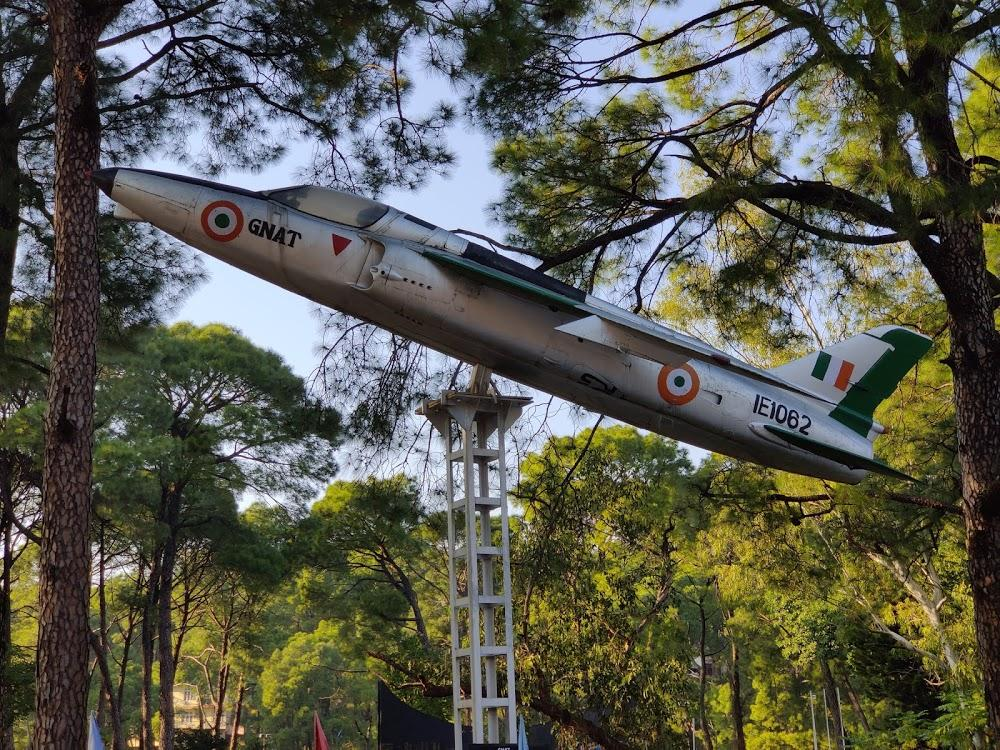
This lesson is not new; it is woven directly into India’s own military history. During the 1965 Indo-Pak War, the Pakistan Air Force fielded the American-supplied Lockheed F-104 Starfighter. It was a marvel of Western engineering—the first combat aircraft capable of sustained Mach 2 flight, equipped with advanced radar and high-end electronics. The Indian Air Force met this sophisticated threat with the Folland Gnat, a tiny, cheap, British-designed light fighter manufactured domestically. The Gnat lacked complex radar, had no sophisticated missile systems, and looked like a toy next to the American-built interceptor.
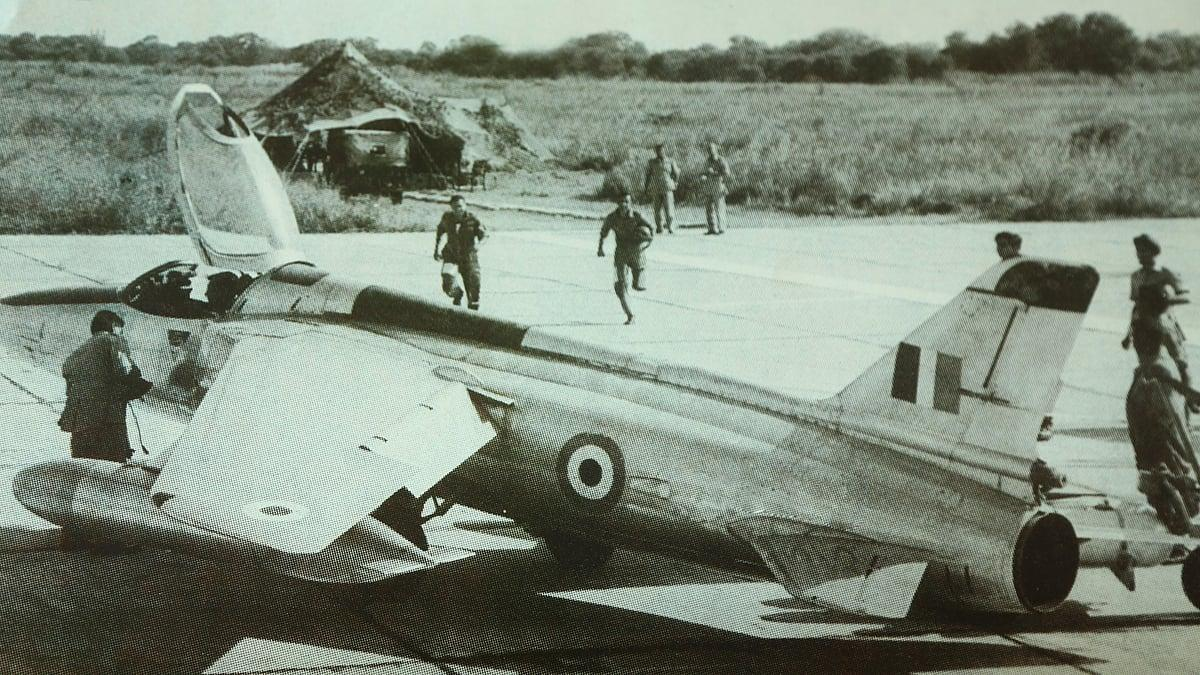
Yet, on the battlefield, the Gnat became legendary as the ‘Sabre Slayer.’ It was agile, mechanically simple, easy to maintain in the field, and could operate from rudimentary airstrips. Its small size made it nearly invisible to Pakistani pilots in visual combat. Conversely, the hyper-complex F-104 proved to be an operational nightmare. It had massive maintenance requirements, was difficult to pilot under stress, and its high-speed design made it unsuited for the tight, low-altitude dogfights over the subcontinent.
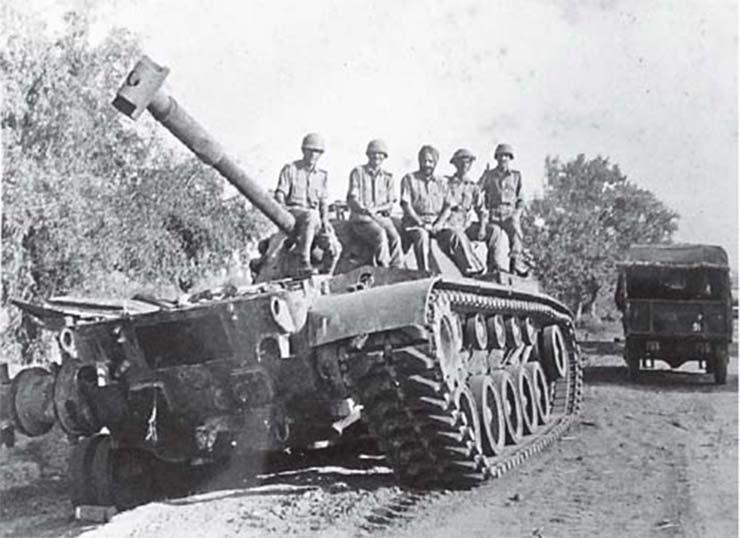
A similar dynamic played out on the ground in the Battle of Asal Uttar. Pakistan deployed the American M48 Patton tank, an armoured beast equipped with advanced stereoscopic rangefinders and automatic fire control systems. India countered with older, simpler Centurion and Sherman tanks. The complex tech on the Pattons overwhelmed the poorly trained crews under stress; their sophisticated optics were blinded by the tall sugarcane fields of Punjab. Indian gunners, utilising simple, rugged mechanical sights and superior tactical placement, turned Asal Uttar into a graveyard for nearly 100 Patton tanks. History proved that expensive Western sophistication falls apart when confronted with simple, rugged mass and steady human execution.
The Cost-Exchange Disaster in Modern War
Today, this gap has returned with a vengeance, transformed by modern technology into a terrifying calculation of resource depletion. Consider the First-Person View (FPV) kamikaze drone. Costing between $300 and $500 to build using commercial, off-the-shelf electronics, these disposable quadcopters routinely achieve a return on investment that defies conventional military economics. On modern frontlines, these cheap drones have been responsible for up to 80 per cent of all combat casualties, systematically neutralising multi-million-dollar main battle tanks.
When isolated or heavily sanctioned nations deploy swarms of low-cost loitering munitions—costing a mere $20,000 to $35,000 apiece—they are not trying to match Western technology. They are trying to break the defender’s bank. To shoot down these basic lawnmower-engined drones, Western forces are forced to fire advanced air defense interceptors, like the Patriot or THAAD, which cost anywhere from $4 million to $12 million per shot. This yields a structural 200-to-1 cost-exchange disadvantage for the defender. Even with a near-perfect interception rate, a military faces systematic financial and industrial bankruptcy because Western defense contractors simply cannot manufacture these exquisite interceptors fast enough to match the mass-mobilisation of a wartime state economy.
Exquisite Traps: The Javelin Paradigm Breakdown
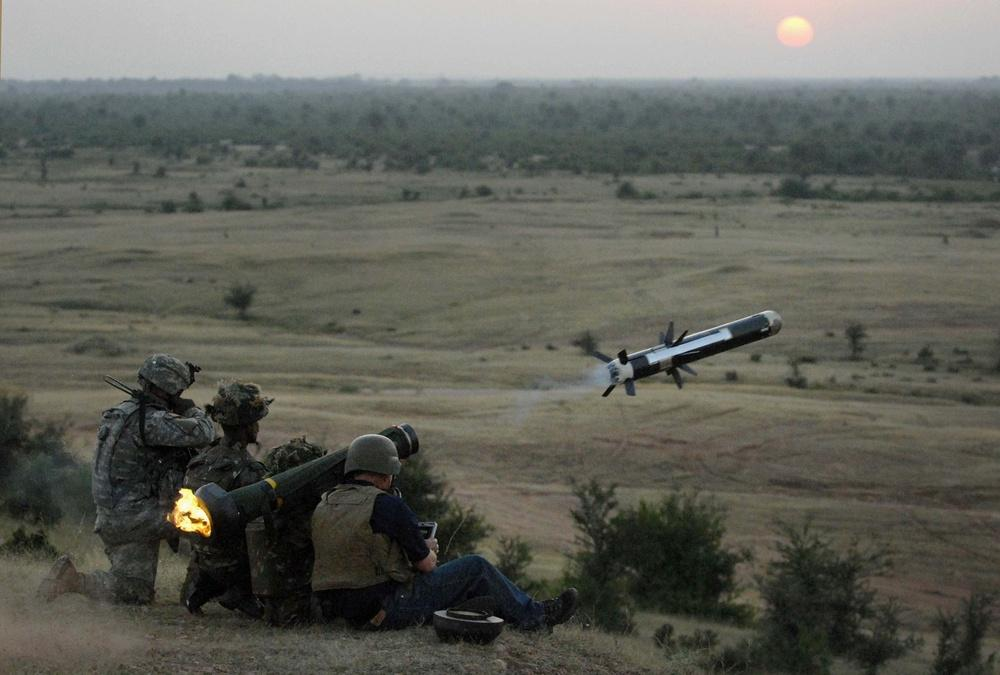
The American FGM-148 Javelin is a quarter-million-dollar engineering marvel designed to protect the soldier via an autonomous, top-attack infrared seeker. It is the ultimate manifestation of Western tech-fetishism. However, real combat data from Ukraine has shattered the myth of its absolute battlefield invincibility. When pulled out of sterile contractor testing, the Javelin’s real-world accuracy numbers plummeted due to acute vulnerability to environmental and operational stress.
U.S. military trial data and reports from the Director of Operational Test and Evaluation (DOT&E;) reveal that the Javelin suffers from severe systemic handling bottlenecks. Because its Imaging Infrared (IIR) seeker relies on thermal contrast rather than a hard physical visual, it struggles immensely in cluttered battlefields. When a target is cold, camouflaged, or turned off inside a dense tree line, the missile’s computer brain regularly miscalculates pixel differences, leading to frequent ‘soft aborts’ or mid-flight tracking gate drifts that send the missile crashing harmlessly into the dirt short of the target.
Furthermore, the Javelin requires its battery coolant unit (BCU) to chill the seeker head via compressed argon gas before it can lock on. This cooling battery has a strict operational lifecycle of just four minutes. If an infantryman under artillery fire takes too long to navigate the complex user interface, adjust track gates, or wait out dust storms, the system completely freezes up, rendering a Rs. 2.5 crore ($200,000+) round entirely useless until a scarce replacement battery can be swapped in.
Yet, India recently used emergency powers to fast-track an estimated Rs. 292 crore ($31 million) deal for a token batch of under 100 Javelin missiles and 25 launchers. Buying tiny quantities of an elite foreign weapon that glitched during trials in Ladakh is strategically flawed. It leaves the Indian Army with an expensive, delicate, foreign-dependent logistical tail that starves funding from India’s own homegrown, more rugged alternative: the DRDO’s indigenous MPATGM.
The M777 and the Fallacy of Titanium Artillery
The mismatch becomes even starker when analysing India’s procurement of 145 American-designed M777 ultra-lightweight 155mm towed howitzers. Engineered extensively out of titanium to weigh just 4.2 tons, the M777 was built for a highly specific Western paradigm: rapid airlift by helicopters into high-altitude or low-intensity counter-insurgency theatres. While this titanium frame is ideal for the mountainous terrain facing China along the Line of Actual Control (LAC), dragging it into a high-intensity, industrial war exposes catastrophic structural limitations.
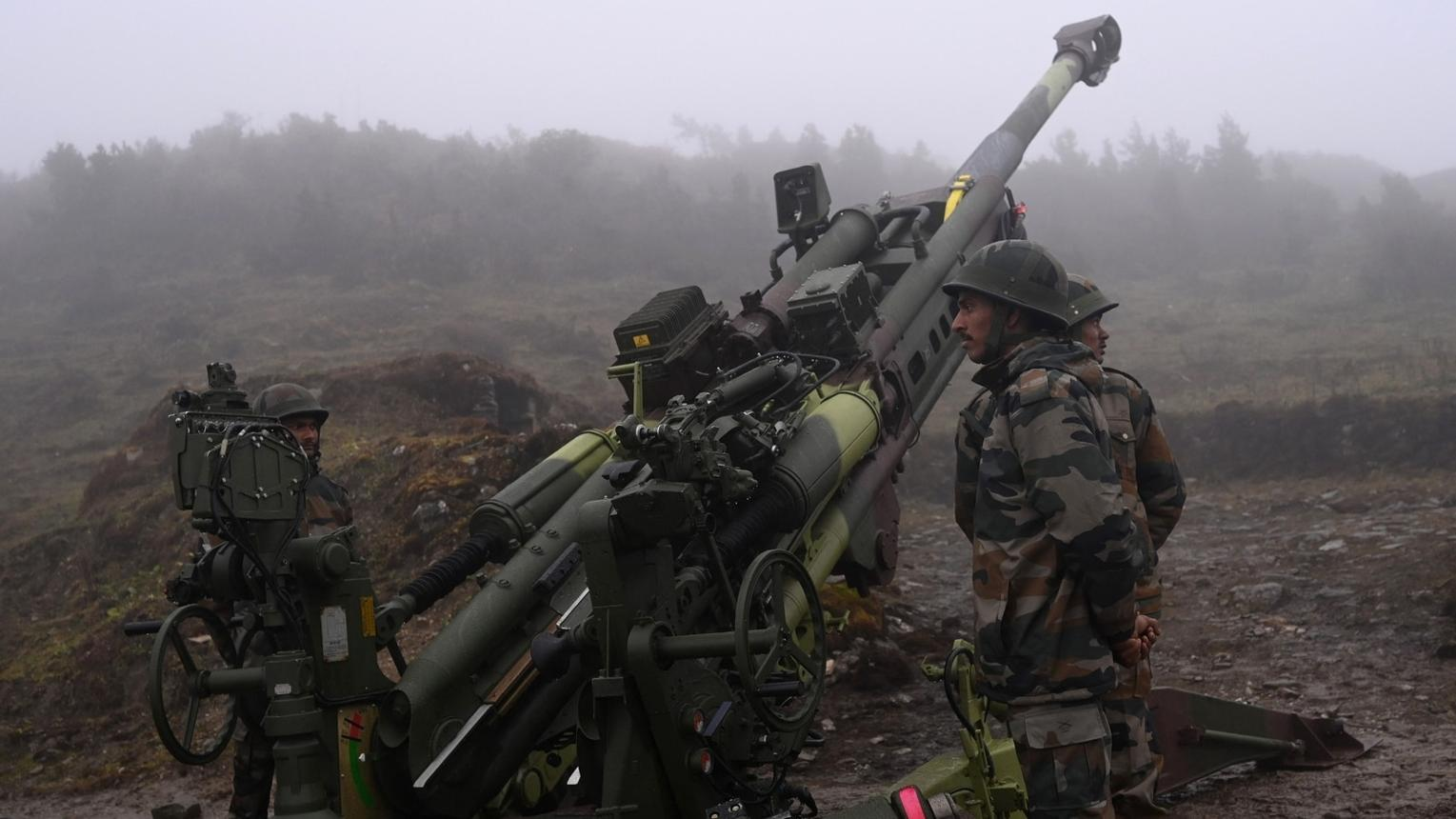
Data from the conventional war in Ukraine has exposed the M777 as fundamentally fragile under the stress of high-rate, multi-thousand-round daily barrages. Because the gun was optimised strictly for weight reduction rather than prolonged, heavy-duty pounding, it suffers from a crushing barrel attrition crisis. An M777 barrel has a designated lifecycle of roughly 2,500 rounds; when fired continuously with maximum propellant charges to maximise range, the internal rifling degrades instantly, ruining accuracy. At points in the Ukraine conflict, up to one-third of all Western-supplied M777 howitzers were simultaneously out of action due to worn-out or blown M776 cannon tubes.
The maintenance requirements of this titanium system are paralysing. Unlike older steel artillery, an M777 cannot be easily bored out or re-lined in a standard field workshop; replacing the cannon tubes requires complex, depot-level interventions. The Pentagon has had to issue multi-million-dollar sustainment contracts just to manage remote tele-maintenance support, and ship shattered parts out of the country for basic repairs. Furthermore, in dense, urbanised plains, counter-battery radar can track an incoming artillery shell instantly. A towed gun like the M777 requires a crew to manually hitch it to a truck to escape. In environments saturated with loitering munitions, this delay is fatal—nearly 100 M777 systems have been visually confirmed as destroyed or heavily damaged in Ukraine, primarily hunted down by cheap kamikaze drones while sitting static. For the plains of Punjab, what India needs is not delicate, air-portable titanium, but the heavy, tracked, heavily armoured protection of self-propelled steel like the K9 Vajra-T—a system that shields its crew from shrapnel and can ‘shoot-and-scoot’ within seconds.
The Excalibur Catastrophe: When ‘Smart’ Weapons Go Blind
The ultimate indictment of this high-cost, low-volume philosophy lies in the spectacular collapse of the M982 Excalibur GPS-guided 155mm artillery shell. Touted by Western commentators as the definitive ‘silver bullet’ that would change the course of modern land warfare, each Excalibur shell is an electronic masterpiece costing an astronomical $100,000 (over Rs. 80 lakh) per round. The weapon was engineered to achieve surgical, pinpoint precision by navigating via satellite signals. But in an industrial war defined by mass, electronic clutter, and heavily fortified plains, the Excalibur transformed into a textbook economic disaster.
Official battlefield telemetry and classified military assessments leaked from Ukraine revealed a devastating performance curve: initial high tactical efficiency dropped off dramatically as dense GPS-jamming and spoofing complexes (like the R-330ZH Zhitel) were deployed. Within a matter of months, the Excalibur’s successful strike rate plummeted from 55% down to a near-useless 6%. Statistically, it required 19 separate Excalibur rounds just to hit a single target, causing the actual operational cost to skyrocket to an unsustainable $1.9 million per successful strike. By importing boutique weapons like the Javelin and Excalibur, New Delhi is buying into a broken ecosystem. If a regional adversary deploys standard GPS spoofing over the plains of Punjab or the valleys of Ladakh, India’s multi-crore ‘smart artillery’ inventory will go blind before it even hits its terminal arc.
The Unmanned Disconnect: Switchblade vs Analogue FPVs
Even in the newer, unmanned domain, Western tech-fetishism has hit an identical wall. The American AeroVironment Switchblade 300 miniature loitering munition was engineered with complex, proprietary digital datalinks, custom thermal imaging, and advanced automated target-tracking software, commanding a price of $6,000 to $10,000 per single-use strike. In high-intensity combat, however, these expensive assets were completely neutralised by basic, commercial-grade radio frequency jammers that choked out their encrypted frequencies, or by simple battlefield smoke screens that threw off their sensitive automated optical trackers.
Meanwhile, frontline workshops constructed basic analogue FPV quadcopters for a mere $300 to $500 each. Operating on raw, unregulated analogue video signals, these unengineered drones proved vastly more resilient. When jammed, their video feed merely degrades into a snowy screen rather than suffering an outright digital freeze, allowing skilled operators to still guide them manually onto targets. The lesson is undeniable: twenty crude, un-jammed analogue drones will always impose greater operational lethality than a single, delicate ‘smart’ missile that fails at the first hint of electronic noise.
The Carrier Prestige Trap and the Psychological Nightmare
This structural disconnect is not limited to infantry tactics; it dominates India’s macro naval strategy. The Indian Navy is currently pushing aggressively for a third aircraft carrier (IAC-II / INS Vishal), a massive platform that will swallow over Rs. 40,000 crore of the defence budget, even before factoring in its multi-billion-dollar air wing of imported fighter jets and mandatory destroyer escorts.
In the era of asymmetric sea denial, an aircraft carrier is a massive, highly visible concentration of capital that functions as a target magnet. The vulnerability of these giant platforms is no longer theoretical. In recent Middle Eastern escalations, the United States Navy was forced to systematically pull its multi-billion-dollar supercarriers out of the Persian Gulf and push them hundreds of miles back, deep into the northern Arabian Sea and Indian Ocean, purely to stay outside the engagement envelope of Iran’s precision anti-ship ballistic missiles and long-range drone networks. If the world’s most advanced navy must retreat to protect its carriers from a heavily sanctioned regional power, how does India expect to operate a carrier battle group inside an IOR heavily monitored by China’s long-range anti-ship ballistic missiles (like the DF-21D and DF-26) and coordinated underwater drone swarms?
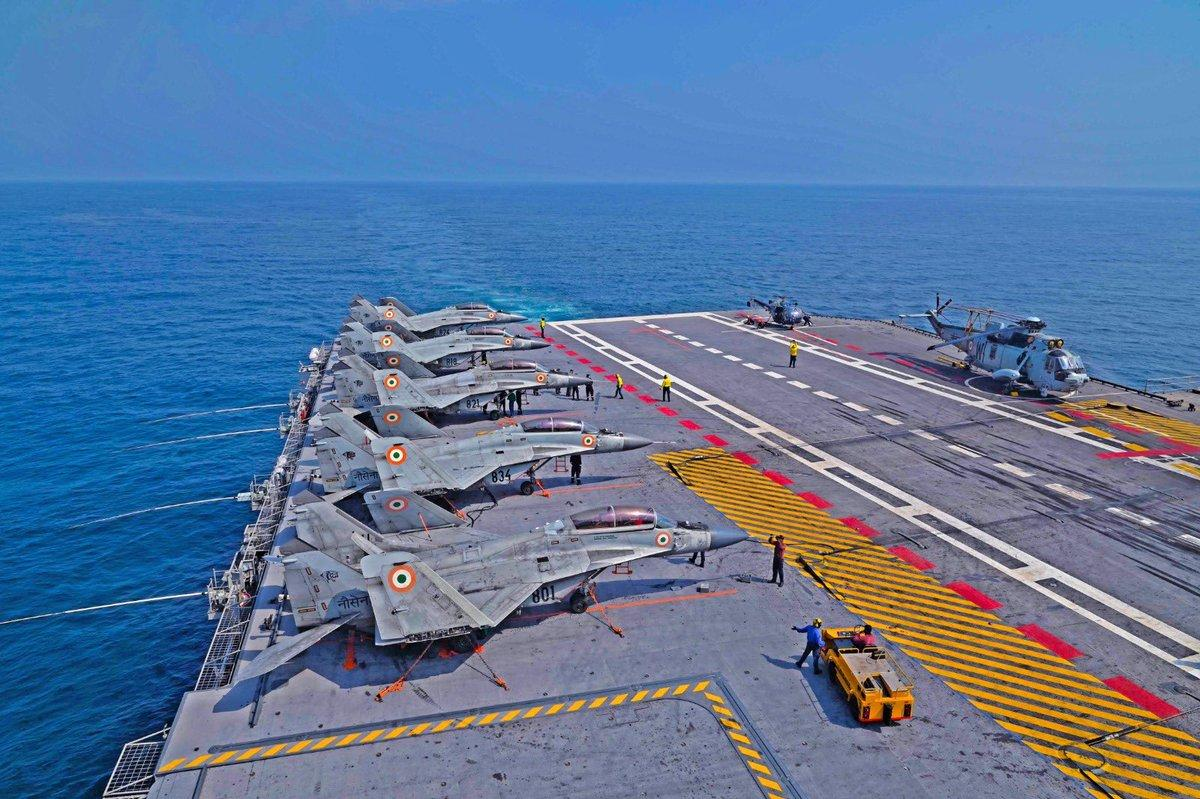
Beyond the extreme financial loss, the defence establishment ignores the catastrophic psychological toll of carrier warfare. An aircraft carrier is not just a weapon; it is a floating city. If a regional adversary successfully sinks or permanently disables a carrier like the INS Vikrant or INS Vishal, the human cost would instantly claim the lives of 3,000 to 4,000 soldiers, sailors, and airmen in a single afternoon. The psychological shockwaves of such a loss would completely paralyse national political resolve. It would trigger a domestic political crisis, devastate public morale, and severely break the military’s strategic confidence—effectively losing the psychological war in a single strike.
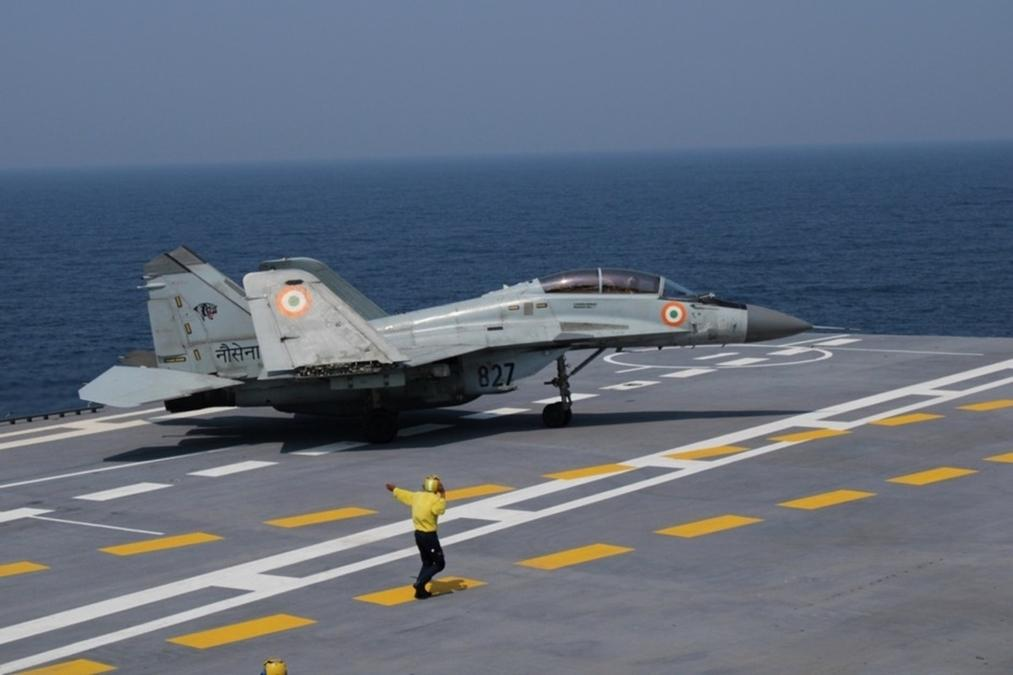
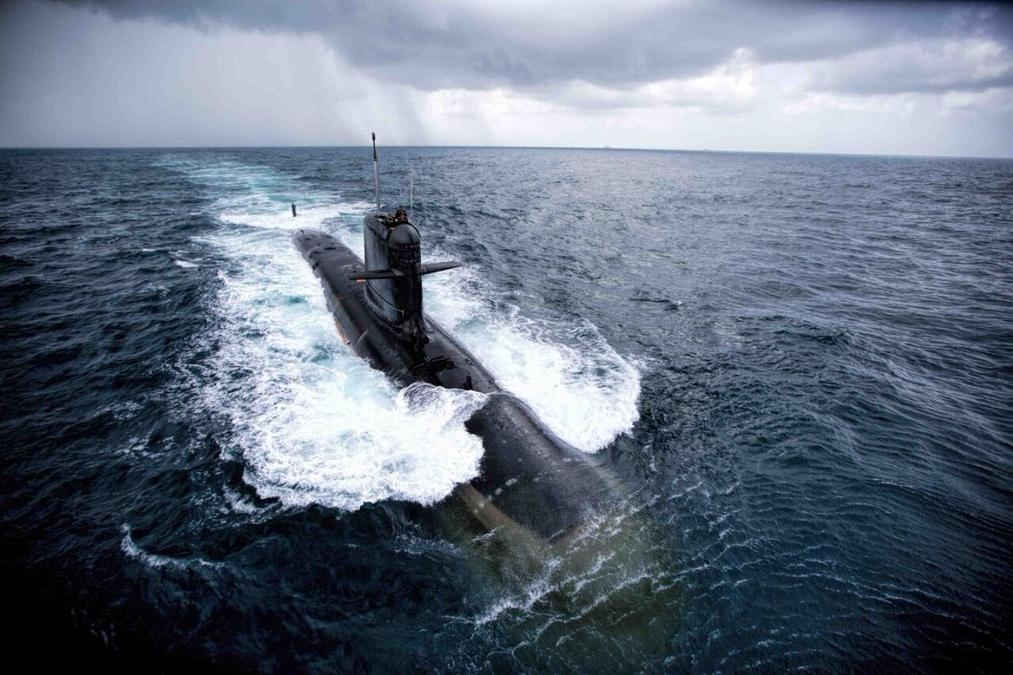
True strategic autonomy lies in Sea Denial, not the hollow prestige of Sea Control. A fleet of stealthy, long-endurance attack submarines equipped with Air-Independent Propulsion (AIP) can effectively paralyse enemy shipping lanes and secure the IOR while remaining entirely invisible to satellite tracking and drone swarms. Yet, while India chases a multi-carrier fleet, its underwater arm is in a state of critical decay, operating a shrinking fleet of legacy conventional hulls while the vital Project 75I submarine construction program faces endless procedural delays.
Rethinking Atmanirbharta: The Logistics of Victory
The current trajectory of the ‘Make in India’ program excels at building heavy, prestigious conventional platforms through monopolistic Defense Public Sector Undertakings (DPSUs). But modern warfare is won not by hyper-engineered Wunderwaffe (wonder-weapons), but by the cold, unyielding mechanics of logistics and industrial endurance. A truly usable weapon is not one that features on glossy promotional brochures; it is one that a common infantryman trusts implicitly to work when caked in mud, drenched in torrential rain, or choked by desert dust under intensive enemy fire.

Crucially, the cost of such a weapon must be low enough that deploying it does not trigger layers of bureaucratic paralysis and elevated authorisation levels. If a soldier must hesitate before pulling the trigger because a single round costs more than their hometown’s annual budget, the weapon has already failed. India’s defense budget must urgently absorb these brutal lessons from recent global battlefields. Strategic autonomy cannot be sustained by hoarding a handful of fragile, unproducible tech marvels. New Delhi must strip away the allure of prestige, stop chasing Western tech-traps, and aggressively fund rugged, mass-producible, and affordable systems that can be sustained through a prolonged war—because those are the only weapons that truly deliver victory.

Wing Commander Rajeev KS (Retired) is a seasoned ICT professional with 23 years of expertise in IP/MPLS networks, tactical communication, VoIP, data centre technologies, solution design, and program management across aerospace and defence sectors. He can be reached at raaka08@gmail.com. Views expressed are the author’s own.
 Divyanka Tandon
  Aayush Pal
  Archita Gaur