
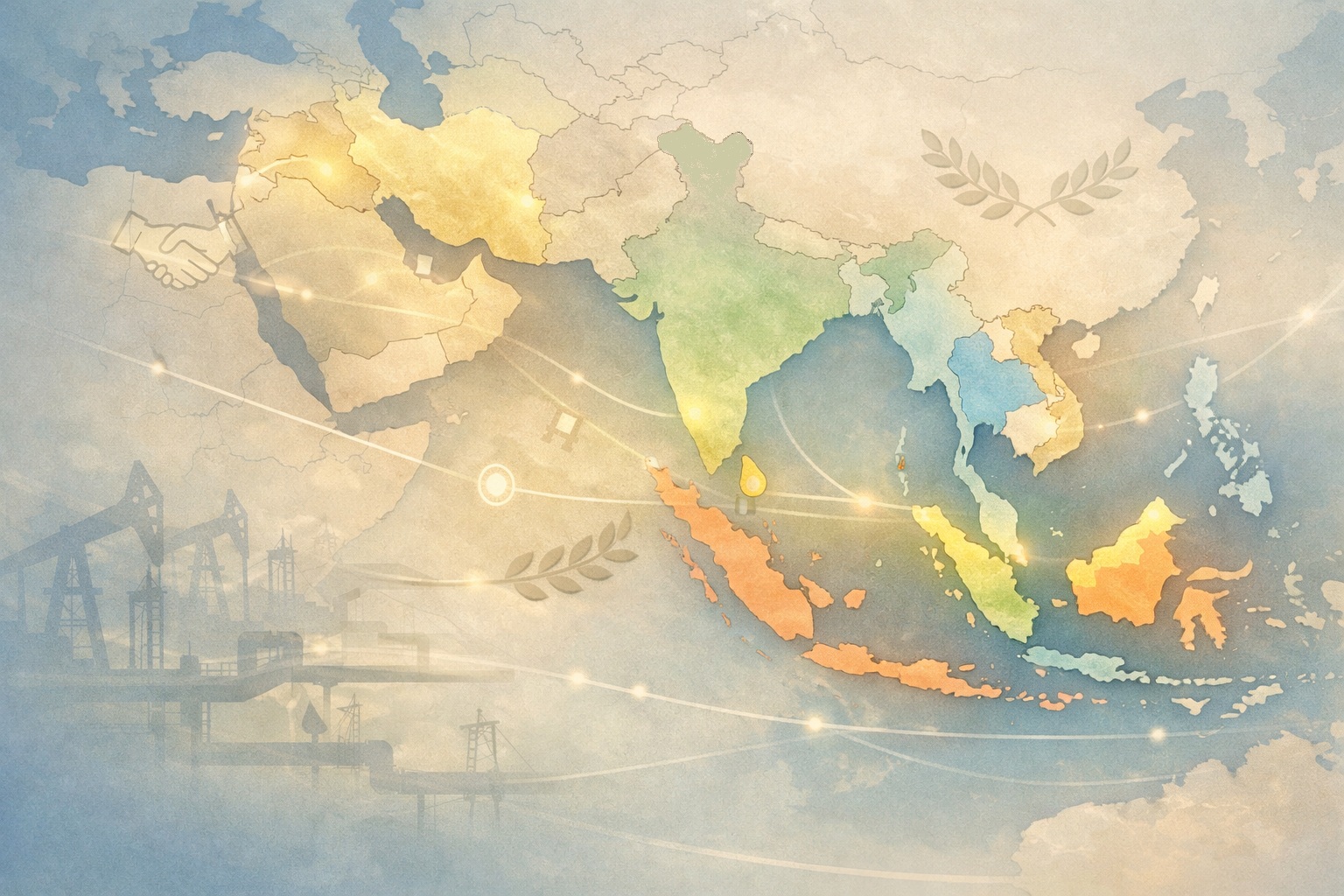
- ASEAN Foreign Ministers have called for an immediate ceasefire and urged the countries involved in the conflict to respect international law and the UN Charter.
- For ASEAN, the primary concern remains the protection of civilians during times of conflict, and the bloc’s broader focus has always been on ensuring peace and stability.
- Countries such as Malaysia strongly condemned the US-Israel strikes on Iran and called on the parties involved to exercise maximum restraint to prevent further damage on either side
The entire world has been witnessing a heated conflict involving key global players since the last week of February 2026. While some were directly responsible for the war, others were drawn in due to their geographical positioning, while the rest of the world watched closely, fearing a broader escalation that could impact all. The same holds for the ASEAN bloc, which has condemned the war; however, its member nations have shown varying opinions and responses to the ongoing tensions between the U.S., Israel and Iran, which have gripped the entire West Asian region.
There has been a range of reactions from the Southeast Asian states to the ongoing war. Individual nations responded differently before ASEAN issued a collective statement on the situation. Countries such as Malaysia strongly condemned the US-Israel strikes on Iran and called on the parties involved to exercise maximum restraint to prevent further damage on either side. Brunei Darussalam adopted a similar stance. Meanwhile, other countries such as Indonesia did not condemn the strikes but were among the first few to respond to the situation and offered to mediate between the nations. Other member states took a more cautious approach and avoided explicit alignment with either side.
Through a joint statement issued by ASEAN Foreign Ministers on 4th March 2026, the bloc called for an immediate ceasefire and urged the countries involved in the conflict to respect international law and the UN Charter. It strongly emphasised the need to exercise maximum restraint and to resolve issues through negotiation, dialogue and diplomacy. The statement further read: “We reaffirm the obligation of all States to resolve their differences through peaceful means and to respect the sovereignty and territorial integrity of all nations, in line with international law, including the UN Charter. We further reiterate the obligations to protect civilians and civilian infrastructures in armed conflicts consistent with international law and relevant UN Security Council resolutions”. For ASEAN, the primary concern remains the protection of civilians during times of conflict, and the bloc’s broader focus has always been on ensuring peace and stability.
A grave concern for ASEAN nations at this point is the safety of their stranded citizens in West Asia. ASEAN leaders have therefore affirmed that they will cooperate in providing emergency assistance to their nationals in the region and ensure their timely evacuation, if necessary. Most ASEAN countries, including Indonesia, Thailand and Malaysia, have issued travel advisories for Iran, Israel and Lebanon, and have called their citizens to leave at the earliest possible. Another major concern is the impact of the war on the oil reserves and the sharp rise in energy prices. The situation thus leaves most countries, including ASEAN members, in a vulnerable position, as most countries in the region depend heavily on the Middle East for oil imports.
A meeting was held recently in which the bloc’s foreign and economic Ministers discussed the ongoing war and its impact on Southeast Asia. They warned that if the war continues, it will have serious repercussions for the region’s economy and drastically affect the livelihoods of millions. Their joint statement read: “A prolonged period of geopolitical instability could pose sustained challenges to the global economic outlook, which has already been battered by multiple headwinds in recent years. It will also impact economic security and stability, the livelihoods of people in the region, and hinder economic progress in ASEAN”.
The Philippines Foreign Affairs Secretary, Theresa Lazaro, mentioned that ASEAN countries have agreed to increase cooperation and work collectively in response to the challenges and impacts of the war on Southeast Asia. The officials also discussed increasing intra-ASEAN trade and emphasised the need for the region to adopt renewable energy instead of relying on fossil fuels if the present situation persists. Several ASEAN countries have begun implementing preparedness measures to mitigate the impact of war, such as conserving energy by introducing a four-day work week and allowing certain staff and officials to work from home.
The ASEAN groupings’ role in directly influencing and minimising the war situation,n although it remains limited, they however continue to advocate de-escalation and negotiations through dialogue to prevent further damage to lives and property in the region. While most ASEAN nations refrained from taking any clear sides, the bloc’s collective stance on the escalating violence in the Middle East reflects the grouping’s broader commitment to peace and stability at both regional and global levels.
References:
- https://www.csis.org/blogs/latest-southeast-asia/latest-southeast-asia-southeast-asia-reacts-ira n-war
- https://asean.org/asean-foreign-ministers-statement-on-the-situation-in-the-middle-east-3/
- https://thediplomat.com/2026/03/asean-again-calls-for-halt-to-iran-war-citing-possible-sustai ned-economic-challenges/
- https://www.aa.com.tr/en/asia-pacific/asian-nations-voice-concern-about-regional-stability-af ter-israel-us-attack-on-iran/3843319
- https://www.arabnews.com/node/2636279/amp
- https://www.aseanwonk.com/p/iran-fallout-southeast-asia-asean-middle-east-conflict#footnot e-4-190271890

Faareha is a PhD scholar awaiting her final defence and has worked on India’s Act East Policy. She is currently a Non-Resident Fellow at the Subhas Chandra Bose Chair on International Relations at Chanakya University. She has previously completed her six-month research internship at India’s Council of World Affairs. Views expressed are the author’s own.
 Dr Mohmmad Rizwan
  Parag Gilada
  Archita Gaur